
TPO vs EPDM — Which Material Is Better for South Philly Flat Roofs?
If you own a row home in South Philadelphia you already know flat roofs come with unique challenges. Hot summers heavy snow and tight drainage systems mean the wrong membrane can leak within years. The two most common flat roof options are TPO and EPDM. One reflects heat and resists punctures. The other handles freeze-thaw cycles and costs less upfront. Which one fits your South Philly home? Keep reading to find out. Philadelphia Licenses and Inspections.
Understanding TPO and EPDM Materials
TPO stands for thermoplastic polyolefin. It is a single-ply membrane made from a blend of polypropylene and ethylene-propylene rubber. Manufacturers reinforce it with polyester and weld the seams using hot air. The result is a flexible white or light-colored sheet that reflects UV rays.
EPDM stands for ethylene propylene diene monomer. It is a synthetic rubber sheet made from oil and natural gas. Most EPDM comes in black or white and installers seal seams with adhesive tape or liquid adhesive. The rubber stays flexible in cold weather and resists UV damage over decades.
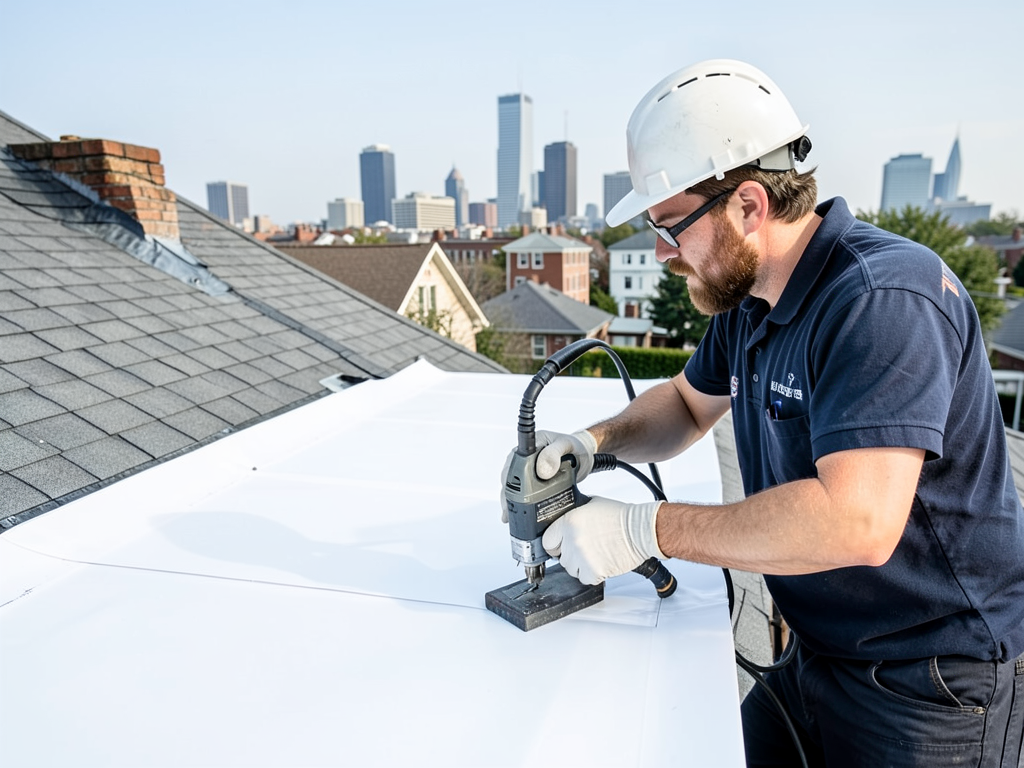
Image description: Close-up of a TPO heat-welded seam on a Philadelphia row home showing the smooth white membrane and clean welded joint.
Comparing Durability and Lifespan
TPO membranes typically last 15 to 20 years in Philadelphia. The welded seams are strong but the membrane can become brittle after repeated freeze-thaw cycles. UV exposure in summer can cause surface chalking if the manufacturer uses low-quality additives.. Read more about Is Your Roof Strong Enough for Solar Panels? — What Every Point Breeze Homeowner Should Check.
EPDM lasts 20 to 30 years in the same conditions. The rubber remains flexible in cold weather and the adhesive seams hold up well unless water pools for long periods. EPDM is less likely to become brittle but can absorb heat in summer which may raise cooling costs.
In South Philly the freeze-thaw cycle is the biggest threat. Water seeps into seams then freezes and expands. Heat-welded TPO seams resist this better than glued EPDM seams. But EPDM’s flexibility helps it survive the constant movement of older row home structures. How to Stop Your South Philly Rowhome Roof from Leaking Every Time it Rains.
Installation Methods and Cost Factors
Both membranes install as large sheets to reduce seams. TPO installers use mechanical fasteners or a fully adhered system with adhesive. EPDM can be fully adhered ballasted with river rock or mechanically attached. Ballasted EPDM is fastest but adds weight to the roof deck.
Installation cost in Philadelphia runs $5.50 to $7.50 per square foot for TPO and $4.50 to $6.50 for EPDM. TPO requires special hot-air welding tools so labor is slightly higher. EPDM uses common roofing adhesives and tools which keeps labor costs down. The Best Local Roofing Companies for Luxury Homes on the Main Line.
For a typical 1 000-square-foot South Philly row home roof TPO installation costs $5 500 to $7 500. EPDM costs $4 500 to $6 500. TPO prices can rise if the roof has many penetrations because each pipe vent or chimney requires a custom flashing boot.
Energy Efficiency and Philadelphia Climate Performance
TPO’s white surface reflects up to 85 percent of sunlight. This lowers roof surface temperature by 50 to 60 degrees compared to black EPDM. In Philadelphia’s humid summers that means less heat entering your top floor and lower air conditioning bills.
EPDM absorbs heat which can help melt snow in winter but raises indoor temperatures in summer. If your row home has poor attic ventilation the extra heat can make upper floors uncomfortable. Black EPDM can reach 150 degrees on a sunny July day.
Philadelphia falls under the International Energy Conservation Code which encourages cool roofs in commercial buildings. While the code does not force homeowners to choose TPO the energy savings can offset the higher upfront cost over time. Why More Homeowners in Manayunk Are Switching to Metal Roofing.
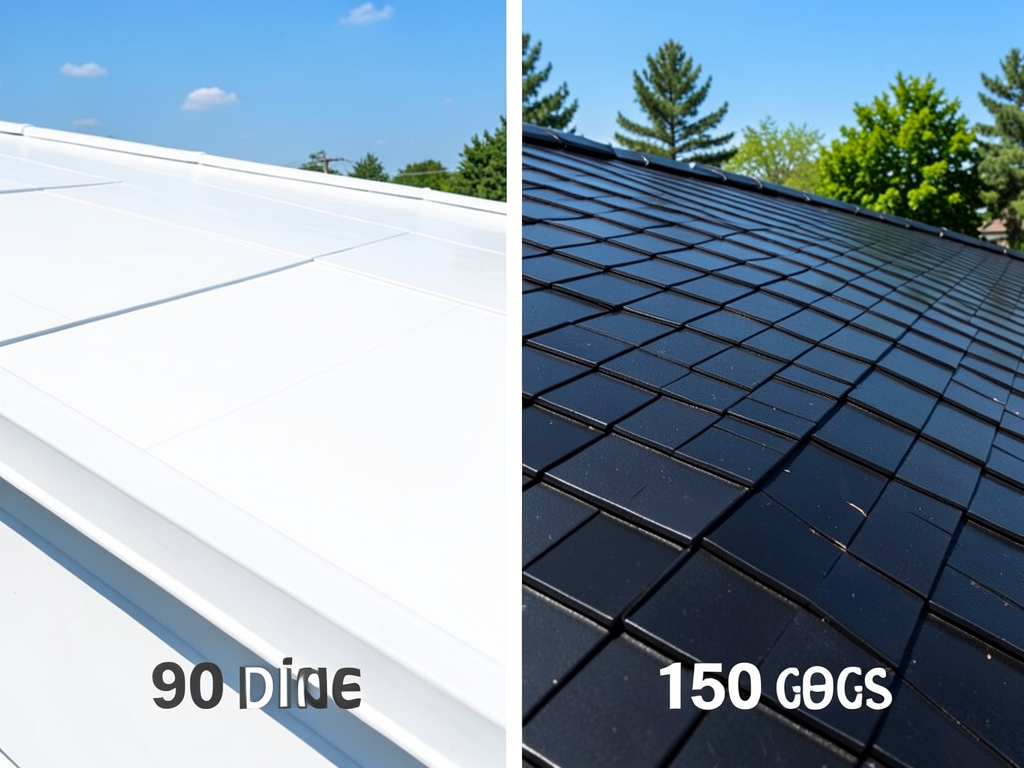
Image description: Thermal imaging comparison showing a white TPO roof at 90 degrees next to a black EPDM roof at 150 degrees on a summer afternoon.
Maintenance Requirements and Common Repairs
TPO needs annual inspections to check for seam lifting or punctures from tree branches or maintenance traffic. Small punctures repair with heat-welded patches. Seam failures require a skilled technician with hot-air tools. Avoid walking on TPO in summer when the surface softens. EPA Urban Heat Island Effect.
EPDM requires less frequent inspection but watch for shrinkage which can pull seams apart. Adhered seams can fail if water sits on the roof for days. Patching uses adhesive-backed rubber sheets. EPDM tolerates foot traffic better than TPO so it works well if you store items on the roof.
In South Philly clogged drains cause most flat roof leaks. Both membranes fail when water pools. Keep drains clear of leaves and debris. Check scuppers on parapet walls twice a year. A five-minute cleaning prevents costly water damage.. Read more about Repairing Cracked Parapet Walls on Your Brewerytown Property Before They Collapse.
Quick Comparison: TPO vs EPDM for South Philly
| Feature | TPO | EPDM |
|---|---|---|
| Typical Lifespan | 15-20 years | 20-30 years |
| Energy Efficiency | High (85% reflective) | Low (absorbs heat) |
| Installation Cost/SF | $5.50-$7.50 | $4.50-$6.50 |
| Seam Technology | Heat-welded | Adhesive tape |
| Freeze-Thaw Durability | Good | Excellent |
| Philadelphia Suitability | Excellent for heat | Excellent for cold |
Philadelphia Building Code and Permit Requirements
The Philadelphia Department of Licenses and Inspections requires a permit for any flat roof replacement over 100 square feet. The application must show the material type and insulation R-value. For TPO roofs the city often requires a UL Class A fire rating for commercial buildings. How Much Does a Full Roof Replacement Actually Cost in Philadelphia Right Now.
Row homes in historic districts like Society Hill need approval from the Philadelphia Historical Commission if the roof is visible from the street. They may require black EPDM instead of white TPO to maintain the historic appearance. Always check before ordering materials.. Read more about What You Need to Know Before Building a Roof Deck on Your Fairmount Rowhome.
The Philadelphia Water Department enforces stormwater regulations. Flat roofs must drain to the city system or use a green roof design. EPDM ballasted with stone can exceed roof load limits in some older homes. A structural engineer must approve the design before installation.
Which Material Should You Choose?
Choose TPO if you want lower cooling bills and plan to stay in your home more than 10 years. It works best on roofs with good drainage and few penetrations. TPO resists UV damage and handles summer heat better than EPDM.
Choose EPDM if your priority is lowest upfront cost and longest lifespan. It handles cold winters and building movement better than TPO. EPDM is ideal for roofs with many vents or equipment mounts where seam avoidance matters.
For most South Philly row homes EPDM offers the best balance of cost durability and cold-weather performance. But if your top floor gets unbearably hot in summer TPO’s reflectivity may be worth the extra investment.
Image description: Technician using a moisture meter on a flat roof deck in South Philadelphia checking for hidden water damage before membrane installation.
Maintenance Checklist for Philadelphia Flat Roofs
- Inspect seams and flashings twice a year
- Clear roof drains and scuppers every fall
- Check for ponding water after heavy rain
- Look for surface chalking or cracking
- Repair small punctures within 48 hours
- Schedule professional inspection after major storms
Call a Philadelphia Flat Roof Expert
Choosing between TPO and EPDM affects your comfort energy bills and long-term maintenance. A wrong choice can mean leaks in two years. A right choice can protect your home for decades.. Read more about The Right Way to Remove Heavy Snow from Your South Philly Rowhome Roof.
Atlas Roofing Philadelphia has installed both membranes on South Philly row homes for over 15 years. We know which product performs best on your block and how to pass city inspections the first time. Roofing Pittsburgh.
Call (267) 344-1222 today to schedule your inspection. We’ll measure your roof explain your options and give you a fixed price quote. Don’t wait for the next storm to find out your roof can’t handle Philadelphia weather.
Frequently Asked Questions
How long does a TPO roof last in Philadelphia?
Most TPO roofs last 15 to 20 years in Philadelphia. Lifespan depends on installation quality UV exposure and how well the roof drains after storms.
Is EPDM better for cold weather than TPO?
EPDM handles freeze-thaw cycles better because the rubber stays flexible in cold. TPO seams can become brittle over many winters but heat-welded seams resist initial water intrusion better.
Can I walk on a TPO or EPDM roof?
You can walk on both but TPO softens in hot sun and can tear. EPDM tolerates foot traffic better. Always wear soft-soled shoes and avoid dragging tools.
Do I need a permit to replace my flat roof in Philadelphia?
Yes. The city requires a permit for any roof replacement over 100 square feet. You must submit material specs and insulation details before work begins.
Which membrane is more energy efficient?
TPO reflects up to 85 percent of sunlight keeping your home cooler in summer. EPDM absorbs heat which can raise cooling costs by 10 to 15 percent.
How much does flat roof replacement cost in South Philly?
TPO installation costs $5.50 to $7.50 per square foot. EPDM costs $4.50 to $6.50 per square foot. A typical 1 000-square-foot row home roof costs $4 500 to $7 500 depending on material and complexity.
What is the best flat roof material for Philadelphia row homes?
EPDM offers the best balance of cost durability and cold-weather performance for most row homes. Choose TPO if you want lower cooling bills and plan to stay in your home long-term.
You may also find this helpful. How We Manage Roof Replacements on the Narrow Streets of Queen Village.
You may also find this helpful. The Safest Way to Seal Your Rowhome Roof Without Using a Blowtorch.
You may also find this helpful. The Best Roofing Materials for Dampening City Noise in East Passyunk.
{
“@context”: “https://schema.org”,
“@type”: “BlogPosting”,
“headline”: “TPO vs EPDM — Which Material Is Better for South Philly Flat Roofs?”,
“description”: “Comparing TPO and EPDM flat roofing materials for Philadelphia row homes. Learn which membrane lasts longer and handles our climate better. Call (267) 344-1222.”,
“wordCount”: 1570,
“datePublished”: “2026-03-06T11:51:00.000Z”,
“dateModified”: “2026-03-06T11:51:00.000Z”,
“inLanguage”: “en-US”,
“mainEntityOfPage”: {
“@type”: “WebPage”,
“@id”: “https://atlasroofingphiladelphia.com”
},
“publisher”: {
“@type”: “LocalBusiness”,
“name”: “Atlas Roofing Philadelphia”,
“url”: “https://atlasroofingphiladelphia.com”
},
“author”: {
“@type”: “Organization”,
“name”: “Atlas Roofing Philadelphia”,
“url”: “https://atlasroofingphiladelphia.com”
},
“image”: {
“@type”: “ImageObject”,
“url”: “https://atlasroofingphiladelphia.com/wp-content/uploads/2026/03/tpo-vs-epdm-which-material-is-better-for-south-phi-1.png”
}
}
{
“@context”: “https://schema.org”,
“@type”: “RoofingContractor”,
“name”: “Atlas Roofing Philadelphia”,
“url”: “https://atlasroofingphiladelphia.com”,
“address”: {
“@type”: “PostalAddress”,
“addressLocality”: “Philadelphia”
},
“areaServed”: {
“@type”: “City”,
“name”: “Philadelphia”
}
}
{
“@context”: “https://schema.org”,
“@type”: “FAQPage”,
“mainEntity”: [
{
“@type”: “Question”,
“name”: “Which Material Should You Choose?”,
“acceptedAnswer”: {
“@type”: “Answer”,
“text”: “Choose TPO if you want lower cooling bills and plan to stay in your home more than 10 years. It works best on roofs with good drainage and few penetrations. TPO resists UV damage and handles summer heat better than EPDM.”
}
},
{
“@type”: “Question”,
“name”: “How long does a TPO roof last in Philadelphia?”,
“acceptedAnswer”: {
“@type”: “Answer”,
“text”: “Most TPO roofs last 15 to 20 years in Philadelphia. Lifespan depends on installation quality UV exposure and how well the roof drains after storms.”
}
},
{
“@type”: “Question”,
“name”: “Is EPDM better for cold weather than TPO?”,
“acceptedAnswer”: {
“@type”: “Answer”,
“text”: “EPDM handles freeze-thaw cycles better because the rubber stays flexible in cold. TPO seams can become brittle over many winters but heat-welded seams resist initial water intrusion better.”
}
},
{
“@type”: “Question”,
“name”: “Can I walk on a TPO or EPDM roof?”,
“acceptedAnswer”: {
“@type”: “Answer”,
“text”: “You can walk on both but TPO softens in hot sun and can tear. EPDM tolerates foot traffic better. Always wear soft-soled shoes and avoid dragging tools.”
}
},
{
“@type”: “Question”,
“name”: “Do I need a permit to replace my flat roof in Philadelphia?”,
“acceptedAnswer”: {
“@type”: “Answer”,
“text”: “Yes. The city requires a permit for any roof replacement over 100 square feet. You must submit material specs and insulation details before work begins.”
}
},
{
“@type”: “Question”,
“name”: “Which membrane is more energy efficient?”,
“acceptedAnswer”: {
“@type”: “Answer”,
“text”: “TPO reflects up to 85 percent of sunlight keeping your home cooler in summer. EPDM absorbs heat which can raise cooling costs by 10 to 15 percent.”
}
},
{
“@type”: “Question”,
“name”: “How much does flat roof replacement cost in South Philly?”,
“acceptedAnswer”: {
“@type”: “Answer”,
“text”: “TPO installation costs $5.50 to $7.50 per square foot. EPDM costs $4.50 to $6.50 per square foot. A typical 1 000-square-foot row home roof costs $4 500 to $7 500 depending on material and complexity.”
}
},
{
“@type”: “Question”,
“name”: “What is the best flat roof material for Philadelphia row homes?”,
“acceptedAnswer”: {
“@type”: “Answer”,
“text”: “EPDM offers the best balance of cost durability and cold-weather performance for most row homes. Choose TPO if you want lower cooling bills and plan to stay in your home long-term.”
}
}
]
}
{
“@context”: “https://schema.org”,
“@type”: “BreadcrumbList”,
“itemListElement”: [
{
“@type”: “ListItem”,
“position”: 1,
“name”: “Home”,
“item”: “https://atlasroofingphiladelphia.com”
},
{
“@type”: “ListItem”,
“position”: 2,
“name”: “Blog”,
“item”: “https://atlasroofingphiladelphia.com/blog”
},
{
“@type”: “ListItem”,
“position”: 3,
“name”: “TPO vs EPDM — Which Material Is Better for South Philly Flat Roofs?”
}
]
}
{
“@context”: “https://schema.org”,
“@type”: “Service”,
“serviceType”: “Roofing”,
“provider”: {
“@type”: “LocalBusiness”,
“name”: “Atlas Roofing Philadelphia”,
“url”: “https://atlasroofingphiladelphia.com”
},
“areaServed”: {
“@type”: “City”,
“name”: “Philadelphia”
},
“description”: “Comparing TPO and EPDM flat roofing materials for Philadelphia row homes. Learn which membrane lasts longer and handles our climate better. Call (267) 344-1222.”
}