
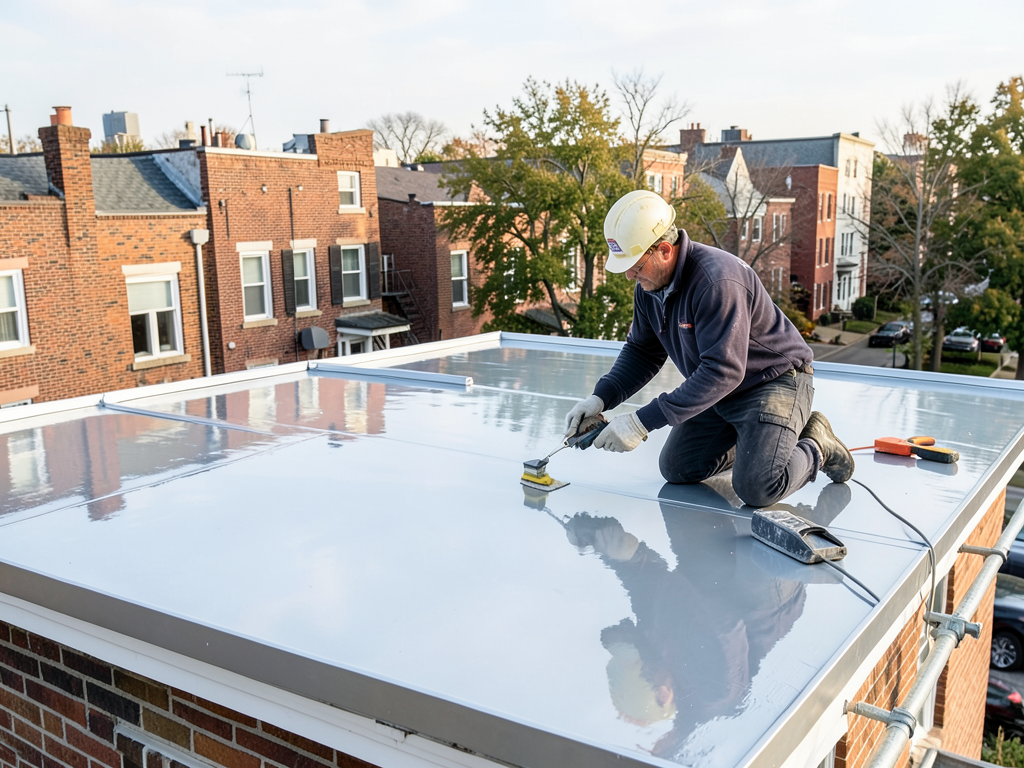
How to Stop Your South Philly Rowhome Roof from Leaking Every Time it Rains
Every heavy rain in South Philadelphia turns into a nightmare for rowhome owners. Water pools on flat roofs, finds the smallest crack, and drips through ceilings. The problem is not just age—it is the unique architecture of South Philly rowhomes. Shared parapet walls trap moisture, narrow streets block proper drainage, and decades-old roofing systems were never designed for today’s storms. You need more than a quick patch. You need a solution built for Philadelphia’s climate and rowhome construction. Philadelphia Department of Licenses and Inspections.
Why South Philly Rowhome Roofs Leak More Than Other Homes
South Philadelphia rowhomes share more than walls. They share drainage problems. Most were built with built-up tar and gravel roofs that last about 20 years. In 2026, many are past that age. The flat surfaces collect water instead of shedding it. Parapit walls create blind spots where leaks hide for months. Chimneys and vents break the waterproof barrier. Even the way trash trucks rumble down narrow streets can shake loose old flashing.. Read more about Adding a Skylight to Your Rowhome During Your Next Roof Replacement in Fairmount.
Philadelphia’s freeze-thaw cycles make things worse. Water seeps into tiny cracks during winter thaws. When it freezes again, it expands and splits the roofing material. By spring, what started as a hairline crack becomes a steady leak.
Common Flat Roof Problems in South Philly Rowhomes
Understanding the problem is the first step to fixing it. Here are the most common failure points in South Philly flat roofs:. Read more about Extending the Life of Your West Philly Flat Roof with Silicone Coatings.
- Pooling Water
Flat roofs are not truly flat. They should have a slight slope to drain water. Many older South Philly roofs settled over time, creating low spots where water collects after every rain.
- Cracked or Blistered Membrane
UV rays, temperature swings, and foot traffic create cracks in the roofing surface. Blisters form when moisture gets trapped under the membrane and expands.
- Failed Flashing Around Chimneys and Vents
Metal flashing seals roof penetrations. In rowhomes, shared chimneys between neighbors often have old, rusted flashing that pulls away from the brick.
- Clogged Scuppers and Drains
Scuppers are the openings in parapet walls that let water drain off the roof. Leaves, trash, and even bird nests can block them, forcing water to back up and find another way in.
- Deteriorated Parapet Wall Caps
The top of parapet walls often has a cap that cracks over time. Once water gets behind the cap, it travels down the wall and into the home.
Testing for Roof Leaks: The Screwdriver Test
Before calling a contractor, you can do a simple test. On a dry day, walk your roof with a screwdriver. Press the tip into the roofing surface. If it sinks easily, the material is soft and likely holding water underneath. Check around vents, chimneys, and where walls meet the roof. Soft spots often mark where water is entering. This test helps you explain the problem to a professional and avoid surprise costs.. Read more about Questions You Must Ask Before Hiring a Roofer in South Philadelphia.
Repair Options for South Philly Flat Roofs
Not every leak needs a full roof replacement. Here are the main repair paths, from quick fixes to permanent solutions: EPA WaterSense Program.
| Repair Type | Best For | Lifespan | Cost Range (2026) |
|---|---|---|---|
| Silver Coating (Aluminized Roof Coating) | Minor cracks, UV protection | 3-5 years | $1.50-$2.50 per sq ft |
| Tar and Gravel Patch | Small isolated leaks | 1-2 years | $200-$500 per area |
| EPDM Membrane Replacement | Medium to large roofs | 20-25 years | $5.00-$7.50 per sq ft |
| TPO Membrane Replacement | Energy-efficient upgrade | 20-25 years | $5.50-$8.00 per sq ft |
| Modified Bitumen | High-traffic roofs | 15-20 years | $4.50-$6.50 per sq ft |
Silver Coating: The Philadelphia Classic
Silver coating is not just a quick fix. It is a Philadelphia tradition. The aluminized coating reflects UV rays, reducing heat buildup in summer. It also seals small cracks and adds a waterproof layer. For many South Philly rowhomes, a fresh silver coat every 3-5 years keeps the roof watertight without the cost of a full replacement.
The process is simple. Contractors clean the roof, repair obvious damage, then roll on the silver coating. It dries to a tough, reflective finish. The downside is that it does not fix structural problems. If your roof has major sagging or widespread cracking, silver coating is a Band-Aid, not a cure.
Modern Membranes: EPDM and TPO
For a permanent fix, EPDM and TPO membranes are the gold standard. EPDM is a rubber-like material that handles Philadelphia’s temperature swings well. TPO is a white thermoplastic that reflects heat and can lower cooling costs.
Both systems involve removing the old roof down to the deck, then installing new insulation and the membrane. The seams are heat-welded for a watertight bond. These systems come with 20-year warranties and can handle the weight of snow and ice that older roofs cannot.
Parapet Wall Repair: The Hidden Problem
Many South Philly leaks start in the parapet walls. These shared walls between rowhomes often have deteriorated caps or cracked mortar. Water runs down the inside of the wall, then across the roof deck, making the leak appear far from the actual source.
Repairing parapet walls involves removing the old cap, repointing the mortar, and installing a new waterproof cap. This work requires skill with masonry and an understanding of Philadelphia’s historic building methods. Skipping parapet repair guarantees the leak will return.
Philadelphia Building Code and Permits
Any major roof work in Philadelphia requires a permit from the Department of Licenses and Inspections (L&I). For flat roofs, you also need to follow the International Building Code’s requirements for slope, drainage, and fire resistance.
Philadelphia Code Section 1507.12 mandates that flat roofs have a minimum slope of 1/4 inch per foot toward drains or scuppers. If your roof does not meet this, you must build up the slope before installing a new membrane. Ignoring this code can lead to failed inspections and costly rework.
Choosing the Right Contractor in South Philly
South Philadelphia’s tight streets and shared walls mean roofing work is not a simple weekend project. You need a contractor who understands rowhome construction, can navigate L&I requirements, and has experience with flat roof systems.
Ask these questions before hiring:
- Do you have a current Pennsylvania Home Improvement Contractor (HIC) license?
- Can you show examples of South Philly rowhome projects?
- Do you handle the permit process?
- What warranty do you offer on both materials and labor?
- How do you protect neighboring properties during the work?
A reputable contractor will provide a written estimate, explain the repair process, and show proof of insurance. Avoid anyone who pressures you for a quick decision or asks for full payment upfront.
Cost Factors for South Philly Flat Roof Repair
Roof repair costs in South Philly depend on several factors:
- Roof Size Larger roofs need more materials and labor.
- Access Narrow alleys and limited parking can increase labor time.
- Existing Damage Water damage to the roof deck or structure adds repair costs.
- Material Choice Silver coating is cheapest, EPDM/TPO is most expensive but longest-lasting.
- Permit Fees Philadelphia permit fees range from $50 to $500 depending on project scope.
In 2026, expect to pay $3,000 to $8,000 for a standard silver coating on a typical South Philly rowhome. Full membrane replacement starts around $8,000 and can exceed $15,000 for larger or more complex roofs.
Preventing Future Leaks
Once your roof is repaired, a few simple steps can prevent future problems:
- Clean Scuppers Twice a Year Remove leaves and debris so water drains freely.
- Inspect After Storms Check for new cracks or lifted flashing.
- Maintain Silver Coating Reapply every 3-5 years before the old coating fails.
- Check Attic for Stains Early signs of leaks often show up on ceilings before you see water on the roof.
Emergency Leak Response
If water is actively dripping, act fast. Place buckets to catch water and move valuables away from the leak. If the ceiling is bulging, poke a small hole to release water and prevent collapse. Then call a professional immediately. Quick action can save thousands in interior damage.
Emergency tarping is a temporary fix. A blue tarp can stop active leaks for a few days, but it is not a permanent solution. Professional repair should follow as soon as possible.
Call (267) 344-1222 for South Philly Flat Roof Repair
Water damage only gets worse with time. Every rainstorm that finds its way inside is costing you money in repairs, mold remediation, and higher utility bills. Do not wait until your ceiling collapses or your walls rot. Call (267) 344-1222 today to schedule your inspection. We understand South Philly rowhomes because we work on them every day. Our team handles everything from emergency tarping to full membrane replacement, and we navigate Philadelphia’s permit process so you do not have to.
Pick up the phone and call (267) 344-1222 before the next storm hits. Your home deserves a roof that keeps the rain outside where it belongs.
Frequently Asked Questions
How long does a flat roof last in Philadelphia?
Most built-up tar and gravel roofs last 20-25 years. EPDM and TPO membranes can last 20-25 years with proper maintenance. Silver coating needs reapplication every 3-5 years.
Can I install a new roof over my old one?
Philadelphia code generally requires removing the old roof down to the deck for flat roofs. Installing over existing materials can trap moisture and void warranties.
How do I know if my leak is from the roof or a pipe?
Roof leaks usually show up as stains that grow larger after rain. Plumbing leaks are more consistent and often near bathrooms or kitchens. A professional inspection can determine the source.
What is the best flat roof material for South Philly?
EPDM and TPO are both excellent choices. EPDM handles temperature swings well. TPO reflects heat and can lower cooling costs. The best choice depends on your specific roof and budget.
How much does it cost to repair a flat roof leak?
Minor repairs start around $200-$500. Silver coating for an average rowhome costs $3,000-$8,000. Full membrane replacement starts at $8,000 and varies by roof size and material.
You may also find this helpful. Why Clogged Gutters Are Ruining Roofs in Mt. Airy and How to Fix It.
You may also find this helpful. How Better Attic Ventilation Can Save Your Northeast Philly Roof from Early Rot.
{
“@context”: “https://schema.org”,
“@type”: “BlogPosting”,
“headline”: “How to Stop Your South Philly Rowhome Roof from Leaking Every Time it Rains”,
“description”: “Stop South Philly rowhome roof leaks with expert flat roof repair. Learn about EPDM, TPO, silver coating, and parapet wall fixes from local Philadelphia specialists.”,
“wordCount”: 1662,
“datePublished”: “2026-02-14T07:28:00.000Z”,
“dateModified”: “2026-02-14T07:28:00.000Z”,
“inLanguage”: “en-US”,
“mainEntityOfPage”: {
“@type”: “WebPage”,
“@id”: “https://atlasroofingphiladelphia.com”
},
“publisher”: {
“@type”: “LocalBusiness”,
“name”: “Atlas Roofing Philadelphia”,
“url”: “https://atlasroofingphiladelphia.com”
},
“author”: {
“@type”: “Organization”,
“name”: “Atlas Roofing Philadelphia”,
“url”: “https://atlasroofingphiladelphia.com”
},
“image”: {
“@type”: “ImageObject”,
“url”: “https://atlasroofingphiladelphia.com/wp-content/uploads/2026/03/how-to-stop-your-south-philly-rowhome-roof-from-le-1.png”
}
}
{
“@context”: “https://schema.org”,
“@type”: “RoofingContractor”,
“name”: “Atlas Roofing Philadelphia”,
“url”: “https://atlasroofingphiladelphia.com”,
“address”: {
“@type”: “PostalAddress”,
“addressLocality”: “Philadelphia”
},
“areaServed”: {
“@type”: “City”,
“name”: “Philadelphia”
}
}
{
“@context”: “https://schema.org”,
“@type”: “FAQPage”,
“mainEntity”: [
{
“@type”: “Question”,
“name”: “How long does a flat roof last in Philadelphia?”,
“acceptedAnswer”: {
“@type”: “Answer”,
“text”: “Most built-up tar and gravel roofs last 20-25 years. EPDM and TPO membranes can last 20-25 years with proper maintenance. Silver coating needs reapplication every 3-5 years.”
}
},
{
“@type”: “Question”,
“name”: “Can I install a new roof over my old one?”,
“acceptedAnswer”: {
“@type”: “Answer”,
“text”: “Philadelphia code generally requires removing the old roof down to the deck for flat roofs. Installing over existing materials can trap moisture and void warranties.”
}
},
{
“@type”: “Question”,
“name”: “How do I know if my leak is from the roof or a pipe?”,
“acceptedAnswer”: {
“@type”: “Answer”,
“text”: “Roof leaks usually show up as stains that grow larger after rain. Plumbing leaks are more consistent and often near bathrooms or kitchens. A professional inspection can determine the source.”
}
},
{
“@type”: “Question”,
“name”: “What is the best flat roof material for South Philly?”,
“acceptedAnswer”: {
“@type”: “Answer”,
“text”: “EPDM and TPO are both excellent choices. EPDM handles temperature swings well. TPO reflects heat and can lower cooling costs. The best choice depends on your specific roof and budget.”
}
},
{
“@type”: “Question”,
“name”: “How much does it cost to repair a flat roof leak?”,
“acceptedAnswer”: {
“@type”: “Answer”,
“text”: “Minor repairs start around $200-$500. Silver coating for an average rowhome costs $3,000-$8,000. Full membrane replacement starts at $8,000 and varies by roof size and material.”
}
}
]
}
{
“@context”: “https://schema.org”,
“@type”: “HowTo”,
“name”: “Common Flat Roof Problems”,
“step”: [
{
“@type”: “HowToStep”,
“position”: 1,
“name”: “Pooling Water”,
“text”: “Flat roofs are not truly flat. They should have a slight slope to drain water. Many older South Philly roofs settled over time, creating low spots where water collects after every rain.”
},
{
“@type”: “HowToStep”,
“position”: 2,
“name”: “Cracked or Blistered Membrane”,
“text”: “UV rays, temperature swings, and foot traffic create cracks in the roofing surface. Blisters form when moisture gets trapped under the membrane and expands.”
},
{
“@type”: “HowToStep”,
“position”: 3,
“name”: “Failed Flashing Around Chimneys and Vents”,
“text”: “Metal flashing seals roof penetrations. In rowhomes, shared chimneys between neighbors often have old, rusted flashing that pulls away from the brick.”
},
{
“@type”: “HowToStep”,
“position”: 4,
“name”: “Clogged Scuppers and Drains”,
“text”: “Scuppers are the openings in parapet walls that let water drain off the roof. Leaves, trash, and even bird nests can block them, forcing water to back up and find another way in.”
},
{
“@type”: “HowToStep”,
“position”: 5,
“name”: “Deteriorated Parapet Wall Caps”,
“text”: “The top of parapet walls often has a cap that cracks over time. Once water gets behind the cap, it travels down the wall and into the home.”
}
],
“image”: “https://atlasroofingphiladelphia.com/wp-content/uploads/2026/03/how-to-stop-your-south-philly-rowhome-roof-from-le-1.png”
}
{
“@context”: “https://schema.org”,
“@type”: “BreadcrumbList”,
“itemListElement”: [
{
“@type”: “ListItem”,
“position”: 1,
“name”: “Home”,
“item”: “https://atlasroofingphiladelphia.com”
},
{
“@type”: “ListItem”,
“position”: 2,
“name”: “Blog”,
“item”: “https://atlasroofingphiladelphia.com/blog”
},
{
“@type”: “ListItem”,
“position”: 3,
“name”: “How to Stop Your South Philly Rowhome Roof from Leaking Every Time it Rains”
}
]
}
{
“@context”: “https://schema.org”,
“@type”: “Service”,
“serviceType”: “Roofing”,
“provider”: {
“@type”: “LocalBusiness”,
“name”: “Atlas Roofing Philadelphia”,
“url”: “https://atlasroofingphiladelphia.com”
},
“areaServed”: {
“@type”: “City”,
“name”: “Philadelphia”
},
“description”: “Stop South Philly rowhome roof leaks with expert flat roof repair. Learn about EPDM, TPO, silver coating, and parapet wall fixes from local Philadelphia specialists.”
}