
How We Manage Roof Replacements on the Narrow Streets of Queen Village
Replacing a roof in Queen Village means working in one of Philadelphia’s tightest residential environments. The neighborhood’s 18th and 19th-century rowhomes sit on streets barely wide enough for two-way traffic, with overhead wires, shared party walls, and zero lot-line construction creating unique logistical challenges. At Atlas Roofing Philadelphia, we’ve developed specialized systems to handle these constraints without disrupting the historic character or daily life of this vibrant community. The Best Local Roofing Companies for Luxury Homes on the Main Line.
Understanding Queen Village’s Unique Roofing Challenges
Queen Village’s narrow streets, typically 18-22 feet wide, create immediate access problems for roofing crews. South 3rd Street, South 4th Street, and the blocks between Bainbridge and Fitzwater often have cars parked on both sides, leaving no room for material delivery trucks or debris containers. The neighborhood’s 200-year-old buildings feature shared chimneys, interconnected parapet walls, and slate or cedar shake roofs that require careful handling to preserve structural integrity. How to Stop Your South Philly Rowhome Roof from Leaking Every Time it Rains.
Philadelphia’s Streets Department Right-of-Way permits become essential in this environment. Each project requires detailed street closure plans showing exactly where dumpsters, material staging areas, and crew parking will occur. The process typically takes 7-10 business days for approval, with emergency expedited permits available for active leaks but at higher fees.
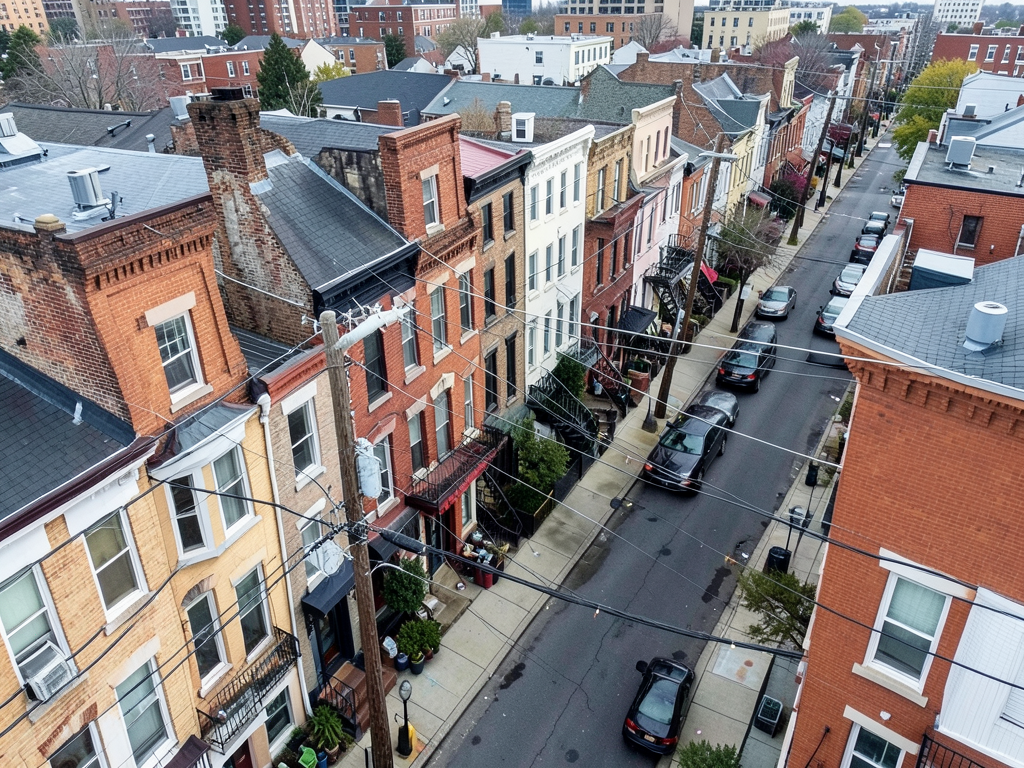
Aerial view of a Queen Village rowhome street showing the tight spacing between buildings and overhead utility lines that complicate roofing equipment placement.
Permit Requirements and Street Closure Logistics
Queen Village roofing projects require multiple permits beyond the standard building permit. The Philadelphia L&I Department mandates structural assessments for any roof replacement over 25% of the existing surface area. The Streets Department issues Right-of-Way permits that specify exact placement windows, typically 7 AM to 4 PM Monday through Friday.
Street closure costs vary by block length and police detail requirements. A typical Queen Village permit for a single rowhome costs $450-650, plus $300-500 for police traffic control on blocks like South 5th Street or Queen Street where through traffic cannot be easily diverted. The Philadelphia Parking Authority coordinates no-parking signage 48 hours before work begins, with violation fines covered by the permit holder.
Specialized Equipment for Tight-Access Roofing
Standard roofing equipment doesn’t work in Queen Village’s confined spaces. We use compact 10-yard dumpsters instead of 20-yard containers, reducing street footprint by 40%. Our boom trucks have 38-foot reach instead of the standard 55-foot models, allowing material placement from street edge without entering neighboring properties. Roofing Pittsburgh.
Material hoists become essential when boom trucks can’t reach. These electric-powered units mount to parapet walls or window openings, lifting shingles and underlayment directly to the roof deck. Each hoist handles 200-300 pounds per lift cycle, requiring careful staging of materials in 3-4 foot stacks rather than bulk delivery.
Debris chutes route old roofing materials directly into dumpsters below. In Queen Village’s historic district, we use protective canopies over sidewalks to prevent damage to original brick and ironwork. The chute system reduces cleanup time by 60% compared to manual debris removal through interior stairwells.. Read more about How to Tell if Your Philadelphia Roofing Estimate Is Fair or Overpriced.
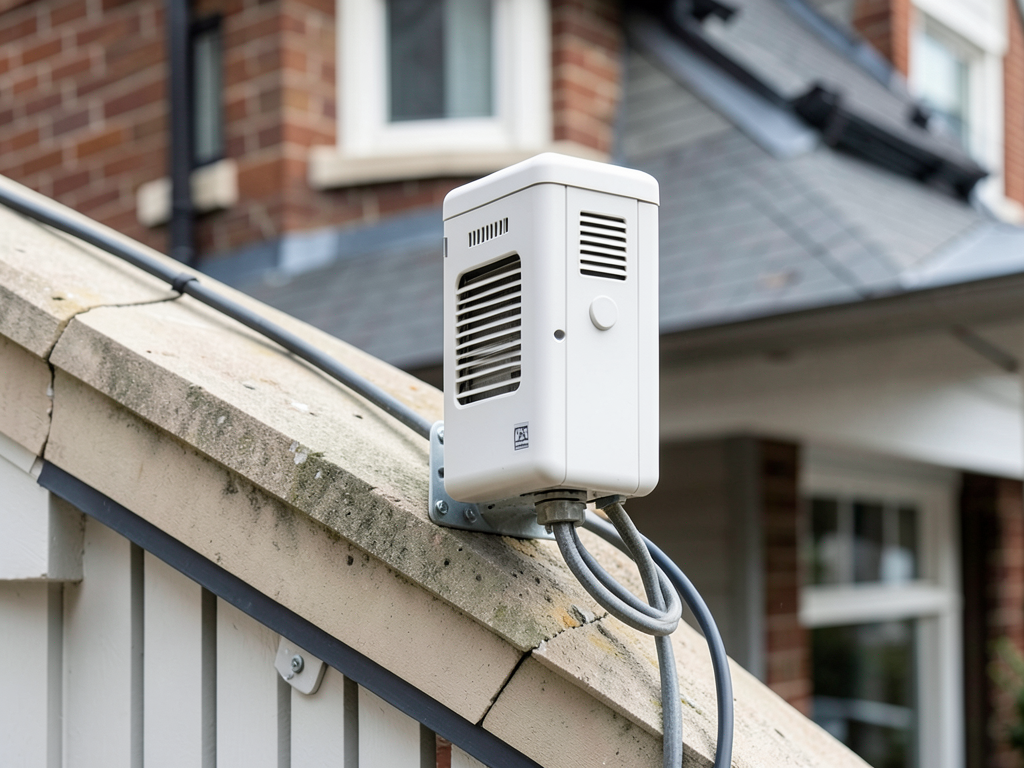
Close-up of a compact material hoist mounted to a Queen Village rowhome parapet, showing the specialized equipment needed for tight-access roofing installations.
Neighbor Relations and Shared-Wall Considerations
Queen Village’s rowhomes share walls, chimneys, and sometimes even roof structures. Before any work begins, we conduct neighbor meetings to explain the project timeline, noise levels, and access requirements. These meetings prevent complaints to L&I and maintain good community relations.. Read more about What You Need to Know Before Building a Roof Deck on Your Fairmount Rowhome.
Shared chimney stacks require special attention. Many Queen Village homes built before 1920 have interconnected flues that must be properly sealed during roof replacement. We use smoke tests to verify no cross-ventilation exists between units, preventing carbon monoxide hazards after project completion. How Much Does a Full Roof Replacement Actually Cost in Philadelphia Right Now.
Party wall agreements become necessary when work affects shared parapet walls. These legal documents, prepared by our in-house permitting specialist, outline each property owner’s responsibilities for structural repairs, waterproofing, and future maintenance access.
Weather Considerations for Queen Village Roofing
Philadelphia’s climate creates specific timing challenges for Queen Village projects. Summer thunderstorms can develop rapidly, requiring crews to tarp exposed roof decks within 20 minutes of rain detection. We monitor National Weather Service alerts continuously during exterior work seasons.. Read more about Navigating Philadelphia L&I Permits When You Need a New Roof in Bella Vista.
Winter roofing in Queen Village presents different challenges. Snow loads on adjacent roofs can exceed 25 pounds per square foot, creating lateral pressure on partially exposed structures. We use thermal imaging to identify ice dam formation points before they cause interior damage to neighboring units.
Spring and fall bring high winds that can lift partially installed materials. Our crews use additional fastening patterns during shoulder seasons, increasing nail density by 25% in areas prone to uplift from the Delaware River breezes that funnel through the neighborhood’s east-west street grid.
Team members installing a protective canopy over a Queen Village sidewalk during roof replacement, demonstrating the careful protection of historic infrastructure during construction.
The Queen Village Roofing Process Timeline
Successful roof replacements in Queen Village follow a specific sequence. Week one involves permit acquisition and neighbor notifications. Week two includes street closure setup and equipment staging. Week three begins demolition, typically completing the tear-off in two days due to the compact work area.
Installation requires four to five days for a standard rowhome. This includes deck inspection, underlayment application, flashing work around chimneys and dormers, and final shingle or membrane installation. Final cleanup and street restoration occur on day six, with permits closed out and neighbor follow-up completed.. Read more about The Safest Way to Seal Your Rowhome Roof Without Using a Blowtorch.
Emergency situations alter this timeline. Active leaks or storm damage receive priority scheduling, often completing the entire process in seven to ten days instead of the standard three weeks. These rush projects require additional permit fees but prevent further property damage to both the client and adjacent units.
Material Selection for Queen Village’s Historic Character
Queen Village’s historic district guidelines influence material choices significantly. While modern architectural shingles offer better warranties, many homeowners prefer materials that match the neighborhood’s traditional appearance. We offer architectural asphalt shingles that mimic slate patterns without the weight and cost of actual slate. Why More Homeowners in Manayunk Are Switching to Metal Roofing.
Flat roof systems in Queen Village often use modified bitumen or TPO membranes. These materials provide better energy efficiency than traditional built-up roofing while maintaining the low-profile appearance required by the historic district. White TPO membranes can reduce cooling costs by 15-20% in summer months.
Copper flashing and gutters remain popular for their durability and authentic appearance. While costing 40% more than aluminum alternatives, copper develops a natural patina that complements the neighborhood’s historic character. These installations typically last 50+ years with minimal maintenance.
Cost Factors Specific to Queen Village Projects
Roof replacement costs in Queen Village run 15-25% higher than suburban projects due to logistical complexities. Permit fees alone add $800-1,200 to project costs. Equipment rental for compact machinery increases weekly rates by 30% compared to standard roofing equipment.
Labor costs reflect the additional time required for careful material handling in tight spaces. Projects take 20-30% longer than identical homes in areas with better access. This extended timeline means crews work on fewer projects annually, spreading fixed overhead costs across fewer jobs.
However, Queen Village homeowners often see value in professional handling of their unique challenges. The risk of property damage from DIY attempts or inexperienced contractors can exceed $10,000 in a single incident, making professional expertise a worthwhile investment.
Frequently Asked Questions
How long do Queen Village roof permits typically take to approve?
Standard permits take 7-10 business days for approval through the Philadelphia Streets Department. Emergency permits for active leaks can be expedited in 24-48 hours but cost 50% more than standard permits.
Can I keep my car on the street during my roof replacement?
No. Street closure permits require complete vehicle removal from the work zone. The Philadelphia Parking Authority posts no-parking signs 48 hours before work begins, and vehicles left in the area receive tickets and towing at the owner’s expense.
What happens if my neighbor refuses to allow access for shared-wall work?
Pennsylvania’s Uniform Construction Code requires access for necessary repairs affecting structural integrity. We can obtain court orders for access if voluntary agreements cannot be reached, though this adds 2-3 weeks to project timelines.
Why Choose Atlas Roofing for Your Queen Village Project
Atlas Roofing Philadelphia has completed over 200 roof replacements in Queen Village since 2015. Our crews understand the neighborhood’s unique challenges, from navigating the Streets Department’s permitting system to maintaining positive relationships with long-term residents. We carry $2 million in liability coverage specifically for shared-wall projects and maintain active memberships in the Greater Philadelphia Chamber of Commerce and the National Roofing Contractors Association.
Our project managers live in Philadelphia and understand the community’s values. We don’t just replace roofs; we preserve the character and structural integrity of these historic homes while minimizing disruption to daily life. Every project includes final inspection by a third-party building inspector to verify code compliance and workmanship quality.
Ready to start your Queen Village roof replacement? Call (267) 344-1222 today to schedule your free assessment. Our team will evaluate your specific site conditions, explain permit requirements, and provide a detailed timeline and cost estimate. Don’t wait until the next storm reveals hidden damage that could affect your neighbors as well as your home.
Pick up the phone and call (267) 344-1222 before the next storm hits. Queen Village’s narrow streets require specialized expertise that only local professionals with years of experience can provide.
{
“@context”: “https://schema.org”,
“@type”: “BlogPosting”,
“headline”: “How We Manage Roof Replacements on the Narrow Streets of Queen Village”,
“description”: “Learn how Atlas Roofing Philadelphia handles complex roof replacements on Queen Village’s narrow streets, from permits to specialized equipment. Call (267) 344-1222 for a free assessment.”,
“wordCount”: 1600,
“datePublished”: “2026-03-13T08:50:00.000Z”,
“dateModified”: “2026-03-13T08:50:00.000Z”,
“inLanguage”: “en-US”,
“mainEntityOfPage”: {
“@type”: “WebPage”,
“@id”: “https://atlasroofingphiladelphia.com”
},
“publisher”: {
“@type”: “LocalBusiness”,
“name”: “Atlas Roofing Philadelphia”,
“url”: “https://atlasroofingphiladelphia.com”
},
“author”: {
“@type”: “Organization”,
“name”: “Atlas Roofing Philadelphia”,
“url”: “https://atlasroofingphiladelphia.com”
},
“image”: {
“@type”: “ImageObject”,
“url”: “https://atlasroofingphiladelphia.com/wp-content/uploads/2026/03/how-we-manage-roof-replacements-on-the-narrow-stre-1.png”
}
}
{
“@context”: “https://schema.org”,
“@type”: “RoofingContractor”,
“name”: “Atlas Roofing Philadelphia”,
“url”: “https://atlasroofingphiladelphia.com”,
“address”: {
“@type”: “PostalAddress”,
“addressLocality”: “Philadelphia”
},
“areaServed”: {
“@type”: “City”,
“name”: “Philadelphia”
}
}
{
“@context”: “https://schema.org”,
“@type”: “FAQPage”,
“mainEntity”: [
{
“@type”: “Question”,
“name”: “How long do Queen Village roof permits typically take to approve?”,
“acceptedAnswer”: {
“@type”: “Answer”,
“text”: “Standard permits take 7-10 business days for approval through the Philadelphia Streets Department. Emergency permits for active leaks can be expedited in 24-48 hours but cost 50% more than standard permits.”
}
},
{
“@type”: “Question”,
“name”: “Can I keep my car on the street during my roof replacement?”,
“acceptedAnswer”: {
“@type”: “Answer”,
“text”: “No. Street closure permits require complete vehicle removal from the work zone. The Philadelphia Parking Authority posts no-parking signs 48 hours before work begins, and vehicles left in the area receive tickets and towing at the owner’s expense.”
}
},
{
“@type”: “Question”,
“name”: “What happens if my neighbor refuses to allow access for shared-wall work?”,
“acceptedAnswer”: {
“@type”: “Answer”,
“text”: “Pennsylvania’s Uniform Construction Code requires access for necessary repairs affecting structural integrity. We can obtain court orders for access if voluntary agreements cannot be reached, though this adds 2-3 weeks to project timelines.”
}
}
]
}
{
“@context”: “https://schema.org”,
“@type”: “BreadcrumbList”,
“itemListElement”: [
{
“@type”: “ListItem”,
“position”: 1,
“name”: “Home”,
“item”: “https://atlasroofingphiladelphia.com”
},
{
“@type”: “ListItem”,
“position”: 2,
“name”: “Blog”,
“item”: “https://atlasroofingphiladelphia.com/blog”
},
{
“@type”: “ListItem”,
“position”: 3,
“name”: “How We Manage Roof Replacements on the Narrow Streets of Queen Village”
}
]
}
{
“@context”: “https://schema.org”,
“@type”: “Service”,
“serviceType”: “Roofing”,
“provider”: {
“@type”: “LocalBusiness”,
“name”: “Atlas Roofing Philadelphia”,
“url”: “https://atlasroofingphiladelphia.com”
},
“areaServed”: {
“@type”: “City”,
“name”: “Philadelphia”
},
“description”: “Learn how Atlas Roofing Philadelphia handles complex roof replacements on Queen Village’s narrow streets, from permits to specialized equipment. Call (267) 344-1222 for a free assessment.”
}