The Safest Way to Seal Your Rowhome Roof Without Using a Blowtorch
Philadelphia rowhomes share walls with neighbors and sit just inches from power lines and wooden cornices. Traditional torch-down roofing creates a real fire risk in this tight urban environment. Cold-applied roofing systems eliminate that danger by using adhesives that cure at room temperature. These liquid membranes or self-adhered sheets provide the same watertight protection as torch-down without open flames. Philadelphia Department of Licenses and Inspections.
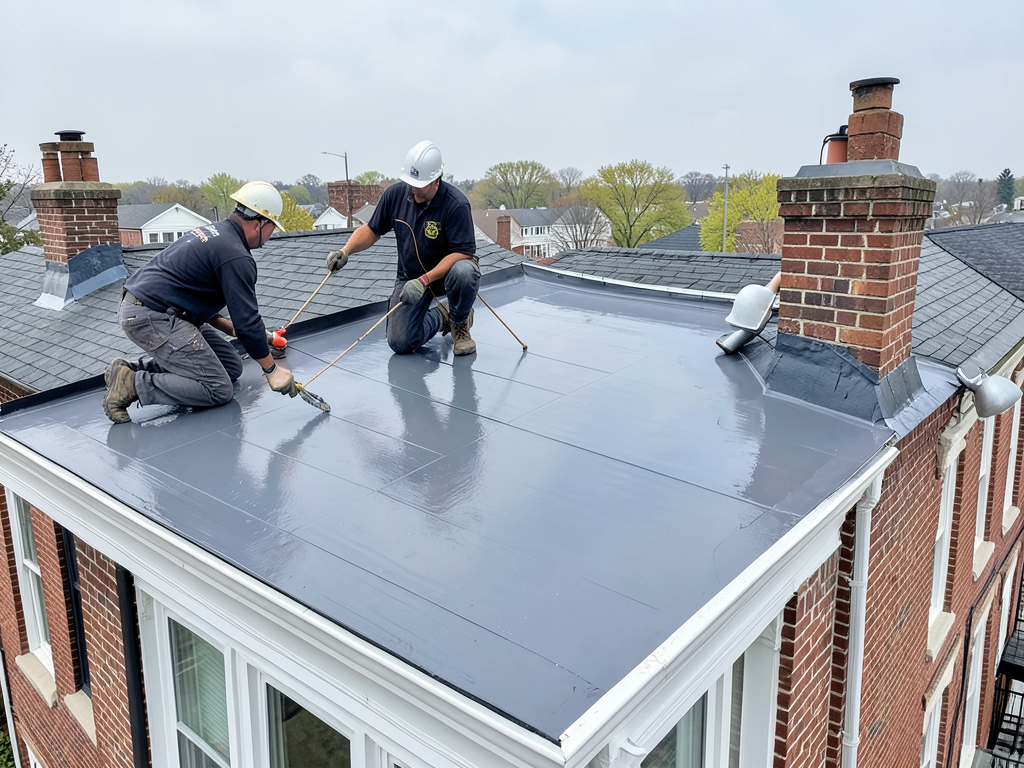
Cold-applied roofing works by rolling or spraying a polymer-modified bitumen or acrylic coating directly onto the roof deck. No propane tanks. No hot asphalt kettles. No open flames near shared walls. The material bonds to the surface and cures to form a seamless waterproof barrier. Installation crews can work in narrow Philadelphia alleyways without worrying about heat or fumes spreading to adjacent properties. The Best Local Roofing Companies for Luxury Homes on the Main Line.
Philadelphia building code allows cold-applied systems on low-slope roofs under L&I guidelines. The material meets Class A fire ratings and can be installed over existing modified bitumen or built-up roofs. Most cold-applied products cure in 24 to 48 hours depending on humidity and temperature. The process produces minimal odor compared to hot-mopped asphalt, making it safer for residents during installation.
Why Cold Applied Roofing is the Standard for Philly Rowhomes
Philadelphia’s dense rowhome neighborhoods create unique safety challenges. Torch-down roofing requires open flames to heat and adhere the membrane. In a city where homes share walls and sit just feet apart, that flame can easily ignite wooden cornices, soffits, or power lines. Cold-applied systems remove that risk entirely. Roofing Pittsburgh.
Installation teams can carry cold-applied materials through narrow alleyways without heavy propane tanks or hot asphalt kettles. This reduces equipment weight and eliminates the need for fire watch personnel. The process also produces less noise and fewer fumes than traditional methods, making it more neighbor-friendly in tight urban blocks.
Cold-applied membranes bond directly to the roof deck or over existing roofing. The material cures to form a seamless barrier that resists ponding water and UV damage. Many products carry a 20-year manufacturer warranty when installed by certified crews. The process meets Philadelphia L&I requirements for low-slope roofing and can be used on historic district homes with proper permits. Roofing Allentown.
Fire insurance providers often offer lower premiums for flame-free roofing installations. This can offset the slightly higher material cost of cold-applied systems. For Philadelphia rowhome owners, the combination of safety, compliance, and potential insurance savings makes cold-applied roofing the standard choice.
Cold Applied vs. Torch-Down: A Comparative Analysis
| Feature | Cold Applied | Torch-Down |
|---|---|---|
| Fire Risk | None – no open flames | High – propane torch required |
| Installation Speed | 1-2 days typical | 2-3 days typical |
| VOC Emissions | Low to minimal | High – hot asphalt fumes |
| Material Cost | $4.50 – $7.00 per sq ft | $3.50 – $6.00 per sq ft |
| Lifespan | 20-30 years | 15-25 years |
| Neighborhood Impact | Minimal noise and odor | Strong asphalt odor, smoke |
The Installation Process: From Parapet to Scupper
Cold-applied roofing follows a systematic process that ensures complete waterproofing. The first step involves cleaning the existing roof surface to remove dirt, debris, and loose material. Crews use pressure washers and scrapers to create a clean substrate. Any damaged decking gets replaced before proceeding.
Next comes surface priming. A bonding primer helps the cold-applied membrane adhere to the roof deck. For existing modified bitumen roofs, a specialized primer creates a chemical bond between old and new layers. The primer dries within 30 to 60 minutes depending on weather conditions.
The membrane application follows. For liquid-applied systems, crews spray or roll the coating in even passes. Self-adhered sheets get rolled out and pressed into place. Flashing details around chimneys, vents, and parapet walls use reinforcing fabric embedded in the coating. This creates waterproof transitions at all roof penetrations.
Curing time varies by product and weather. Most cold-applied systems achieve full cure in 24 to 48 hours. During this period, the roof should not be walked on or exposed to heavy rain. Once cured, the surface forms a seamless membrane that resists ponding water and UV damage.
Final inspection includes checking all seams, flashings, and transitions. Crews look for bubbles, gaps, or areas where the membrane did not bond properly. Any defects get repaired before the project is considered complete. The result is a watertight roof system that meets Philadelphia building code requirements. EPA information on VOC emissions.
Navigating Philadelphia Building Codes for Flat Roofs
Philadelphia Department of Licenses and Inspections requires permits for all flat roof replacements. Cold-applied systems fall under the same category as modified bitumen roofing. The application must show roof area, material specifications, and contractor licensing information. Historic district properties need additional approval from the Philadelphia Historical Commission. How Much Does a Full Roof Replacement Actually Cost in Philadelphia Right Now.
Building code mandates Class A fire ratings for all low-slope roofing materials. Cold-applied membranes meet this requirement when installed per manufacturer specifications. The material must also provide adequate insulation value per current energy codes. Most products achieve an R-value of 2.5 to 3.0 per inch of thickness.
Philadelphia’s stormwater management regulations affect roof design. Flat roofs must include proper drainage through internal drains or scuppers. The drainage system must handle 100-year storm events as defined by the Philadelphia Water Department. Cold-applied membranes can be installed over existing drains if the surface is properly prepared.
Inspections occur at multiple stages. The initial inspection verifies permit compliance and site safety. A final inspection checks the completed installation against code requirements. Inspectors look for proper flashing details, adequate drainage, and material certification. Failure to pass inspection can result in fines or required rework.
Insurance considerations also matter. Some carriers offer premium discounts for flame-free roofing installations. The reduction can offset the higher material cost of cold-applied systems. Property owners should check with their insurance provider before selecting a roofing method.
Cost Factors and ROI for Philadelphia Homeowners
Cold-applied roofing costs vary based on roof size, existing conditions, and material selection. A typical Philadelphia rowhome roof measuring 15 by 40 feet costs between $3,600 and $5,400 for materials and installation. This compares to $2,800 to $4,800 for torch-down roofing on the same size roof.
Material costs drive the price difference. Cold-applied membranes cost $1.50 to $2.50 more per square foot than traditional modified bitumen. The price includes primer, reinforcement fabric, and specialized adhesives. Labor costs remain similar between both methods since installation time is comparable.
Long-term value comes from durability and energy efficiency. Cold-applied systems typically last 20 to 30 years with proper maintenance. The seamless membrane resists UV damage and ponding water better than torch-down. Many products carry reflective coatings that reduce cooling costs by 10 to 15 percent.
Insurance savings can offset the higher initial cost. Some carriers offer 5 to 10 percent premium reductions for flame-free roofing installations. Over a 20-year lifespan, these savings can total $500 to $1,000. The exact amount depends on the insurance provider and property location.
Maintenance costs also favor cold-applied systems. The seamless membrane eliminates seams where leaks typically develop. Repairs involve cleaning and re-coating rather than replacing entire sections. Annual maintenance costs average $200 to $400 compared to $300 to $500 for torch-down roofs.
Property resale value may increase with cold-applied roofing. Buyers appreciate the safety benefits and lower maintenance requirements. The system also appeals to environmentally conscious buyers due to its energy efficiency and low VOC emissions during installation.
Common Questions About Cold Applied Roofing
Many Philadelphia homeowners ask if cold-applied roofing works on historic district homes. The answer is yes, with proper permits. The Philadelphia Historical Commission reviews applications to ensure the installation does not alter visible exterior features. Cold-applied systems can be installed without changing the roofline or adding equipment. Why More Homeowners in Manayunk Are Switching to Metal Roofing.
Another frequent question concerns warranty coverage. Most cold-applied manufacturers offer 20-year warranties when installed by certified contractors. The warranty covers material defects and delamination but not damage from severe weather or improper maintenance. Some contractors offer additional workmanship warranties of 5 to 10 years.
Property owners also wonder about installation timing. Cold-applied systems can be installed year-round in Philadelphia. The material cures properly in temperatures above 40 degrees Fahrenheit. Summer installations cure faster but require more attention to prevent bubbling from trapped moisture.
Noise during installation concerns some residents. Cold-applied roofing produces minimal noise compared to torch-down. The process involves rolling or spraying rather than torching and mopping. Most installations complete within two days, causing minimal disruption to the household.
Finally, many ask about compatibility with existing roofing. Cold-applied membranes can be installed over most single-ply and modified bitumen roofs. The existing surface must be clean and structurally sound. Built-up roofs with multiple layers may need removal before installation.
Maintenance Tips for Cold Applied Flat Roofs
Regular maintenance extends the life of any roofing system. For cold-applied roofs, annual inspections catch problems before they become major leaks. Inspections should check for ponding water, membrane damage, and flashing deterioration. Pay special attention to areas around vents, chimneys, and parapet walls.
Cleaning removes debris that can trap moisture against the membrane. Use a soft-bristle broom or leaf blower to clear leaves, branches, and dirt. Avoid pressure washing as high pressure can damage the coating. Clean the roof surface at least twice per year, more often if trees overhang the building.
Small repairs prevent larger problems. Seal minor cracks or blisters with compatible patching compound. Cut away damaged sections and apply new membrane material. Always clean and prime the repair area before applying patches. For extensive damage, contact a professional roofer rather than attempting DIY repairs.
Drainage maintenance prevents ponding water. Keep internal drains and scuppers clear of debris. Check that downspouts direct water away from the foundation. Standing water can degrade the membrane over time, reducing the roof’s effective lifespan by several years.
Trim overhanging tree branches to prevent damage from falling limbs and reduce debris accumulation. Branches that touch the roof can abrade the membrane surface during wind. Keep at least three feet of clearance between trees and the roof edge.
Document all maintenance activities. Keep records of inspections, repairs, and cleaning dates. This information helps track roof condition over time and supports warranty claims if needed. Many contractors offer maintenance agreements that include scheduled inspections and priority service.
Why Philadelphia Rowhome Owners Choose Cold Applied Roofing
Philadelphia’s unique urban environment makes cold-applied roofing the logical choice for rowhome owners. The flame-free installation eliminates fire risks in neighborhoods where homes share walls. The low odor process keeps neighbors comfortable during construction. The seamless membrane provides superior waterproofing for the city’s aging housing stock.
Local building codes support cold-applied systems when installed per manufacturer specifications. The material meets Class A fire ratings and energy efficiency requirements. Historical Commission approval makes it suitable for use in all Philadelphia neighborhoods. The system’s durability matches or exceeds traditional roofing methods.
Insurance considerations often tip the decision. Many carriers offer premium discounts for flame-free installations. The potential savings over a 20-year lifespan can offset the higher initial material cost. Property owners should check with their insurance provider before selecting a roofing method.
Atlas Roofing Philadelphia has installed hundreds of cold-applied roofs throughout the city. Our crews understand the specific challenges of Philadelphia rowhomes. We navigate permit requirements, coordinate with neighbors, and complete installations with minimal disruption. Our work comes with manufacturer warranties and our own workmanship guarantee.
Ready to make your rowhome safer and more durable? Call (267) 344-1222 today to schedule your inspection. Our team will evaluate your current roof and recommend the best cold-applied solution for your specific needs. Don’t wait until the next storm reveals hidden damage.
Frequently Asked Questions
How long does cold applied roofing last?
Cold applied roofing systems typically last 20 to 30 years with proper maintenance. The exact lifespan depends on weather exposure, roof maintenance, and the quality of installation. Many manufacturers offer 20-year warranties on their cold applied products.
Is cold applied roofing more expensive than traditional methods?
Cold applied roofing costs $1.50 to $2.50 more per square foot than traditional torch-down roofing. For a typical Philadelphia rowhome, this adds $600 to $1,200 to the total project cost. However, potential insurance savings and longer lifespan can offset this difference over time.
Can cold applied roofing be installed over my existing roof?
Yes, cold applied roofing can often be installed over existing modified bitumen or single-ply roofs. The existing surface must be clean, dry, and structurally sound. Built-up roofs with multiple layers may need removal before installation. A professional inspection determines compatibility.
How long does installation take?
Most cold applied roofing installations on Philadelphia rowhomes take 1 to 2 days. The process includes surface preparation, priming, membrane application, and initial curing. Full cure requires 24 to 48 hours before the roof can bear foot traffic or heavy rain.
Does cold applied roofing meet Philadelphia building codes?
Yes, cold applied roofing meets all Philadelphia L&I requirements for low-slope roofing. The material must achieve Class A fire ratings and meet energy efficiency standards. Proper permits are required, and installations in historic districts need additional Historical Commission approval.
You may also find this helpful. Finding and Fixing Stubborn Leaks Around Your Manayunk Dormer Windows.
{
“@context”: “https://schema.org”,
“@type”: “BlogPosting”,
“headline”: “The Safest Way to Seal Your Rowhome Roof Without Using a Blowtorch”,
“description”: “Learn why cold-applied roofing is the safest flame-free solution for Philadelphia rowhomes. No fire risk, no odors, and full L&I compliance.”,
“wordCount”: 2194,
“datePublished”: “2026-03-20T12:37:00.000Z”,
“dateModified”: “2026-03-20T12:37:00.000Z”,
“inLanguage”: “en-US”,
“mainEntityOfPage”: {
“@type”: “WebPage”,
“@id”: “https://atlasroofingphiladelphia.com”
},
“publisher”: {
“@type”: “LocalBusiness”,
“name”: “Atlas Roofing Philadelphia”,
“url”: “https://atlasroofingphiladelphia.com”
},
“author”: {
“@type”: “Organization”,
“name”: “Atlas Roofing Philadelphia”,
“url”: “https://atlasroofingphiladelphia.com”
},
“image”: {
“@type”: “ImageObject”,
“url”: “https://atlasroofingphiladelphia.com/wp-content/uploads/2026/03/the-safest-way-to-seal-your-rowhome-roof-without-u-1.png”
}
}
{
“@context”: “https://schema.org”,
“@type”: “RoofingContractor”,
“name”: “Atlas Roofing Philadelphia”,
“url”: “https://atlasroofingphiladelphia.com”,
“address”: {
“@type”: “PostalAddress”,
“addressLocality”: “Philadelphia”
},
“areaServed”: {
“@type”: “City”,
“name”: “Philadelphia”
}
}
{
“@context”: “https://schema.org”,
“@type”: “FAQPage”,
“mainEntity”: [
{
“@type”: “Question”,
“name”: “How long does cold applied roofing last?”,
“acceptedAnswer”: {
“@type”: “Answer”,
“text”: “Cold applied roofing systems typically last 20 to 30 years with proper maintenance. The exact lifespan depends on weather exposure, roof maintenance, and the quality of installation. Many manufacturers offer 20-year warranties on their cold applied products.”
}
},
{
“@type”: “Question”,
“name”: “Is cold applied roofing more expensive than traditional methods?”,
“acceptedAnswer”: {
“@type”: “Answer”,
“text”: “Cold applied roofing costs $1.50 to $2.50 more per square foot than traditional torch-down roofing. For a typical Philadelphia rowhome, this adds $600 to $1,200 to the total project cost. However, potential insurance savings and longer lifespan can offset this difference over time.”
}
},
{
“@type”: “Question”,
“name”: “Can cold applied roofing be installed over my existing roof?”,
“acceptedAnswer”: {
“@type”: “Answer”,
“text”: “Yes, cold applied roofing can often be installed over existing modified bitumen or single-ply roofs. The existing surface must be clean, dry, and structurally sound. Built-up roofs with multiple layers may need removal before installation. A professional inspection determines compatibility.”
}
},
{
“@type”: “Question”,
“name”: “How long does installation take?”,
“acceptedAnswer”: {
“@type”: “Answer”,
“text”: “Most cold applied roofing installations on Philadelphia rowhomes take 1 to 2 days. The process includes surface preparation, priming, membrane application, and initial curing. Full cure requires 24 to 48 hours before the roof can bear foot traffic or heavy rain.”
}
},
{
“@type”: “Question”,
“name”: “Does cold applied roofing meet Philadelphia building codes?”,
“acceptedAnswer”: {
“@type”: “Answer”,
“text”: “Yes, cold applied roofing meets all Philadelphia L&I requirements for low-slope roofing. The material must achieve Class A fire ratings and meet energy efficiency standards. Proper permits are required, and installations in historic districts need additional Historical Commission approval.”
}
}
]
}
{
“@context”: “https://schema.org”,
“@type”: “BreadcrumbList”,
“itemListElement”: [
{
“@type”: “ListItem”,
“position”: 1,
“name”: “Home”,
“item”: “https://atlasroofingphiladelphia.com”
},
{
“@type”: “ListItem”,
“position”: 2,
“name”: “Blog”,
“item”: “https://atlasroofingphiladelphia.com/blog”
},
{
“@type”: “ListItem”,
“position”: 3,
“name”: “The Safest Way to Seal Your Rowhome Roof Without Using a Blowtorch”
}
]
}
{
“@context”: “https://schema.org”,
“@type”: “Service”,
“serviceType”: “Roofing”,
“provider”: {
“@type”: “LocalBusiness”,
“name”: “Atlas Roofing Philadelphia”,
“url”: “https://atlasroofingphiladelphia.com”
},
“areaServed”: {
“@type”: “City”,
“name”: “Philadelphia”
},
“description”: “Learn why cold-applied roofing is the safest flame-free solution for Philadelphia rowhomes. No fire risk, no odors, and full L&I compliance.”
}