
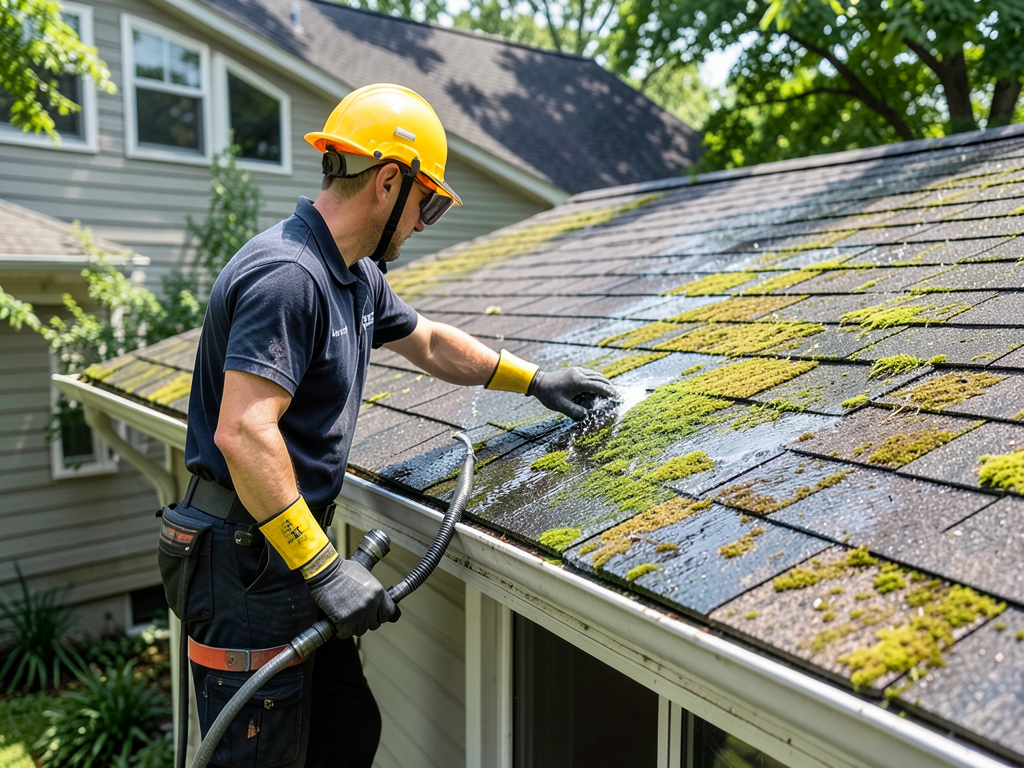
How to Safely Remove the Green Moss Growing on Your Shady Mt. Airy Roof
Green moss on your Mt. Airy roof isn’t just an eyesore—it’s a warning sign that could lead to expensive damage if left untreated. The dense tree canopy and humid Delaware Valley climate create perfect conditions for moss to thrive on shaded roof surfaces. This guide explains exactly how to remove moss safely without damaging your asphalt shingles and how to prevent it from coming back. Asphalt Roofing Manufacturers Association.
Why Mt. Airy Homes Battle Moss More Than Other Philadelphia Neighborhoods
Mt. Airy’s unique geography makes it particularly vulnerable to moss growth. The neighborhood sits at a higher elevation with abundant mature oak and maple trees creating extensive shade coverage. These conditions combined with Philadelphia’s average annual humidity of 68% create an ideal environment for moss spores to establish themselves on north-facing roof slopes.
Moss typically appears as a thick, velvety green growth that feels spongy to the touch. Unlike black algae which creates dark streaks, moss forms raised patches that can lift and separate asphalt shingles. This lifting action allows water to seep underneath, causing wood rot and potential leaks during Philadelphia’s freeze-thaw cycles. EPA.
The Wissahickon Creek watershed area, including Mt. Airy, experiences more moisture retention in the air compared to other parts of the city. This microclimate effect means homes in zip codes 19119 and 19127 often see moss growth appear 2-3 years earlier than similar homes in Northeast Philadelphia or South Philly. How to Stop Your South Philly Rowhome Roof from Leaking Every Time it Rains.
The Hidden Dangers of DIY Moss Removal Methods
Many homeowners attempt to remove moss using pressure washers or harsh chemicals, but these methods often cause more damage than the moss itself. High-pressure washing can strip the protective granules from asphalt shingles, reducing their lifespan by 30-40% and voiding manufacturer warranties. Why More Homeowners in Manayunk Are Switching to Metal Roofing.
Common DIY mistakes include:
- Using undiluted bleach which can discolor shingles and kill surrounding vegetation
- Scraping moss with metal tools that damage the shingle surface
- Ignoring the underlying moisture problem that allowed moss to grow
- Removing moss without addressing the root system that extends into shingle cracks
The Pennsylvania Uniform Construction Code requires that any roof cleaning method must not compromise the structural integrity of the roofing system. This means pressure washing above 1,500 PSI is prohibited on asphalt shingles as it violates manufacturer installation guidelines. The Best Local Roofing Companies for Luxury Homes on the Main Line.
Professional Soft Washing: The Safe Solution for Mt. Airy Homes
Professional soft washing uses specialized equipment that applies cleaning solutions at pressures below 500 PSI—similar to a garden hose. This method effectively kills moss without damaging shingles. The process typically involves:
- Inspection and Assessment
Technicians examine roof pitch, shingle type, and moss severity to determine the appropriate treatment solution.
- Plant Protection
Surrounding landscaping receives protective covering and pre-treatment with neutralizing agents.
- Application of Cleaning Solution
EPA-registered biocides containing quaternary ammonium compounds are applied at specific dilution ratios.
- dwell Time
Solution remains on the roof for 15-20 minutes to penetrate moss root systems.
- Rinse and Neutralization
Low-pressure rinse removes dead moss while neutralizing agents protect the environment.
The cleaning solution typically contains sodium hypochlorite at concentrations between 3-6%, which is strong enough to kill moss but safe for properly installed asphalt shingles. This concentration follows guidelines from the Asphalt Roofing Manufacturers Association (ARMA). Roofing Pittsburgh.
Philadelphia Climate Factors That Accelerate Moss Growth
Philadelphia’s climate creates unique challenges for roof maintenance. The city experiences approximately 41 inches of rainfall annually, with the highest precipitation occurring during summer months when temperatures and humidity peak simultaneously.
Temperature fluctuations in the Delaware Valley cause expansion and contraction of roofing materials. When moss is present, it holds moisture against the shingle surface, accelerating deterioration during these thermal cycles. The National Weather Service reports that Philadelphia experiences an average of 22 days per year with temperatures below freezing, creating freeze-thaw stress on compromised roofing systems. Roofing Allentown.
Air quality also plays a role. Philadelphia’s urban environment contains airborne particulates that settle on roofs and provide nutrients for moss growth. The combination of moisture, nutrients, and shade creates a perfect storm for moss establishment.
Cost Factors for Moss Removal in the Philadelphia Metro Area
Moss removal costs vary based on several factors specific to Philadelphia homes. The average roof in Mt. Airy ranges from 1,500 to 2,500 square feet, with removal costs typically between $0.20 to $0.40 per square foot.
Key cost factors include:
| Factor | Impact on Cost | Philadelphia Specific Notes |
|---|---|---|
| Roof Pitch | Higher pitch = Higher cost | Mt. Airy homes often have 6:12 to 8:12 pitches requiring safety equipment |
| Moss Severity | Light vs. Heavy growth | Heavy growth may require multiple treatments common in heavily wooded areas |
| Accessibility | Difficult access = Higher cost | Narrow Mt. Airy streets may require specialized equipment |
| Shingle Type | Delicate materials cost more | Historic slate or cedar shake requires specialized treatment |
Most professional services include a 6-month guarantee against rapid moss regrowth when preventative measures are implemented. This guarantee is particularly valuable given Philadelphia’s climate conditions.
Long-Term Prevention Strategies for Philadelphia Homes
Preventing moss recurrence requires addressing the underlying conditions that allowed it to grow. The most effective strategy combines physical modifications with chemical treatments.
Zinc or copper strips installed near the roof peak release metal ions during rainfall that inhibit moss growth. These strips typically cost $300-$500 for an average Philadelphia home and last 15-20 years. The Philadelphia Water Department approves these treatments as they do not significantly impact stormwater quality.
Tree management is crucial in Mt. Airy where mature trees provide the shade moss needs. Professional arborists recommend pruning branches to maintain at least 10 feet of clearance from roof surfaces. This reduces shade while improving air circulation that helps roofs dry faster after rainfall.
Annual inspections can identify early moss growth before it becomes established. Look for small green patches in late spring, particularly on north-facing slopes. Early intervention costs significantly less than treating established moss colonies.
Identifying When Moss Removal Requires Professional Help
While small patches might seem manageable, certain conditions indicate you need professional intervention. If moss covers more than 30% of your roof surface, DIY methods become ineffective and potentially dangerous.
Consider professional help when:
- Your roof pitch exceeds 7:12 (steep slopes increase fall risk)
- You notice water stains on interior ceilings or walls
- Moss growth extends under shingles or into roof valleys
- Your home is in a historic district with specific preservation requirements
Philadelphia’s building code requires licensed contractors for any work that could compromise roof waterproofing. This includes moss removal when the growth has lifted shingles or created gaps in the roofing system.. Read more about Common DIY Roofing Mistakes That End Up Costing Philadelphia Homeowners Thousands.
Environmental Considerations for Philadelphia Residents
Philadelphia’s environmental regulations impact how moss removal must be conducted. The city’s stormwater management regulations require that cleaning solutions not enter storm drains or affect local waterways.
Professional services use biodegradable cleaning agents that break down within 48 hours. These solutions are pH-neutral when properly diluted, protecting both your landscaping and the Schuylkill and Delaware River ecosystems.
Many Mt. Airy residents are concerned about chemical use near Wissahickon Creek. Reputable companies can provide Material Safety Data Sheets (MSDS) showing environmental impact ratings and demonstrate containment procedures that prevent runoff.
Common Moss vs. Algae Confusion in Philadelphia
Philadelphia homeowners often mistake black algae for moss. Black algae, caused by Gloeocapsa magma, creates dark streaks but does not lift shingles like moss does. This distinction matters because treatment methods differ significantly.
Moss identification checklist:
- Raised, three-dimensional growth that feels spongy
- Bright to dark green coloration
- Visible root structures when partially removed
- Prefers shaded areas on north-facing slopes
Algae identification checklist:
- Flat, two-dimensional discoloration
- Dark brown to black appearance
- No raised texture or sponginess
- Appears as streaks rather than patches
Understanding this difference helps you choose the correct treatment and avoid wasting money on inappropriate solutions.
Seasonal Timing for Moss Removal in Philadelphia
Timing your moss removal project affects both effectiveness and cost. Philadelphia’s weather patterns create optimal windows for treatment throughout the year.
Spring (April-May) offers moderate temperatures and adequate rainfall to help cleaning solutions work effectively. However, this is also the busiest season for roofing contractors, potentially increasing wait times.
Fall (September-October) provides another excellent window. Temperatures are cooler, reducing the risk of cleaning solution evaporation before it can work. Fall treatment also prepares your roof for winter snow loads.
Summer heat can cause cleaning solutions to evaporate too quickly, reducing effectiveness. Winter treatments are generally avoided due to freezing temperatures that can prevent proper solution application.
Insurance and Warranty Considerations
Many Philadelphia homeowners don’t realize that moss growth can affect insurance claims and roofing warranties. Insurance companies may deny claims for water damage if moss was present and untreated for extended periods.
Roofing material manufacturers typically require regular maintenance to keep warranties valid. Some warranties specifically exclude damage from biological growth if preventative treatments weren’t performed. Documentation of professional moss removal can support warranty claims.
The Pennsylvania Insurance Department recommends documenting roof conditions annually with photos. This documentation can prove valuable if you need to file claims related to storm damage or leaks.
DIY Safety Precautions for Minor Moss Issues
If you decide to tackle small moss patches yourself, follow these safety protocols. First, never work on a wet roof—wait at least 24 hours after rainfall for surfaces to dry completely.
Use a safety harness rated for roof work, even on single-story homes. Philadelphia’s older homes often have steeper pitches than newer construction, increasing fall risks.
Wear non-slip shoes with rubber soles and use a safety rope anchored to a secure point. Never lean over the roof edge to reach distant areas—this is when most accidents occur.
Choose cleaning solutions specifically formulated for roofs. Avoid household bleach mixtures which can damage shingles and surrounding plants. Look for products containing potassium salts of fatty acids or other roof-safe biocides.
The Cost of Inaction: What Moss Really Costs Philadelphia Homeowners
Ignoring moss growth can lead to costs far exceeding professional removal. A typical moss removal job for a Philadelphia home costs $300-$800, while replacing water-damaged roof decking can cost $1,500-$3,000.
Interior damage from moss-related leaks often includes:
- Ceiling repairs: $500-$2,000
- Insulation replacement: $1,000-$2,500
- Mold remediation: $2,000-$6,000
- Electrical repairs from water damage: $300-$1,500
These costs multiply quickly, especially in Philadelphia’s older housing stock where water damage can affect multiple levels of a home.
Choosing the Right Professional for Your Mt. Airy Home
Not all roof cleaning services are equal. Look for contractors with specific experience in Philadelphia’s climate and building types. Ask about their soft washing certification and whether they follow ARMA guidelines.
Verify that contractors carry both general liability and workers’ compensation insurance. Philadelphia requires contractors to register with the city and display their license number on all marketing materials.
Get multiple estimates, but be wary of prices significantly below market rates. Extremely low prices often indicate inexperienced operators who may use damaging high-pressure methods or inadequate cleaning solutions.
Frequently Asked Questions
How long does professional moss removal take?
Most Philadelphia homes require 2-4 hours for complete moss removal, depending on roof size and moss severity. This includes setup, treatment, and cleanup.
Will moss grow back after professional removal?
Without preventative measures, moss can return in 12-24 months. Professional services often include zinc strip installation or other prevention strategies that extend this timeframe to 5-7 years.
Is moss removal safe for my plants and pets?
Professional services use plant-safe solutions and protective measures. Most cleaning agents break down within 48 hours and are safe for pets once dry. Always ask about specific product safety if you have concerns.
Can I stay in my home during moss removal?
Yes, moss removal doesn’t require you to leave your home. However, keep pets and children indoors during the actual cleaning process for safety.
How can I tell if moss has damaged my roof?
Look for lifted or curling shingles, water stains on ceilings, or visible gaps where moss was removed. A professional inspection can identify hidden damage using moisture meters and thermal imaging.
Does homeowner’s insurance cover moss removal?
Standard policies don’t cover routine maintenance like moss removal. However, if moss-related damage occurs during a covered event, insurance may cover repairs if you can prove regular maintenance was performed.
What’s the difference between moss and lichen?
Lichen is a combination of algae and fungi that creates a flat, crusty growth. Unlike moss, lichen doesn’t lift shingles but can still retain moisture against the roof surface. Treatment methods are similar but require different cleaning solutions.
How often should I have my roof inspected for moss?
Annual inspections are recommended for Philadelphia homes, especially those in wooded areas like Mt. Airy. Spring inspections can catch early growth before it becomes established.
Can moss grow on any type of roofing material?
Moss prefers porous surfaces like asphalt shingles, wood shakes, and concrete tiles. Metal and slate roofs are less susceptible but can still develop moss in severe shade conditions.
Call (267) 344-1222 Today to Schedule Your Inspection
Don’t let moss damage your Mt. Airy home. Call (267) 344-1222 today to schedule a professional inspection. Our certified technicians understand Philadelphia’s unique climate challenges and use only ARMA-compliant soft washing methods that protect your roof warranty.
Pick up the phone and call (267) 344-1222 before the next storm hits. Early intervention prevents costly damage and extends your roof’s lifespan by years. We serve all Philadelphia neighborhoods with the expertise that comes from 15+ years of local experience.
Remember, moss removal isn’t just about appearance—it’s about protecting your home investment. Call (267) 344-1222 now for a free estimate and let our experts show you why we’re Philadelphia’s trusted choice for safe, effective roof cleaning.
You may also find this helpful. The Only Gutter Guards That Actually Work with the Massive Trees in Wissahickon.
{
“@context”: “https://schema.org”,
“@type”: “BlogPosting”,
“headline”: “How to Safely Remove the Green Moss Growing on Your Shady Mt. Airy Roof”,
“description”: “Learn how to safely remove green moss from your Mt. Airy roof without damaging shingles. Expert guide covering soft washing, prevention, and Philadelphia-specific solutions.”,
“wordCount”: 2293,
“datePublished”: “2026-03-27T12:56:00.000Z”,
“dateModified”: “2026-03-27T12:56:00.000Z”,
“inLanguage”: “en-US”,
“mainEntityOfPage”: {
“@type”: “WebPage”,
“@id”: “https://atlasroofingphiladelphia.com”
},
“publisher”: {
“@type”: “LocalBusiness”,
“name”: “Atlas Roofing Philadelphia”,
“url”: “https://atlasroofingphiladelphia.com”
},
“author”: {
“@type”: “Organization”,
“name”: “Atlas Roofing Philadelphia”,
“url”: “https://atlasroofingphiladelphia.com”
},
“image”: {
“@type”: “ImageObject”,
“url”: “https://atlasroofingphiladelphia.com/wp-content/uploads/2026/03/how-to-safely-remove-the-green-moss-growing-on-you-1.png”
}
}
{
“@context”: “https://schema.org”,
“@type”: “RoofingContractor”,
“name”: “Atlas Roofing Philadelphia”,
“url”: “https://atlasroofingphiladelphia.com”,
“address”: {
“@type”: “PostalAddress”,
“addressLocality”: “Philadelphia”
},
“areaServed”: {
“@type”: “City”,
“name”: “Philadelphia”
}
}
{
“@context”: “https://schema.org”,
“@type”: “FAQPage”,
“mainEntity”: [
{
“@type”: “Question”,
“name”: “How long does professional moss removal take?”,
“acceptedAnswer”: {
“@type”: “Answer”,
“text”: “Most Philadelphia homes require 2-4 hours for complete moss removal, depending on roof size and moss severity. This includes setup, treatment, and cleanup.”
}
},
{
“@type”: “Question”,
“name”: “Will moss grow back after professional removal?”,
“acceptedAnswer”: {
“@type”: “Answer”,
“text”: “Without preventative measures, moss can return in 12-24 months. Professional services often include zinc strip installation or other prevention strategies that extend this timeframe to 5-7 years.”
}
},
{
“@type”: “Question”,
“name”: “Is moss removal safe for my plants and pets?”,
“acceptedAnswer”: {
“@type”: “Answer”,
“text”: “Professional services use plant-safe solutions and protective measures. Most cleaning agents break down within 48 hours and are safe for pets once dry. Always ask about specific product safety if you have concerns.”
}
},
{
“@type”: “Question”,
“name”: “Can I stay in my home during moss removal?”,
“acceptedAnswer”: {
“@type”: “Answer”,
“text”: “Yes, moss removal doesn’t require you to leave your home. However, keep pets and children indoors during the actual cleaning process for safety.”
}
},
{
“@type”: “Question”,
“name”: “How can I tell if moss has damaged my roof?”,
“acceptedAnswer”: {
“@type”: “Answer”,
“text”: “Look for lifted or curling shingles, water stains on ceilings, or visible gaps where moss was removed. A professional inspection can identify hidden damage using moisture meters and thermal imaging.”
}
},
{
“@type”: “Question”,
“name”: “Does homeowner’s insurance cover moss removal?”,
“acceptedAnswer”: {
“@type”: “Answer”,
“text”: “Standard policies don’t cover routine maintenance like moss removal. However, if moss-related damage occurs during a covered event, insurance may cover repairs if you can prove regular maintenance was performed.”
}
},
{
“@type”: “Question”,
“name”: “What’s the difference between moss and lichen?”,
“acceptedAnswer”: {
“@type”: “Answer”,
“text”: “Lichen is a combination of algae and fungi that creates a flat, crusty growth. Unlike moss, lichen doesn’t lift shingles but can still retain moisture against the roof surface. Treatment methods are similar but require different cleaning solutions.”
}
},
{
“@type”: “Question”,
“name”: “How often should I have my roof inspected for moss?”,
“acceptedAnswer”: {
“@type”: “Answer”,
“text”: “Annual inspections are recommended for Philadelphia homes, especially those in wooded areas like Mt. Airy. Spring inspections can catch early growth before it becomes established.”
}
},
{
“@type”: “Question”,
“name”: “Can moss grow on any type of roofing material?”,
“acceptedAnswer”: {
“@type”: “Answer”,
“text”: “Moss prefers porous surfaces like asphalt shingles, wood shakes, and concrete tiles. Metal and slate roofs are less susceptible but can still develop moss in severe shade conditions.”
}
}
]
}
{
“@context”: “https://schema.org”,
“@type”: “HowTo”,
“name”: “Professional Moss Removal Process”,
“step”: [
{
“@type”: “HowToStep”,
“position”: 1,
“name”: “Inspection and Assessment”,
“text”: “Technicians examine roof pitch, shingle type, and moss severity to determine the appropriate treatment solution.”
},
{
“@type”: “HowToStep”,
“position”: 2,
“name”: “Plant Protection”,
“text”: “Surrounding landscaping receives protective covering and pre-treatment with neutralizing agents.”
},
{
“@type”: “HowToStep”,
“position”: 3,
“name”: “Application of Cleaning Solution”,
“text”: “EPA-registered biocides containing quaternary ammonium compounds are applied at specific dilution ratios.”
},
{
“@type”: “HowToStep”,
“position”: 4,
“name”: “dwell Time”,
“text”: “Solution remains on the roof for 15-20 minutes to penetrate moss root systems.”
},
{
“@type”: “HowToStep”,
“position”: 5,
“name”: “Rinse and Neutralization”,
“text”: “Low-pressure rinse removes dead moss while neutralizing agents protect the environment.”
}
],
“image”: “https://atlasroofingphiladelphia.com/wp-content/uploads/2026/03/how-to-safely-remove-the-green-moss-growing-on-you-1.png”
}
{
“@context”: “https://schema.org”,
“@type”: “BreadcrumbList”,
“itemListElement”: [
{
“@type”: “ListItem”,
“position”: 1,
“name”: “Home”,
“item”: “https://atlasroofingphiladelphia.com”
},
{
“@type”: “ListItem”,
“position”: 2,
“name”: “Blog”,
“item”: “https://atlasroofingphiladelphia.com/blog”
},
{
“@type”: “ListItem”,
“position”: 3,
“name”: “How to Safely Remove the Green Moss Growing on Your Shady Mt. Airy Roof”
}
]
}
{
“@context”: “https://schema.org”,
“@type”: “Service”,
“serviceType”: “Roofing”,
“provider”: {
“@type”: “LocalBusiness”,
“name”: “Atlas Roofing Philadelphia”,
“url”: “https://atlasroofingphiladelphia.com”
},
“areaServed”: {
“@type”: “City”,
“name”: “Philadelphia”
},
“description”: “Learn how to safely remove green moss from your Mt. Airy roof without damaging shingles. Expert guide covering soft washing, prevention, and Philadelphia-specific solutions.”
}