
Understanding Snow Load Risks for Philadelphia Flat Roofs
Philadelphia winters can dump over 22 inches of snow in a single storm. That weight adds up fast. Fresh powder weighs about 3 to 5 pounds per square foot but packed snow can hit 20 pounds per square foot. Ice is even worse at 57 pounds per square foot. Most Philadelphia building codes require flat roofs to handle 20 to 25 pounds per square foot of live load. Older rowhomes built before modern codes may only be rated for 15 pounds per square foot. That means a heavy storm can push your roof past its limit before you even realize it. Philadelphia Building Code.
Philadelphia Building Code Requirements for Snow Loads
The Philadelphia Building Code follows the International Building Code Chapter 16 for snow loads. For most flat roofs in Philadelphia the minimum design live load is 20 pounds per square foot. However if your building was constructed before the 1980s or sits in a historic district like Society Hill you may have older timber joists rated for less. The Philadelphia Department of Licenses and Inspections (L&I) requires structural evaluations for any roof replacement or major renovation. That means if your flat roof is over 20 years old you need a structural engineer to confirm it can handle modern snow loads before installing new roofing. International Building Code Chapter 16.
Warning Signs Your Flat Roof is Overloaded
You need to act fast if you notice these red flags. Ceiling tiles or drywall suddenly sag or bow inward. New cracks appear in interior walls especially near corners. You hear loud creaking or popping sounds from above. Doors and windows that used to close easily now stick or jam. Water stains spread across ceilings even without recent rain. These are signs the roof deck is deflecting under weight. If you see any of these stop using the top floor and call a structural professional immediately.. Read more about How to Identify Early Signs of Roof Failure Before the Rain Starts in Holmesburg.
Factors That Reduce Your Roof’s Snow Capacity
Several hidden problems make your roof more vulnerable. Ponding water from clogged drains adds weight even before snow falls. Older Philadelphia rowhomes often have undersized timber joists spaced 24 inches apart instead of modern 16-inch spacing. Flat roofs without tapered insulation hold water and snow in low spots. Ice dams block drainage paths forcing meltwater to pool. Even the type of roofing membrane matters. EPDM and TPO can handle foot traffic for snow removal but built-up roofs with gravel ballast can hide soft spots that collapse under pressure. The Best Local Roofing Companies for Luxury Homes on the Main Line.
Safe Snow Removal vs. Structural Reinforcement
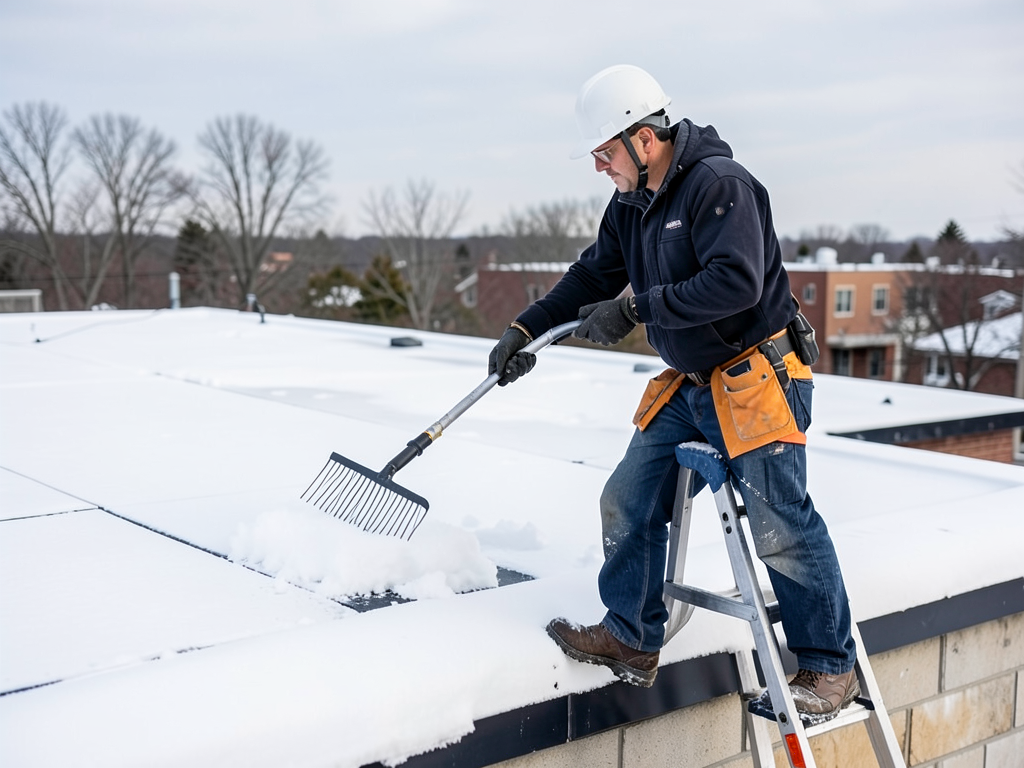
Never use metal shovels or ice picks on your flat roof. Those tools can puncture membranes and create leaks. Use plastic roof rakes with extension poles to pull snow down from the edges. Work from the ground if possible. If you must climb use a safety harness anchored to a structural beam. For heavy snow over 6 inches deep consider hiring professionals with snow load calculations. Sometimes the smarter move is not removal but reinforcement. Sistering new joists alongside old ones can boost capacity by 30 to 40 percent. Installing tapered insulation also helps water and snow drain to the edges instead of pooling.
Philadelphia Weather Patterns That Increase Risk
Philadelphia’s freeze-thaw cycles are brutal on flat roofs. Snow melts during the day then refreezes at night creating ice layers that trap more snow. The city’s proximity to the Atlantic means coastal storms can dump wet heavy snow that weighs up to 30 percent more than powder. The Schuylkill and Delaware rivers create microclimates where river effect snow bands drop extra inches on riverfront neighborhoods. If your building sits in a low area near these waterways you may see ponding even on roofs rated for standard loads.
Emergency Steps if Your Roof Starts to Fail
If you hear sudden cracking sounds or see ceiling tiles fall clear the area below immediately. Move furniture and valuables out of the room. Use buckets to catch any dripping water. Do not climb onto the roof yourself. Call (267) 344-1222 for emergency structural assessment. While waiting for help you can reduce interior damage by covering furniture with plastic and shutting off electricity to affected areas. If water is actively pouring in drill a small hole in the ceiling to relieve pressure and direct flow into a bucket. This prevents a total ceiling collapse.
Preventative Maintenance to Boost Snow Load Capacity
Start your winter prep in early fall. Clean all roof drains and scuppers so water flows freely. Inspect seams and flashings for cracks or gaps. Look for ponding areas after a heavy rain and mark them for repair. Install heat cables along roof edges to prevent ice dam formation. Check attic or top floor for signs of moisture or pest damage to joists. A structural engineer can use a moisture meter to test joist integrity before winter hits. These steps cost far less than emergency repairs after a collapse. Winter Roof Maintenance Tips.
Cost Comparison: Snow Removal vs. Structural Upgrades
| Service | Typical Cost Range | Long Term Benefit |
|---|---|---|
| Professional Snow Removal | $200 – $500 per visit | Immediate risk reduction |
| Joist Sistering | $15 – $25 per square foot | 30-40% capacity increase |
| Tapered Insulation | $3 – $6 per square foot | Better drainage prevents ponding |
| Emergency Tarping | $500 – $1500 | Stops interior water damage |
Philadelphia Neighborhoods Most at Risk
Historic districts like Society Hill and Old City have the oldest flat roofs. Many were built in the 1800s with timber joists never designed for modern snow loads. South Philadelphia rowhomes often share party walls but have flat roofs that trap snow in alley-facing yards. University City has newer construction but many buildings use lightweight steel joists that can buckle under concentrated loads. If your building is in any of these areas get a structural assessment before the first major storm. How to Stop Your South Philly Rowhome Roof from Leaking Every Time it Rains.
Call (267) 344-1222 Before the Next Storm Hits
Don’t wait until you see cracks in your ceiling. Atlas Roofing Philadelphia offers free structural roof assessments to check your snow load capacity. We inspect joists, drains, and membrane integrity. If your roof needs reinforcement we provide engineered solutions that meet Philadelphia code. Our emergency team is on call 24/7 for snow removal and structural stabilization. Call (267) 344-1222 today to schedule your inspection and get peace of mind this winter. A quick call now can prevent thousands in water damage later.
Roofing Pittsburgh.
Frequently Asked Questions
How much snow weight can my flat roof handle?
Most Philadelphia flat roofs are designed for 20 to 25 pounds per square foot. That equals about 4 to 5 inches of packed snow or 18 inches of fresh powder. Ice layers reduce capacity quickly.
Should I remove snow from my flat roof myself?
Only if the snow is light and you can reach it safely from the ground. Use plastic roof rakes not metal tools. For heavy snow hire professionals with safety equipment and load calculations.
What building code covers snow loads in Philadelphia?
The Philadelphia Building Code adopts the International Building Code Chapter 16. Minimum live load for flat roofs is 20 psf. Older buildings may have lower ratings and need structural evaluation.
How can I tell if my roof is overloaded?
Look for sagging ceiling tiles, new wall cracks, creaking sounds, or doors that stick. These are signs the roof deck is deflecting under weight. Stop using the space and call a professional immediately.
Does insurance cover snow collapse damage?
Most policies cover collapse from snow weight if the roof was properly maintained. Document the damage with photos and keep receipts for emergency repairs. Your insurer may require a structural engineer’s report.
{
“@context”: “https://schema.org”,
“@type”: “BlogPosting”,
“headline”: “How to Prep Your Flat Roof for the Weight of a Philadelphia Winter”,
“description”: “Learn how to protect your flat roof from heavy snow loads this winter. Atlas Roofing Philadelphia explains snow weight limits, warning signs, and when to call (267) 344-1222.”,
“wordCount”: 1295,
“datePublished”: “2026-05-20T09:50:00.000Z”,
“dateModified”: “2026-05-20T09:50:00.000Z”,
“inLanguage”: “en-US”,
“mainEntityOfPage”: {
“@type”: “WebPage”,
“@id”: “https://atlasroofingphiladelphia.com”
},
“publisher”: {
“@type”: “LocalBusiness”,
“name”: “Atlas Roofing Philadelphia”,
“url”: “https://atlasroofingphiladelphia.com”
},
“author”: {
“@type”: “Organization”,
“name”: “Atlas Roofing Philadelphia”,
“url”: “https://atlasroofingphiladelphia.com”
},
“image”: {
“@type”: “ImageObject”,
“url”: “https://atlasroofingphiladelphia.com/wp-content/uploads/2026/03/how-to-prep-your-flat-roof-for-the-weight-of-a-phi-1.png”
}
}
{
“@context”: “https://schema.org”,
“@type”: “RoofingContractor”,
“name”: “Atlas Roofing Philadelphia”,
“url”: “https://atlasroofingphiladelphia.com”,
“address”: {
“@type”: “PostalAddress”,
“addressLocality”: “Philadelphia”
},
“areaServed”: {
“@type”: “City”,
“name”: “Philadelphia”
}
}
{
“@context”: “https://schema.org”,
“@type”: “FAQPage”,
“mainEntity”: [
{
“@type”: “Question”,
“name”: “How much snow weight can my flat roof handle?”,
“acceptedAnswer”: {
“@type”: “Answer”,
“text”: “Most Philadelphia flat roofs are designed for 20 to 25 pounds per square foot. That equals about 4 to 5 inches of packed snow or 18 inches of fresh powder. Ice layers reduce capacity quickly.”
}
},
{
“@type”: “Question”,
“name”: “Should I remove snow from my flat roof myself?”,
“acceptedAnswer”: {
“@type”: “Answer”,
“text”: “Only if the snow is light and you can reach it safely from the ground. Use plastic roof rakes not metal tools. For heavy snow hire professionals with safety equipment and load calculations.”
}
},
{
“@type”: “Question”,
“name”: “What building code covers snow loads in Philadelphia?”,
“acceptedAnswer”: {
“@type”: “Answer”,
“text”: “The Philadelphia Building Code adopts the International Building Code Chapter 16. Minimum live load for flat roofs is 20 psf. Older buildings may have lower ratings and need structural evaluation.”
}
},
{
“@type”: “Question”,
“name”: “How can I tell if my roof is overloaded?”,
“acceptedAnswer”: {
“@type”: “Answer”,
“text”: “Look for sagging ceiling tiles, new wall cracks, creaking sounds, or doors that stick. These are signs the roof deck is deflecting under weight. Stop using the space and call a professional immediately.”
}
},
{
“@type”: “Question”,
“name”: “Does insurance cover snow collapse damage?”,
“acceptedAnswer”: {
“@type”: “Answer”,
“text”: “Most policies cover collapse from snow weight if the roof was properly maintained. Document the damage with photos and keep receipts for emergency repairs. Your insurer may require a structural engineer’s report.”
}
}
]
}
{
“@context”: “https://schema.org”,
“@type”: “BreadcrumbList”,
“itemListElement”: [
{
“@type”: “ListItem”,
“position”: 1,
“name”: “Home”,
“item”: “https://atlasroofingphiladelphia.com”
},
{
“@type”: “ListItem”,
“position”: 2,
“name”: “Blog”,
“item”: “https://atlasroofingphiladelphia.com/blog”
},
{
“@type”: “ListItem”,
“position”: 3,
“name”: “How to Prep Your Flat Roof for the Weight of a Philadelphia Winter”
}
]
}
{
“@context”: “https://schema.org”,
“@type”: “Service”,
“serviceType”: “Roofing”,
“provider”: {
“@type”: “LocalBusiness”,
“name”: “Atlas Roofing Philadelphia”,
“url”: “https://atlasroofingphiladelphia.com”
},
“areaServed”: {
“@type”: “City”,
“name”: “Philadelphia”
},
“description”: “Learn how to protect your flat roof from heavy snow loads this winter. Atlas Roofing Philadelphia explains snow weight limits, warning signs, and when to call (267) 344-1222.”
}