
Why Ridge Vents Alone Might Not Be Enough for Your Hot Attic in Wynnefield
Your attic feels like an oven even though you just installed a brand new ridge vent. The upper floors stay hot. Your air conditioner runs nonstop. You’re not imagining things. Ridge vents are a critical component of attic ventilation, but they rarely work alone. In Wynnefield’s humid summers and snowy winters, your attic needs a complete ventilation system to stay cool and dry. Winter Roof Maintenance Tips.
Philadelphia’s climate creates unique challenges for attic ventilation. The city’s high humidity means moisture constantly tries to enter your attic space. During winter, heavy snow can block ridge vents completely. These local conditions make proper attic ventilation more important than most homeowners realize. The Best Local Roofing Companies for Luxury Homes on the Main Line.
How Ridge Vents Actually Work
Ridge vents install along the peak of your roof, creating a continuous exhaust opening at the highest point. Hot air naturally rises and escapes through these vents. This process works well when everything functions correctly, but several factors can prevent ridge vents from doing their job effectively.
The physics behind ridge ventilation relies on the stack effect. As your attic heats up, air becomes less dense and rises. This creates negative pressure that should draw cooler air in through intake vents. Without proper intake ventilation, however, the system breaks down. Your ridge vent becomes a passive opening rather than an active exhaust system.
Philadelphia’s Building Code requires attic ventilation to maintain specific temperature and moisture levels. The International Residential Code (IRC) Section R806 mandates that ventilation openings must have a total net free area of at least 1/150 of the area being ventilated. In some cases, this can be reduced to 1/300 if specific vapor barrier requirements are met. National Fire Protection Association attic ventilation standards.
The Missing Half of Your Ventilation System
Most homeowners focus on exhaust ventilation like ridge vents but forget about intake. Soffit vents under your roof eaves provide the cool air that makes the entire system work. Without adequate intake, your ridge vent cannot create the negative pressure needed to pull air through your attic. Why More Homeowners in Manayunk Are Switching to Metal Roofing.
Think of your attic ventilation like breathing. Your ridge vent exhales hot air, but your soffit vents must inhale cool air. If you cannot inhale, you cannot exhale effectively. This imbalance explains why many homes with ridge vents still have hot attics.
In Wynnefield’s older homes, original construction often lacked proper soffit ventilation. Builders in the mid-20th century rarely considered the long-term effects of trapped attic heat. Many homes have solid soffits with no ventilation openings at all. Even newer homes sometimes have undersized or blocked soffit vents that prevent proper airflow.
Common Problems That Block Ridge Vent Performance
Snow accumulation represents one of the biggest threats to ridge vent effectiveness in Wynnefield. Philadelphia averages 22 inches of snow annually, with occasional heavy storms dumping much more. When snow piles up on your roof, it can completely cover ridge vents. This blockage prevents hot air from escaping, causing your attic to become a heat trap.
Attic bypasses create another major problem. These are gaps and holes in your ceiling that allow conditioned air to leak into your attic. Common bypasses include gaps around light fixtures, plumbing vents, and attic access hatches. When this warm air enters your attic, it overwhelms your ridge vent’s ability to exhaust it.
Blocked soffit vents represent a silent killer of ventilation systems. Insulation often falls into soffit areas during installation or over time. This loose insulation blocks the very vents meant to provide intake air. Even a small amount of blockage can reduce airflow by 50% or more.
Why Your Attic Still Feels Like a Sauna
Several factors beyond basic vent installation affect attic temperature. Roof color plays a huge role in heat absorption. Dark shingles can reach temperatures of 150-175 degrees Fahrenheit on sunny summer days. This heat radiates into your attic, creating conditions that overwhelm basic ventilation.
Attic floor insulation works against proper ventilation when installed incorrectly. Insulation should never block soffit vents. Unfortunately, many Wynnefield homes have insulation pushed deep into soffit areas, completely blocking airflow. This creates a perfect storm where heat cannot escape and cool air cannot enter.
The stack effect works differently in Philadelphia’s humid climate. High outdoor humidity means the air entering your soffit vents often contains significant moisture. Without proper ventilation rates, this moisture condenses on cool attic surfaces, creating ideal conditions for mold growth. The EPA recommends keeping attic humidity below 60% to prevent these problems. EPA guidelines on attic ventilation.
The Ventilation Triangle: What Your Attic Really Needs
Effective attic ventilation requires three components working together. First, continuous soffit vents provide intake air along the entire eave line. Second, ridge vents or other exhaust vents at the peak remove hot air. Third, unobstructed airflow between these points allows the system to function.
Philadelphia’s humid summers make this triangle especially important. The Delaware Valley experiences humidity levels above 70% for much of the summer. Without proper ventilation, this moisture accumulates in your attic, leading to condensation, mold growth, and eventual structural damage. The National Association of Home Builders recommends a minimum of one square foot of ventilation for every 150 square feet of attic space.
Wind direction affects how your ventilation system performs. Philadelphia’s prevailing winds come from the west, but storms can bring winds from any direction. A properly designed system works regardless of wind direction, relying on natural convection rather than wind pressure. This reliability matters during Philadelphia’s severe weather events.
Philadelphia’s Climate Creates Unique Ventilation Challenges
Wynnefield experiences temperature swings that test ventilation systems. Summer highs regularly reach the 90s, while winter lows can drop into the teens. This 70-degree temperature differential creates extreme conditions for building materials and ventilation systems. Your attic might experience 150-degree heat in summer and freezing temperatures in winter.
Humidity compounds these temperature challenges. Philadelphia’s location near the Atlantic Ocean and Delaware River means moisture levels remain high throughout much of the year. This humidity enters your attic through various pathways and condenses when it contacts cooler surfaces. The result is often hidden moisture damage that worsens over time.
Ice damming represents another winter threat to ridge vent effectiveness. When snow melts on warmer roof areas and refreezes at colder eaves, it creates ice dams that can force water under shingles. Proper attic ventilation helps prevent ice dams by keeping roof temperatures uniform, but only if the system functions correctly.
Warning Signs Your Ventilation System Is Failing
Several indicators suggest your ridge vent alone cannot handle your attic’s ventilation needs. Hot upper floors indicate trapped heat in your attic. If your second floor stays 5-10 degrees warmer than your first floor during summer, your attic likely needs help.
Ice dam formation along your eaves signals ventilation problems. These ice ridges form when attic heat melts snow, which then refreezes at the colder eaves. The resulting ice backup can force water under shingles, causing leaks and damage. Proper ventilation keeps roof temperatures uniform to prevent this cycle.
Musty odors in your attic or upper rooms often indicate moisture problems. When humidity levels stay high, mold and mildew begin growing on wood surfaces, insulation, and other materials. This growth releases odors and can cause health problems for sensitive individuals.
Higher than expected cooling bills suggest your air conditioner works harder than necessary due to heat gain from your attic. If your energy costs spike during summer months, poor attic ventilation might be forcing your AC to run longer than needed.
The Cost of Ignoring Ventilation Problems
Trapped attic heat accelerates shingle deterioration. Asphalt shingles designed to last 20-30 years might fail in 10-15 years when exposed to excessive heat. This premature failure costs thousands in early replacement expenses. The Asphalt Roofing Manufacturers Association notes that proper ventilation can extend shingle life by 5-10 years. How Much Does a Full Roof Replacement Actually Cost in Philadelphia Right Now.
Moisture damage represents an even greater threat. Water vapor condensing in your attic creates perfect conditions for wood rot, rusted fasteners, and insulation degradation. These problems often remain hidden until they cause major structural issues. By then, repair costs can run into tens of thousands of dollars.
Ice dam damage frequently occurs during Philadelphia’s winter storms. When water backs up under shingles, it can damage ceilings, walls, and insulation. These repairs become urgent when leaks occur, often during severe weather when contractors charge premium rates.
Philadelphia Building Code Requirements for Attic Ventilation
Philadelphia’s building code incorporates the International Residential Code requirements for attic ventilation. The code mandates minimum ventilation rates based on attic area. For most homes, this means one square foot of net free ventilation area for every 150 square feet of attic floor space.
The code allows reduced ventilation rates under specific conditions. If your home has a vapor barrier with a permeance rating of 1.0 or less, you can reduce the requirement to one square foot per 300 square feet. However, most older Wynnefield homes lack these vapor barriers, making the stricter requirement apply.
Philadelphia’s Licenses and Inspections department enforces these requirements during roof replacements and major renovations. Contractors must demonstrate compliance with ventilation standards to obtain permits. This enforcement helps ensure new installations meet minimum performance requirements.
Professional Diagnostic Tools for Ventilation Assessment
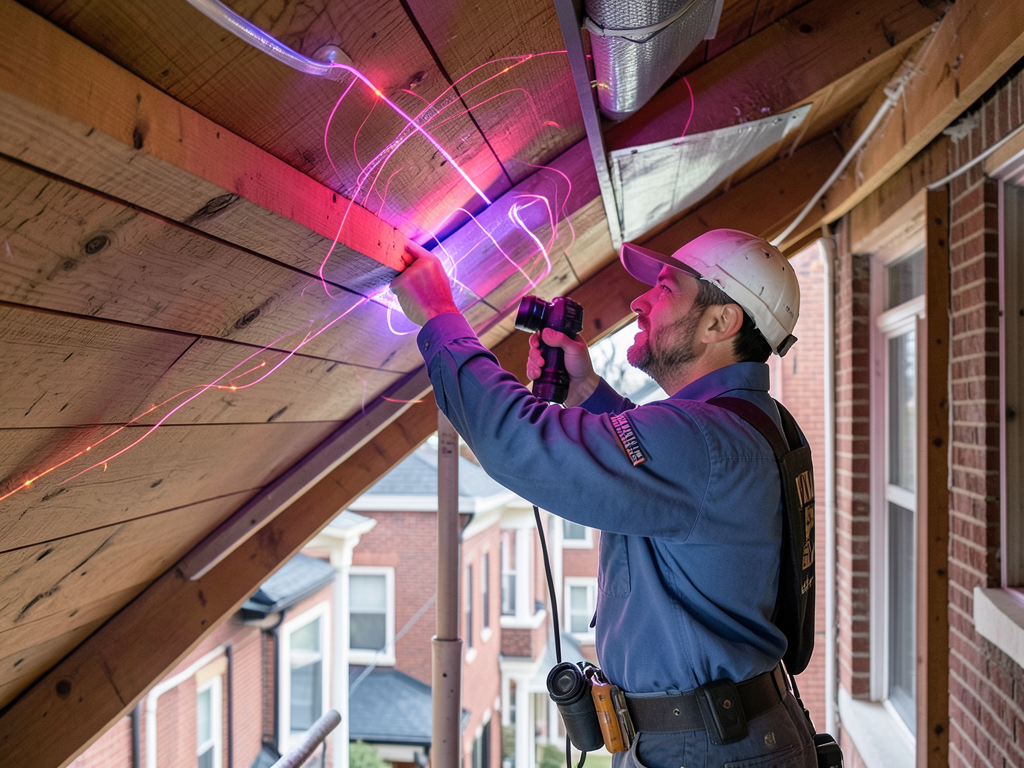
Professional roofers use several tools to assess ventilation effectiveness. Infrared cameras detect temperature variations that indicate poor airflow patterns. These cameras reveal hot spots where heat accumulates and cold spots where ventilation works properly.
Smoke pencils or chemical smoke tests visualize air movement in attics. These tools show whether air flows from soffits to ridge vents as intended. They can reveal dead zones where air stagnates and moisture accumulates.
Moisture meters measure humidity levels in attic materials. High readings indicate ventilation problems that allow moisture accumulation. These readings help quantify the severity of ventilation issues and track improvements after repairs.
Common Ventilation Mistakes in Wynnefield Homes
Many Wynnefield homes have ventilation systems that look correct but function poorly. Mixing different vent types often creates short-circuiting. For example, combining ridge vents with gable vents can cause air to flow in circles rather than through the entire attic space.
Improper vent installation causes numerous problems. Ridge vents must install with specific gaps between the roof deck and ridge board. Without these gaps, the vent cannot function as designed. Similarly, soffit vents require proper spacing and clearance from insulation.
Attic conversions frequently damage existing ventilation systems. When homeowners finish attic spaces, they often block soffit vents with knee walls or cover them with drywall. This conversion work can destroy the very ventilation system that keeps the space healthy.
Philadelphia Row Home Ventilation Challenges
Wynnefield’s mix of detached homes and rowhomes creates different ventilation challenges. Row homes often have limited roof area and complex wall configurations that make standard ventilation difficult. The shared walls between units can create thermal bridges that affect attic temperatures.
Many Philadelphia rowhomes have flat or low-slope roofs that complicate ventilation. Traditional ridge vents work poorly on these roof types, requiring alternative solutions like powered vents or specialized low-profile systems. These alternatives must meet the same ventilation requirements as standard ridge vents.
Limited access for maintenance creates additional challenges in rowhomes. Narrow alleys and shared walls make it difficult to inspect or repair ventilation components. This limited access often means problems go unnoticed until they cause major damage.
Energy Efficiency Benefits of Proper Ventilation
Proper attic ventilation reduces cooling costs by preventing heat buildup. When your attic stays cooler, less heat transfers through your ceiling into living spaces. This reduction in heat gain can lower air conditioning costs by 10-15% during peak summer months.
Winter energy savings also result from proper ventilation. When attic temperatures stay closer to outdoor temperatures, less heat escapes through your ceiling. This reduced heat loss means your furnace runs less frequently, lowering heating bills throughout winter.
The Department of Energy estimates that proper attic ventilation can reduce annual energy costs by $200-400 for typical Philadelphia homes. These savings accumulate over the life of your roof, often paying for ventilation improvements within a few years.
When to Call a Professional
Several situations warrant professional ventilation assessment. If your attic regularly exceeds 130 degrees Fahrenheit during summer, you need expert help. This extreme heat indicates ventilation cannot keep pace with heat gain.
Visible moisture problems require immediate professional attention. Water stains on rafters, rusted nails, or mold growth signal serious moisture issues that ventilation alone cannot fix. These problems often require comprehensive solutions including vapor barriers and improved sealing.
After severe weather events, professional inspection helps identify damage that might affect ventilation. Heavy snow can bend or break ridge vents. High winds can tear off vent components. Professional assessment ensures your system continues functioning properly.
Frequently Asked Questions
Can I add more ridge vent to solve my attic heat problem?
Adding more ridge vent without addressing intake ventilation usually makes problems worse. The system needs balance between intake and exhaust. Without adequate soffit vents, additional ridge vent cannot improve airflow and may even reduce effectiveness by creating negative pressure that pulls conditioned air from your living space.
How much does it cost to fix ventilation problems in a Wynnefield home?
Ventilation repairs typically cost between $1,500 and $3,500 depending on your home’s size and existing conditions. Simple fixes like clearing blocked soffit vents might cost under $500, while complete ventilation system installations run $2,000-5,000. These investments often pay for themselves through energy savings within 3-5 years.
Will proper ventilation prevent ice dams on my Philadelphia roof?
Proper ventilation significantly reduces ice dam formation but cannot eliminate it entirely during extreme weather. Ventilation keeps roof temperatures uniform, preventing the freeze-thaw cycle that creates ice dams. Combined with adequate insulation and sealed bypasses, ventilation provides the best protection against ice dam damage.
How can I tell if my soffit vents are blocked?
Look for continuous vent strips along your eaves. If you see solid soffit material, your vents might be blocked or nonexistent. Professional inspection with infrared cameras or smoke tests provides definitive answers about airflow patterns and blockage locations.
Does my Philadelphia home need powered attic ventilation?
Most homes with proper passive ventilation do not need powered vents. Powered systems use electricity and can create negative pressure that pulls conditioned air from your living space. However, homes with unusual configurations or extreme heat gain might benefit from powered ventilation as part of a comprehensive system.
Take Action Before Summer Heat Arrives
Philadelphia’s summer heat is coming, and your attic ventilation needs attention now. Don’t wait until your upstairs bedrooms become unbearable or your cooling bills skyrocket. A professional assessment can identify ventilation problems and recommend solutions that work for your specific home and budget.
Call (267) 344-1222 today to schedule your ventilation inspection. Our experienced team understands Philadelphia’s unique climate challenges and can recommend solutions that keep your attic cool, dry, and energy-efficient year-round. Don’t let another summer pass with a hot, uncomfortable home when proper ventilation can make all the difference.
Pick up the phone and call (267) 344-1222 before the next heat wave hits. Your comfort and energy bills depend on proper attic ventilation, and our team has the local expertise to ensure your system works as designed. Wynnefield homes deserve ventilation solutions that handle our specific climate challenges, and we deliver exactly that.
Don’t risk ice dam damage this winter or excessive cooling costs this summer. Call (267) 344-1222 now for your professional ventilation assessment. Our team serves Wynnefield and all of Philadelphia with ventilation solutions that last. Your home’s comfort and efficiency are just one phone call away.
{
“@context”: “https://schema.org”,
“@type”: “BlogPosting”,
“headline”: “Why Ridge Vents Alone Might Not Be Enough for Your Hot Attic in Wynnefield”,
“description”: “Is your attic still scorching despite a ridge vent? Discover why Philly homes in Wynnefield need more than just ridge vents to stay cool and dry.”,
“wordCount”: 2625,
“datePublished”: “2026-06-10T15:25:00.000Z”,
“dateModified”: “2026-06-10T15:25:00.000Z”,
“inLanguage”: “en-US”,
“mainEntityOfPage”: {
“@type”: “WebPage”,
“@id”: “https://atlasroofingphiladelphia.com”
},
“publisher”: {
“@type”: “LocalBusiness”,
“name”: “Atlas Roofing Philadelphia”,
“url”: “https://atlasroofingphiladelphia.com”
},
“author”: {
“@type”: “Organization”,
“name”: “Atlas Roofing Philadelphia”,
“url”: “https://atlasroofingphiladelphia.com”
},
“image”: {
“@type”: “ImageObject”,
“url”: “https://atlasroofingphiladelphia.com/wp-content/uploads/2026/03/why-ridge-vents-alone-might-not-be-enough-for-your-1.png”
}
}
{
“@context”: “https://schema.org”,
“@type”: “RoofingContractor”,
“name”: “Atlas Roofing Philadelphia”,
“url”: “https://atlasroofingphiladelphia.com”,
“address”: {
“@type”: “PostalAddress”,
“addressLocality”: “Philadelphia”
},
“areaServed”: {
“@type”: “City”,
“name”: “Philadelphia”
}
}
{
“@context”: “https://schema.org”,
“@type”: “FAQPage”,
“mainEntity”: [
{
“@type”: “Question”,
“name”: “Can I add more ridge vent to solve my attic heat problem?”,
“acceptedAnswer”: {
“@type”: “Answer”,
“text”: “Adding more ridge vent without addressing intake ventilation usually makes problems worse. The system needs balance between intake and exhaust. Without adequate soffit vents, additional ridge vent cannot improve airflow and may even reduce effectiveness by creating negative pressure that pulls conditioned air from your living space.”
}
},
{
“@type”: “Question”,
“name”: “How much does it cost to fix ventilation problems in a Wynnefield home?”,
“acceptedAnswer”: {
“@type”: “Answer”,
“text”: “Ventilation repairs typically cost between $1,500 and $3,500 depending on your home’s size and existing conditions. Simple fixes like clearing blocked soffit vents might cost under $500, while complete ventilation system installations run $2,000-5,000. These investments often pay for themselves through energy savings within 3-5 years.”
}
},
{
“@type”: “Question”,
“name”: “Will proper ventilation prevent ice dams on my Philadelphia roof?”,
“acceptedAnswer”: {
“@type”: “Answer”,
“text”: “Proper ventilation significantly reduces ice dam formation but cannot eliminate it entirely during extreme weather. Ventilation keeps roof temperatures uniform, preventing the freeze-thaw cycle that creates ice dams. Combined with adequate insulation and sealed bypasses, ventilation provides the best protection against ice dam damage.”
}
},
{
“@type”: “Question”,
“name”: “How can I tell if my soffit vents are blocked?”,
“acceptedAnswer”: {
“@type”: “Answer”,
“text”: “Look for continuous vent strips along your eaves. If you see solid soffit material, your vents might be blocked or nonexistent. Professional inspection with infrared cameras or smoke tests provides definitive answers about airflow patterns and blockage locations.”
}
},
{
“@type”: “Question”,
“name”: “Does my Philadelphia home need powered attic ventilation?”,
“acceptedAnswer”: {
“@type”: “Answer”,
“text”: “Most homes with proper passive ventilation do not need powered vents. Powered systems use electricity and can create negative pressure that pulls conditioned air from your living space. However, homes with unusual configurations or extreme heat gain might benefit from powered ventilation as part of a comprehensive system.”
}
}
]
}
{
“@context”: “https://schema.org”,
“@type”: “BreadcrumbList”,
“itemListElement”: [
{
“@type”: “ListItem”,
“position”: 1,
“name”: “Home”,
“item”: “https://atlasroofingphiladelphia.com”
},
{
“@type”: “ListItem”,
“position”: 2,
“name”: “Blog”,
“item”: “https://atlasroofingphiladelphia.com/blog”
},
{
“@type”: “ListItem”,
“position”: 3,
“name”: “Why Ridge Vents Alone Might Not Be Enough for Your Hot Attic in Wynnefield”
}
]
}
{
“@context”: “https://schema.org”,
“@type”: “Service”,
“serviceType”: “Roofing”,
“provider”: {
“@type”: “LocalBusiness”,
“name”: “Atlas Roofing Philadelphia”,
“url”: “https://atlasroofingphiladelphia.com”
},
“areaServed”: {
“@type”: “City”,
“name”: “Philadelphia”
},
“description”: “Is your attic still scorching despite a ridge vent? Discover why Philly homes in Wynnefield need more than just ridge vents to stay cool and dry.”
}