
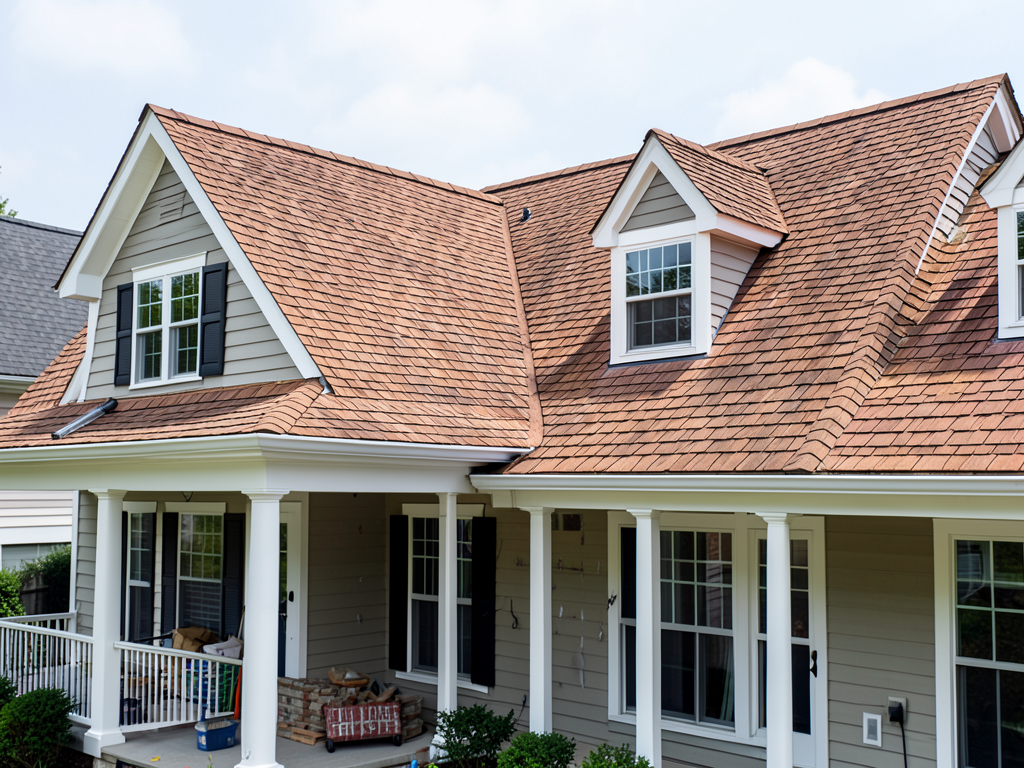
Why Main Line Homeowners Are Moving Away from Real Wood Shakes to Composite Tiles
Main Line homeowners are increasingly choosing composite shake tiles over traditional cedar wood shakes for their Philadelphia-area homes. The shift comes down to three critical factors: fire safety compliance with Pennsylvania building codes, resistance to our humid climate’s moisture damage, and significantly reduced maintenance costs over a 30-year lifespan. Why More Homeowners in Manayunk Are Switching to Metal Roofing.
Composite materials like polymer-based DaVinci Roofscapes and Brava Roof Tile products now offer the authentic wood grain texture and dimensional appearance of cedar without the vulnerabilities. These synthetic alternatives maintain their rich brown and gray tones without fading, resist algae and moss growth in our humid summers, and withstand the freeze-thaw cycles that destroy natural wood in Pennsylvania winters.
How Philadelphia Weather Destroys Natural Wood Shakes
Our Philadelphia climate creates a perfect storm of conditions that rapidly deteriorate real cedar shakes. The combination of high humidity, frequent rainfall, and dramatic temperature swings causes wood to expand and contract repeatedly, leading to cracking, splitting, and eventual rot.
During humid summer months, moisture penetrates the wood fibers, creating an ideal environment for algae and moss growth. These organisms not only discolor the roof but also retain moisture against the wood surface, accelerating decay. The problem compounds in shaded areas where sunlight cannot dry the surface.
Winter presents another major challenge. When temperatures fluctuate above and below freezing, water trapped in wood shakes expands as it freezes, causing the material to split and crack. Ice dams form more easily on cedar surfaces because the wood’s natural texture provides grip for ice accumulation.
Wind-driven rain during summer thunderstorms can force water beneath individual shakes, especially as the wood ages and gaps develop between pieces. This moisture intrusion leads to deck rot and potential interior water damage to your Main Line home’s structure.
According to the Philadelphia Water Department’s stormwater management guidelines, proper roof materials play a crucial role in preventing urban runoff issues that affect our combined sewer system. Composite materials shed water more efficiently than aged cedar, reducing the strain on our aging infrastructure. EPA WaterSense.
Fire Safety Requirements in Pennsylvania
Pennsylvania’s building codes have become increasingly strict regarding fire-resistant roofing materials, particularly in suburban areas like the Main Line. The International Building Code, adopted by Pennsylvania, requires Class A fire ratings for most residential applications. The Best Local Roofing Companies for Luxury Homes on the Main Line.
Natural cedar shakes typically achieve only a Class C fire rating without chemical treatments, which degrade over time and require reapplication every 3-5 years. Composite shake tiles from manufacturers like DaVinci achieve Class A fire ratings through their polymer composition, providing the highest level of fire protection available.
The Pennsylvania Department of Labor and Industry enforces these codes through local inspections. Homes in areas with dense tree coverage or near wooded properties face additional scrutiny regarding fire-resistant materials. Insurance companies often offer premium discounts for Class A rated roofs, potentially saving Main Line homeowners hundreds of dollars annually.
During wildfire season, which has become more severe in recent years, Class A rated composite roofs provide crucial protection. The materials won’t ignite from wind-blown embers, a common cause of structure fires during regional fire events.
Local building inspectors in Montgomery County specifically look for proper underlayment installation when composite materials replace cedar. The synthetic products require specific moisture barriers and ventilation systems to maintain their warranty coverage.
Cost Comparison: Cedar vs. Composite Over 30 Years
Initial installation costs for composite shake tiles run 15-20% higher than premium cedar shakes in the Philadelphia market. However, the total cost of ownership over 30 years tells a dramatically different story.
| Cost Factor | Cedar Shakes (30 Years) | Composite Shakes (30 Years) |
|---|---|---|
| Initial Installation | $18,000 – $22,000 | $21,000 – $26,000 |
| Maintenance (Cleaning/Staining) | $4,500 – $6,000 | $0 |
| Repairs (Split Shakes) | $2,500 – $3,500 | $500 – $1,000 |
| Replacement (After 20-25 Years) | $18,000 – $22,000 | Material still under warranty |
| Insurance Premium Savings | $0 | $2,400 – $3,600 |
| Total 30-Year Cost | $43,000 – $53,000 | $21,500 – $27,000 |
The maintenance-free nature of composite materials eliminates the need for biennial cleaning and staining that cedar requires. Professional cedar maintenance in the Main Line area costs $1,200 – $1,800 every three years, adding up quickly over two decades.
Composite materials carry warranties ranging from 50 years to lifetime coverage, while cedar typically needs complete replacement after 20-25 years in our climate. The warranty coverage alone represents significant value for Main Line homeowners planning to stay in their homes long-term. How Much Does a Full Roof Replacement Actually Cost in Philadelphia Right Now.
Energy efficiency provides another cost advantage. Composite shakes reflect more solar heat than dark cedar, potentially reducing cooling costs by 10-15% during Philadelphia’s humid summers. This translates to approximately $200-300 in annual savings for a typical Main Line home.
Installation Process for Composite Shake Roofing
Replacing cedar with composite requires specific installation techniques that differ from traditional wood shake application. The process begins with complete removal of existing materials down to the roof deck.
During deck inspection, contractors check for moisture damage that may have occurred beneath the cedar shakes. Any rotted plywood or damaged structural elements must be replaced before proceeding. This step often reveals hidden damage that wasn’t visible from the exterior.
Composite installation requires synthetic underlayment rather than traditional felt paper. Products like GAF Deck-Armor or similar synthetic barriers provide superior moisture protection and allow the roof to breathe. This underlayment costs approximately $0.50 – $0.75 more per square foot but prevents moisture-related warranty claims.
The starter course installation differs significantly from cedar. Composite shakes require specific nailing patterns and spacing to maintain warranty coverage. Most manufacturers mandate 6 nails per shake rather than the 4 used for wood, creating stronger wind resistance against our frequent Nor’easters.
Flashing details become more critical with composite materials. The synthetic products expand and contract at different rates than traditional materials, requiring specific flashing types and installation methods. Aluminum or copper flashing with expansion joints prevents buckling and maintains water-tight seals.
Ventilation requirements increase with composite roofs. The materials trap more heat than wood, making proper ridge and soffit ventilation essential. Building codes in Montgomery County now require minimum 1 square foot of net free ventilation area per 150 square feet of attic space.
Local Project Examples in the Philadelphia Area
Several high-profile Main Line homes have recently completed cedar-to-composite conversions, demonstrating the material’s versatility with historic architecture. A 1920s Tudor-style home in Bryn Mawr replaced its weathered cedar shakes with DaVinci’s Tahoe Blend composite, maintaining the home’s character while upgrading fire safety.
In Gladwyne, a 5,000 square foot colonial underwent complete roof replacement using Brava’s Old World Slate composite tiles. The homeowners reported a 25% reduction in cooling costs during their first summer and eliminated the annual maintenance contract they’d maintained for cedar care.
A Radnor Township property manager overseeing multiple historic homes converted a 1910 craftsman-style residence to composite shakes. The project required approval from the local historical commission, which approved the DaVinci product after reviewing samples and warranty documentation.
Insurance companies have taken notice of these conversions. Several Main Line homeowners reported 15-20% reductions in their homeowners insurance premiums after installing Class A rated composite roofing, with some policies specifically citing the upgraded fire rating. Roofing Pittsburgh.
The Philadelphia Historical Commission has begun accepting certain composite materials for use in designated historic districts, provided they meet specific aesthetic requirements. This represents a significant shift in how preservation authorities view synthetic roofing alternatives. Roofing Allentown.
Environmental Impact and Sustainability
Composite shake roofing offers surprising environmental benefits compared to traditional cedar. The polymer materials contain recycled content, with many products incorporating 30-50% post-consumer recycled plastics and rubber.. Read more about Trustworthy Roofing Services for Homeowners in Media and Swarthmore.
The extended lifespan of composite materials means fewer replacement cycles over a home’s lifetime. A single composite installation lasting 50+ years eliminates the manufacturing, transportation, and disposal impacts of two or three cedar roof replacements.
Manufacturing processes for leading composite manufacturers have become increasingly sustainable. DaVinci Roofscapes operates a zero-waste facility in Kansas, while Brava uses 100% renewable energy in their production processes.
End-of-life recycling options continue to improve. While cedar shakes decompose naturally, composite materials can now be recycled into new building products, preventing landfill waste. Several Philadelphia-area recycling facilities accept composite roofing materials.
The energy efficiency benefits extend beyond cooling costs. The reflective properties of many composite products reduce the urban heat island effect, particularly important in dense suburban areas like parts of the Main Line.
LEED certification points are available for composite roofing installations, making them attractive for environmentally conscious homeowners and builders pursuing green building standards.
Common Misconceptions About Composite Shakes
Many homeowners hesitate to switch to composite materials due to persistent myths about appearance and performance. The most common misconception is that composite shakes look obviously artificial.
Modern manufacturing techniques have eliminated this concern. High-definition molds capture the subtle variations in natural cedar grain, including knots, splits, and weathering patterns. Close inspection reveals only minor differences, and most visitors cannot distinguish composite from real wood at normal viewing distances.
Another myth suggests composite materials cannot be repaired if damaged. In reality, individual shakes can be replaced using manufacturer-specific techniques. The key difference is that repairs blend seamlessly because the color extends through the entire material thickness, not just surface staining.
Some believe composite shakes are too heavy for existing structures. Most composite products weigh 200-250 pounds per square, compared to 300-400 pounds for wet cedar shakes. This actually reduces structural load in many cases, particularly for older homes with aging roof structures.
The perception that composite materials lack authenticity persists among traditionalists. However, historic preservation boards increasingly recognize that maintaining a home’s appearance while upgrading its performance serves preservation goals better than allowing natural materials to deteriorate.
Cost concerns often center on the higher initial investment. While true that composite materials cost more upfront, the 30-year cost analysis consistently favors synthetic products when maintenance, replacement, and insurance factors are included.
Choosing the Right Composite Product
Several manufacturers produce composite shake tiles suitable for Philadelphia’s climate, each with distinct advantages. DaVinci Roofscapes leads the market with their Bellaforte Shake collection, offering 50-year warranties and Class A fire ratings.
Brava Roof Tile specializes in products that closely mimic specific wood species. Their Old World Slate collection replicates the look of aged cedar with remarkable accuracy, including the subtle color variations found in weathered wood.
CertainTeed’s Apollo II solar-ready composite shakes combine traditional appearance with integrated solar technology. These products allow homeowners to maintain aesthetic continuity while generating renewable energy.
When evaluating products, consider the specific climate challenges in your area. Homes in more shaded locations benefit from products with enhanced algae resistance, while properties in open areas need maximum wind resistance.
Warranty terms vary significantly between manufacturers. Some cover only material defects, while others include labor costs and consequential damage. Read the fine print carefully, as warranty coverage often depends on using certified installers.
Color selection impacts both appearance and performance. Lighter colors reflect more heat but may show dirt more readily. Many manufacturers now offer multi-tone blends that hide minor staining while maintaining visual interest.
Frequently Asked Questions
Does composite shake roofing look fake compared to real cedar?
Modern composite shakes use high-definition molds that capture authentic wood grain patterns, knots, and weathering details. From street level, most people cannot distinguish composite from natural cedar without close inspection.
How long do composite shake roofs last in Philadelphia’s climate?
Quality composite shakes typically last 40-50 years in our climate, with many manufacturers offering lifetime warranties. This far exceeds cedar’s 20-25 year lifespan in Philadelphia’s humid, freeze-thaw conditions.
Will switching to composite shakes increase my home’s value?
Yes, composite shakes often increase home value through improved fire safety ratings, eliminated maintenance costs, and enhanced curb appeal. Insurance companies may offer premium discounts, and the long-term durability appeals to potential buyers.
Can composite shakes be installed over existing cedar shakes?
Typically no. Building codes require complete removal of existing materials to inspect the roof deck and ensure proper underlayment installation. This also allows for necessary ventilation upgrades required by modern composite products.
Are composite shakes environmentally friendly?
Yes, composite shakes contain recycled materials, last 2-3 times longer than cedar, and reduce the need for chemical treatments. Many products are recyclable at end of life, and their energy efficiency benefits reduce overall environmental impact.
Ready to Upgrade Your Main Line Home’s Roof?
The combination of fire safety requirements, climate resilience, and long-term cost savings makes composite shake roofing an increasingly popular choice for Main Line homeowners. As building codes continue to evolve and climate challenges intensify, the advantages of synthetic materials become more compelling each year.
Before making your decision, schedule a professional roof inspection to assess your current roof’s condition and discuss how composite materials might benefit your specific home. A qualified contractor can provide detailed cost comparisons and help you navigate local permitting requirements.
Call (267) 344-1222 today to schedule your inspection and learn more about how composite shake roofing can protect your Main Line home for decades to come.
Don’t wait until winter storms or summer humidity damage your existing cedar shakes. Pick up the phone and call (267) 344-1222 before the next storm hits. Our team understands the unique challenges facing Main Line homes and can help you make the right choice for your property. For more information, visit FEMA.
{
“@context”: “https://schema.org”,
“@type”: “BlogPosting”,
“headline”: “Why Main Line Homeowners Are Moving Away from Real Wood Shakes to Composite Tiles”,
“description”: “Discover why Philadelphia’s Main Line homeowners are switching to composite shake roofing for better fire safety, durability, and maintenance-free performance in our humid climate.”,
“wordCount”: 2234,
“datePublished”: “2026-04-10T15:07:00.000Z”,
“dateModified”: “2026-04-10T15:07:00.000Z”,
“inLanguage”: “en-US”,
“mainEntityOfPage”: {
“@type”: “WebPage”,
“@id”: “https://atlasroofingphiladelphia.com”
},
“publisher”: {
“@type”: “LocalBusiness”,
“name”: “Atlas Roofing Philadelphia”,
“url”: “https://atlasroofingphiladelphia.com”
},
“author”: {
“@type”: “Organization”,
“name”: “Atlas Roofing Philadelphia”,
“url”: “https://atlasroofingphiladelphia.com”
},
“image”: {
“@type”: “ImageObject”,
“url”: “https://atlasroofingphiladelphia.com/wp-content/uploads/2026/03/why-main-line-homeowners-are-moving-away-from-real-1.png”
}
}
{
“@context”: “https://schema.org”,
“@type”: “RoofingContractor”,
“name”: “Atlas Roofing Philadelphia”,
“url”: “https://atlasroofingphiladelphia.com”,
“address”: {
“@type”: “PostalAddress”,
“addressLocality”: “Philadelphia”
},
“areaServed”: {
“@type”: “City”,
“name”: “Philadelphia”
}
}
{
“@context”: “https://schema.org”,
“@type”: “FAQPage”,
“mainEntity”: [
{
“@type”: “Question”,
“name”: “Does composite shake roofing look fake compared to real cedar?”,
“acceptedAnswer”: {
“@type”: “Answer”,
“text”: “Modern composite shakes use high-definition molds that capture authentic wood grain patterns, knots, and weathering details. From street level, most people cannot distinguish composite from natural cedar without close inspection.”
}
},
{
“@type”: “Question”,
“name”: “How long do composite shake roofs last in Philadelphia’s climate?”,
“acceptedAnswer”: {
“@type”: “Answer”,
“text”: “Quality composite shakes typically last 40-50 years in our climate, with many manufacturers offering lifetime warranties. This far exceeds cedar’s 20-25 year lifespan in Philadelphia’s humid, freeze-thaw conditions.”
}
},
{
“@type”: “Question”,
“name”: “Will switching to composite shakes increase my home’s value?”,
“acceptedAnswer”: {
“@type”: “Answer”,
“text”: “Yes, composite shakes often increase home value through improved fire safety ratings, eliminated maintenance costs, and enhanced curb appeal. Insurance companies may offer premium discounts, and the long-term durability appeals to potential buyers.”
}
},
{
“@type”: “Question”,
“name”: “Are composite shakes environmentally friendly?”,
“acceptedAnswer”: {
“@type”: “Answer”,
“text”: “Yes, composite shakes contain recycled materials, last 2-3 times longer than cedar, and reduce the need for chemical treatments. Many products are recyclable at end of life, and their energy efficiency benefits reduce overall environmental impact.”
}
},
{
“@type”: “Question”,
“name”: “Ready to Upgrade Your Main Line Home’s Roof?”,
“acceptedAnswer”: {
“@type”: “Answer”,
“text”: “The combination of fire safety requirements, climate resilience, and long-term cost savings makes composite shake roofing an increasingly popular choice for Main Line homeowners. As building codes continue to evolve and climate challenges intensify, the advantages of synthetic materials become more compelling each year.”
}
}
]
}
{
“@context”: “https://schema.org”,
“@type”: “BreadcrumbList”,
“itemListElement”: [
{
“@type”: “ListItem”,
“position”: 1,
“name”: “Home”,
“item”: “https://atlasroofingphiladelphia.com”
},
{
“@type”: “ListItem”,
“position”: 2,
“name”: “Blog”,
“item”: “https://atlasroofingphiladelphia.com/blog”
},
{
“@type”: “ListItem”,
“position”: 3,
“name”: “Why Main Line Homeowners Are Moving Away from Real Wood Shakes to Composite Tiles”
}
]
}
{
“@context”: “https://schema.org”,
“@type”: “Service”,
“serviceType”: “Roofing”,
“provider”: {
“@type”: “LocalBusiness”,
“name”: “Atlas Roofing Philadelphia”,
“url”: “https://atlasroofingphiladelphia.com”
},
“areaServed”: {
“@type”: “City”,
“name”: “Philadelphia”
},
“description”: “Discover why Philadelphia’s Main Line homeowners are switching to composite shake roofing for better fire safety, durability, and maintenance-free performance in our humid climate.”
}