
The Right Way to Remove Heavy Snow from Your South Philly Rowhome Roof
Philadelphia rowhome owners face unique winter risks. Flat roofs on these historic brick buildings collect snow and ice much faster than sloped roofs. When heavy snow sits on your roof for days, the weight can reach dangerous levels. The water from melting snow can also back up under shingles and cause interior damage. You need to know the right way to remove snow before it becomes a structural emergency. Philadelphia Department of Licenses and Inspections.
Philadelphia rowhomes typically have flat or low-slope roofs that are vulnerable to snow accumulation. The shared walls and dense urban layout mean snow removal equipment must be carefully maneuvered through narrow alleys and over power lines. Ice dams form quickly on these roofs when daytime melting meets nighttime freezing. The freeze-thaw cycle creates dangerous conditions that can lead to roof collapse or severe water damage inside your home.. Read more about A Quick Spring Roofing Checklist for Homeowners in Holmesburg.
The Philadelphia Department of Licenses and Inspections sets specific snow load requirements for residential buildings. A standard rowhome roof must safely support 30 pounds per square foot of snow weight. Heavy wet snow can weigh up to 20 pounds per cubic foot. This means just 18 inches of wet snow can push your roof to its structural limits. Ice adds even more weight and creates dangerous sliding hazards.
Professional snow removal requires specialized equipment and training. Roof rakes with telescoping handles can reach 20 feet but must be used carefully to avoid damaging shingles. Steam removal is the safest method for ice dams because it melts ice without physical impact. Calcium chloride tablets can help melt channels in ice but should never be used with rock salt which corrodes metal flashing and damages plants.
Before you attempt snow removal, check your roof’s structural condition. Look for sagging ceiling joists inside your attic. Listen for creaking sounds from roof rafters during heavy snow. Watch for water stains on interior walls which indicate ice dam formation. If you notice any of these warning signs, call a professional immediately. Do not walk on a snow-covered roof yourself.
The right way to remove snow starts with safety assessment. Check weather forecasts for warming trends that could cause sudden melting. Clear snow from around downspouts to ensure drainage. Remove snow in layers from the roof edge working upward. Never pull snow directly over the edge as it can create dangerous ice buildup below.
Professional roofers use thermal imaging cameras to identify heat loss areas that cause uneven snow melting. They check for proper attic ventilation which prevents ice dam formation. They inspect flashing around chimneys and vents for damage. They verify that gutters are securely fastened to handle the weight of ice and snow.
Philadelphia’s urban environment creates additional challenges. Many rowhomes share common walls with zero setback from property lines. Snow removal equipment must navigate narrow alleys between buildings. Power lines run close to roof edges in older neighborhoods. Professional crews carry liability insurance specifically for these urban conditions.
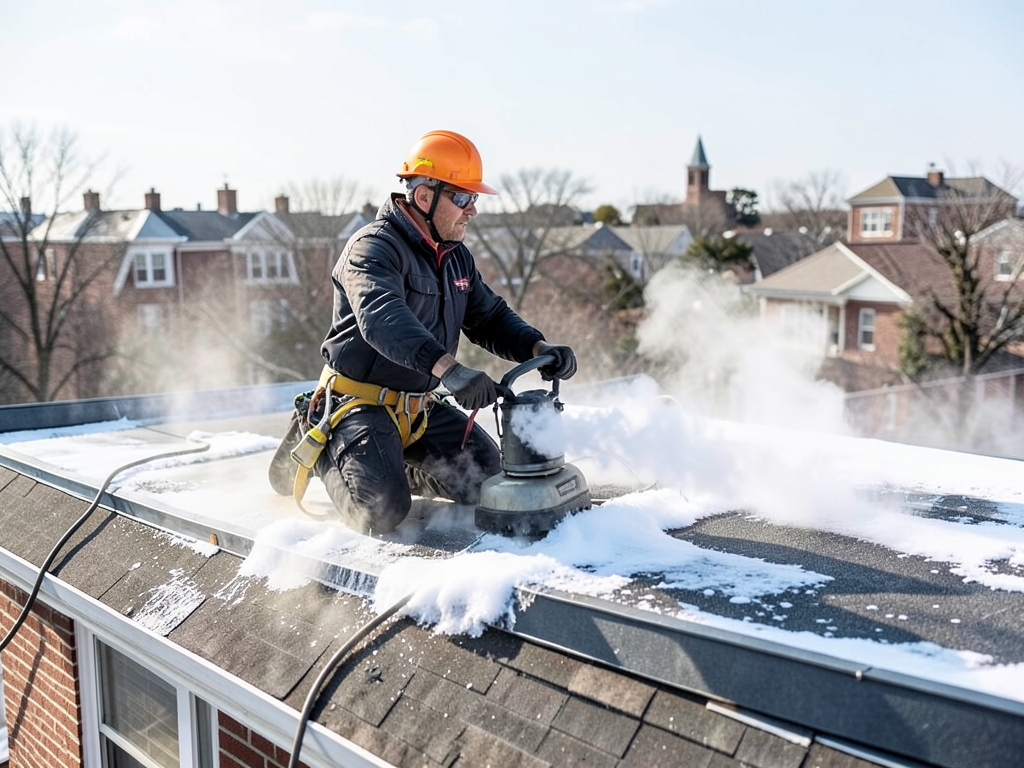
Ice dam removal requires careful technique. Steam machines heat water to 300 degrees Fahrenheit to melt ice without damaging roofing materials. The steam operator works from a ladder positioned safely away from the roof edge. They create channels through the ice to allow water drainage. They never use hammers or chisels which can puncture roof membranes. The Best Local Roofing Companies for Luxury Homes on the Main Line.
Post-removal inspection is critical. Check for damaged shingles or membrane punctures. Verify that all drainage paths are clear. Look for signs of structural stress in ceiling joists and wall studs. Document any damage for insurance purposes. Take photos before and after snow removal.
Preventive measures reduce future risks. Install proper attic insulation to minimize heat loss through the roof. Add ventilation baffles to ensure airflow from soffits to ridge vents. Consider heat cables in problem areas where ice dams consistently form. Keep gutters clean before winter to ensure proper drainage. Winter Roof Maintenance Tips.
Emergency response planning saves time and money. Keep emergency contact numbers for roofing professionals. Have tarps ready for temporary leak protection. Know the location of your main water shutoff valve. Understand your insurance coverage for snow-related damage. Roofing Pittsburgh.
The cost of professional snow removal varies by roof size and snow conditions. Expect to pay $300-600 for a typical rowhome roof. Emergency after-hours service costs more but prevents expensive structural damage. Insurance may cover snow removal if it prevents interior damage.
DIY snow removal carries significant risks. Falls from ladders cause serious injuries. Improper technique damages roofing materials. Incomplete removal leaves ice dams that cause leaks. Professional equipment and training reduce these risks significantly. Roofing Allentown.
Philadelphia’s specific climate patterns affect snow removal timing. Lake effect snow from Erie can add unexpected accumulation. Coastal storms bring heavy wet snow that weighs more than powder snow. Temperature fluctuations between 20-35 degrees Fahrenheit create ideal ice dam conditions.
Commercial properties have different requirements. Flat commercial roofs often use TPO or EPDM membranes that handle snow differently than residential asphalt shingles. Building owners must follow Philadelphia’s commercial snow load codes which require engineering calculations for large roof areas.
Insurance claim documentation requires specific information. Record snow depth measurements. Document interior water damage with photos. Keep receipts for emergency repairs. Contact your insurance agent immediately after discovering damage. Many policies require prompt notification for coverage.
Environmental considerations affect snow removal methods. Avoid using chemical de-icers that harm plants and contaminate waterways. Philadelphia’s combined sewer system cannot handle chemical runoff during melting periods. Steam removal produces no harmful runoff and is the most environmentally responsible method.
Long-term solutions prevent recurring problems. Roof replacement with better insulation reduces heat loss. Improved ventilation systems prevent ice dam formation. Gutter guards prevent debris buildup that causes ice dams. These investments pay for themselves through reduced emergency repair costs. How Much Does a Full Roof Replacement Actually Cost in Philadelphia Right Now.
Community coordination helps in dense urban areas. Neighbors can coordinate snow removal schedules to avoid alley congestion. Shared resources like snow blowers can be more efficient than individual efforts. Philadelphia’s narrow streets require careful planning for equipment access.
Seasonal timing affects removal effectiveness. Early morning removal before temperatures rise prevents ice formation. Late afternoon work risks refreezing and creating hazardous conditions. Weather forecasts should guide removal scheduling for maximum safety and effectiveness.
Professional credentials matter for snow removal. Look for Pennsylvania contractors license. Verify general liability insurance coverage. Check for workers compensation insurance. Ask about specific experience with Philadelphia rowhome construction. Request references from local customers.
Emergency preparedness includes having backup plans. Know alternative shelter options if your home becomes unsafe. Keep emergency supplies ready. Have contact information for multiple roofing contractors. Understand evacuation routes in your neighborhood.
Philadelphia’s building codes require specific safety measures. OSHA mandates fall protection for workers on roofs over 6 feet high. Pennsylvania code requires proper ladder tie-off and equipment stabilization. Professional crews follow these regulations to protect workers and property owners. OSHA safety standards for roof work.
The right equipment makes snow removal safer and more effective. Professional-grade roof rakes have non-abrasive heads. Steam machines have adjustable temperature controls. Safety harnesses prevent falls. Moisture meters detect hidden water damage. These tools cost thousands of dollars and require training to use properly.
Post-storm inspection should include checking for structural damage. Look for new cracks in interior walls. Check doors and windows for proper operation which indicates foundation movement. Listen for unusual sounds from roof structures. Document any changes for insurance and repair planning.
Frequently Asked Questions
How much does professional snow removal cost in Philadelphia?
Professional snow removal for a typical Philadelphia rowhome costs $300-600 depending on roof size and snow conditions. Emergency after-hours service costs more but prevents expensive structural damage.
Can I remove snow from my roof myself?
DIY snow removal carries significant risks including falls from ladders, damage to roofing materials, and incomplete removal that leaves ice dams. Professional equipment and training reduce these risks significantly.
What are the signs my roof is in danger from snow?
Warning signs include sagging ceiling joists, creaking sounds from roof rafters, water stains on interior walls, and doors or windows that suddenly stick or won’t close properly.
How long do I have before heavy snow becomes dangerous?
Heavy wet snow can reach dangerous weight levels within 24-48 hours. Ice dams can form in as little as 12 hours when daytime temperatures rise above freezing and nighttime temperatures drop below freezing.
Does insurance cover snow removal?
Insurance may cover snow removal if it prevents interior damage. Document snow depth, take photos of any damage, and contact your insurance agent immediately after discovering problems.
What’s the safest method for ice dam removal?
Steam removal is the safest method because it melts ice without physical impact. Steam machines heat water to 300 degrees Fahrenheit and create channels through ice for drainage.
How can I prevent ice dams from forming?
Prevent ice dams by improving attic insulation, adding ventilation baffles, keeping gutters clean, and installing heat cables in problem areas. These measures reduce heat loss through the roof.
What equipment do professionals use?
Professionals use specialized roof rakes with non-abrasive heads, steam machines with adjustable temperature controls, safety harnesses, and moisture meters to detect hidden water damage.
How does Philadelphia’s urban environment affect snow removal?
Philadelphia’s dense rowhome layout means snow removal equipment must navigate narrow alleys between buildings, work around power lines, and coordinate with neighbors for efficient access.
When should I call a professional versus doing it myself?
Call a professional if you notice warning signs of structural stress, if your roof is difficult to access safely, or if you lack proper equipment and training for safe snow removal.
Don’t wait until your roof collapses under the weight of winter snow. Call (267) 344-1222 today to schedule your professional snow removal inspection. Our experienced Philadelphia crews understand the unique challenges of rowhome flat roofs and can prevent expensive damage before it happens.
Pick up the phone and call (267) 344-1222 before the next storm hits. We offer 24/7 emergency service throughout Philadelphia and can respond quickly to prevent structural damage to your home.
You may also find this helpful. Why Your West Philly Porch Roof Is Starting to Sag and How to Save It.
You may also find this helpful. Essential Maintenance for Those Tiny Tin Porch Roofs All Over South Philadelphia.
{
“@context”: “https://schema.org”,
“@type”: “BlogPosting”,
“headline”: “The Right Way to Remove Heavy Snow from Your South Philly Rowhome Roof”,
“description”: “Philadelphia rowhome flat roofs are at high risk for snow collapse. Learn the safe, professional methods for snow removal and ice dam prevention before it’s too late.”,
“wordCount”: 1699,
“datePublished”: “2026-04-04T14:05:00.000Z”,
“dateModified”: “2026-04-04T14:05:00.000Z”,
“inLanguage”: “en-US”,
“mainEntityOfPage”: {
“@type”: “WebPage”,
“@id”: “https://atlasroofingphiladelphia.com”
},
“publisher”: {
“@type”: “LocalBusiness”,
“name”: “Atlas Roofing Philadelphia”,
“url”: “https://atlasroofingphiladelphia.com”
},
“author”: {
“@type”: “Organization”,
“name”: “Atlas Roofing Philadelphia”,
“url”: “https://atlasroofingphiladelphia.com”
},
“image”: {
“@type”: “ImageObject”,
“url”: “https://atlasroofingphiladelphia.com/wp-content/uploads/2026/03/the-right-way-to-remove-heavy-snow-from-your-south-1.png”
}
}
{
“@context”: “https://schema.org”,
“@type”: “RoofingContractor”,
“name”: “Atlas Roofing Philadelphia”,
“url”: “https://atlasroofingphiladelphia.com”,
“address”: {
“@type”: “PostalAddress”,
“addressLocality”: “Philadelphia”
},
“areaServed”: {
“@type”: “City”,
“name”: “Philadelphia”
}
}
{
“@context”: “https://schema.org”,
“@type”: “FAQPage”,
“mainEntity”: [
{
“@type”: “Question”,
“name”: “How much does professional snow removal cost in Philadelphia?”,
“acceptedAnswer”: {
“@type”: “Answer”,
“text”: “Professional snow removal for a typical Philadelphia rowhome costs $300-600 depending on roof size and snow conditions. Emergency after-hours service costs more but prevents expensive structural damage.”
}
},
{
“@type”: “Question”,
“name”: “Can I remove snow from my roof myself?”,
“acceptedAnswer”: {
“@type”: “Answer”,
“text”: “DIY snow removal carries significant risks including falls from ladders, damage to roofing materials, and incomplete removal that leaves ice dams. Professional equipment and training reduce these risks significantly.”
}
},
{
“@type”: “Question”,
“name”: “What are the signs my roof is in danger from snow?”,
“acceptedAnswer”: {
“@type”: “Answer”,
“text”: “Warning signs include sagging ceiling joists, creaking sounds from roof rafters, water stains on interior walls, and doors or windows that suddenly stick or won’t close properly.”
}
},
{
“@type”: “Question”,
“name”: “How long do I have before heavy snow becomes dangerous?”,
“acceptedAnswer”: {
“@type”: “Answer”,
“text”: “Heavy wet snow can reach dangerous weight levels within 24-48 hours. Ice dams can form in as little as 12 hours when daytime temperatures rise above freezing and nighttime temperatures drop below freezing.”
}
},
{
“@type”: “Question”,
“name”: “Does insurance cover snow removal?”,
“acceptedAnswer”: {
“@type”: “Answer”,
“text”: “Insurance may cover snow removal if it prevents interior damage. Document snow depth, take photos of any damage, and contact your insurance agent immediately after discovering problems.”
}
},
{
“@type”: “Question”,
“name”: “What’s the safest method for ice dam removal?”,
“acceptedAnswer”: {
“@type”: “Answer”,
“text”: “Steam removal is the safest method because it melts ice without physical impact. Steam machines heat water to 300 degrees Fahrenheit and create channels through ice for drainage.”
}
},
{
“@type”: “Question”,
“name”: “How can I prevent ice dams from forming?”,
“acceptedAnswer”: {
“@type”: “Answer”,
“text”: “Prevent ice dams by improving attic insulation, adding ventilation baffles, keeping gutters clean, and installing heat cables in problem areas. These measures reduce heat loss through the roof.”
}
},
{
“@type”: “Question”,
“name”: “What equipment do professionals use?”,
“acceptedAnswer”: {
“@type”: “Answer”,
“text”: “Professionals use specialized roof rakes with non-abrasive heads, steam machines with adjustable temperature controls, safety harnesses, and moisture meters to detect hidden water damage.”
}
},
{
“@type”: “Question”,
“name”: “When should I call a professional versus doing it myself?”,
“acceptedAnswer”: {
“@type”: “Answer”,
“text”: “Call a professional if you notice warning signs of structural stress, if your roof is difficult to access safely, or if you lack proper equipment and training for safe snow removal.”
}
}
]
}
{
“@context”: “https://schema.org”,
“@type”: “BreadcrumbList”,
“itemListElement”: [
{
“@type”: “ListItem”,
“position”: 1,
“name”: “Home”,
“item”: “https://atlasroofingphiladelphia.com”
},
{
“@type”: “ListItem”,
“position”: 2,
“name”: “Blog”,
“item”: “https://atlasroofingphiladelphia.com/blog”
},
{
“@type”: “ListItem”,
“position”: 3,
“name”: “The Right Way to Remove Heavy Snow from Your South Philly Rowhome Roof”
}
]
}
{
“@context”: “https://schema.org”,
“@type”: “Service”,
“serviceType”: “Roofing”,
“provider”: {
“@type”: “LocalBusiness”,
“name”: “Atlas Roofing Philadelphia”,
“url”: “https://atlasroofingphiladelphia.com”
},
“areaServed”: {
“@type”: “City”,
“name”: “Philadelphia”
},
“description”: “Philadelphia rowhome flat roofs are at high risk for snow collapse. Learn the safe, professional methods for snow removal and ice dam prevention before it’s too late.”
}