
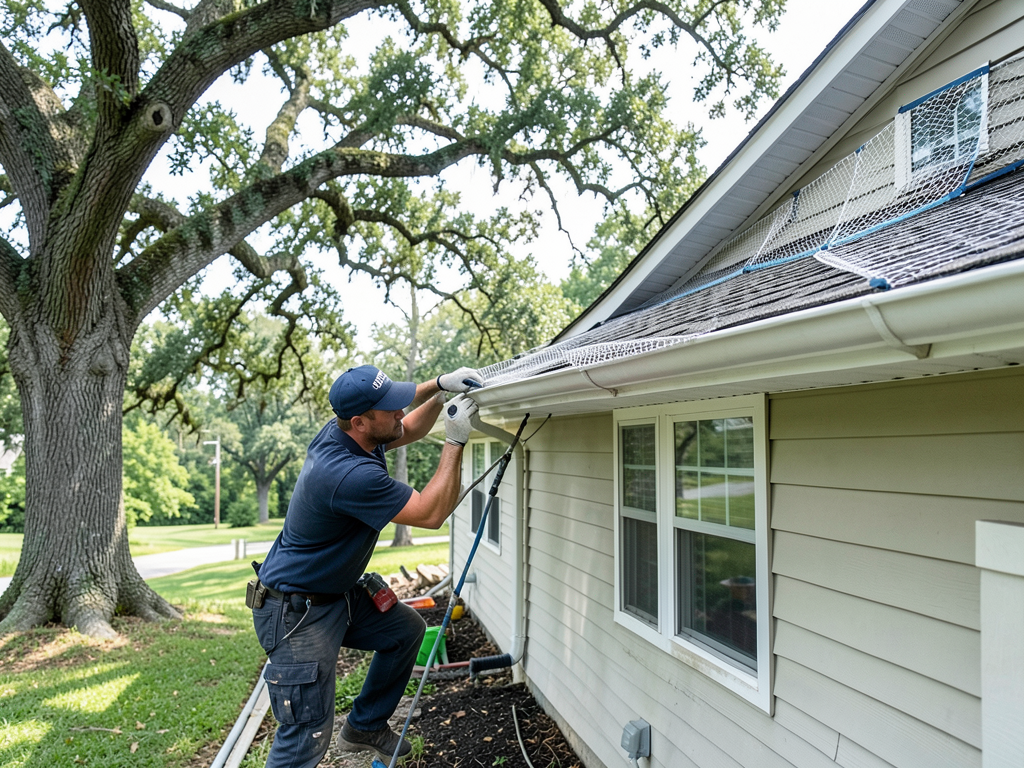
The Only Gutter Guards That Actually Work with the Massive Trees in Wissahickon
Living in Wissahickon means dealing with some of Philadelphia’s largest and oldest trees. Those majestic oaks, towering maples, and sprawling sycamores create a stunning canopy but also produce an overwhelming amount of debris that clogs gutters every fall. When leaves, twigs, and seed pods pile up, water backs up, ice dams form in winter, and roof rot begins. The solution isn’t just any gutter guard—it’s the right gutter guard engineered specifically for heavy leaf fall in our unique Philadelphia climate. Winter Roof Maintenance Tips.
Most homeowners try standard mesh screens or cheap plastic guards from big-box stores, only to find themselves cleaning gutters again by November. The massive trees in Wissahickon produce leaves that are too large, too numerous, and too persistent for basic protection. What you need is a system that handles the volume, the weight, and the freeze-thaw cycles that define our Pennsylvania winters. Why More Homeowners in Manayunk Are Switching to Metal Roofing.
Why Wissahickon’s Trees Create a Unique Gutter Problem
The trees in Wissahickon Valley Park and surrounding neighborhoods aren’t just big—they’re mature specimens that have been growing for decades. Oak trees in this area can produce leaves up to eight inches long with thick, waxy surfaces that resist breaking down. Maple trees drop enormous quantities of seeds and leaves simultaneously. Sycamore leaves are massive and leathery, creating heavy, wet mats that standard screens cannot handle.
Add Philadelphia’s weather patterns—heavy spring rains, humid summers that accelerate decomposition, and brutal winters with repeated freeze-thaw cycles—and you have a perfect storm for gutter failure. When debris sits in gutters through multiple freeze-thaw cycles, it expands and contracts, creating gaps in guards and forcing water under shingles.
The Science Behind Gutter Guard Failure
Most gutter guards fail because they don’t account for the physics of water flow and debris accumulation. Surface tension systems work well for light debris but collapse under the weight of wet sycamore leaves. Mesh guards clog when organic material breaks down into a sludge that fills the openings. Brush systems trap debris but become saturated and heavy, pulling away from the gutter edge.
The key is understanding that water needs to flow at specific velocities to carry debris away. When water slows below 3 feet per second, leaves and seeds drop out of suspension and clog the system. Philadelphia’s typical rainfall intensity—often 1-2 inches per hour during summer thunderstorms—requires guards that maintain proper water velocity even when partially clogged.
Micro-Mesh Technology: The Wissahickon Solution
Micro-mesh gutter guards represent the most effective technology for heavy leaf environments like Wissahickon. These systems use surgical-grade stainless steel mesh with openings as small as 50 microns—smaller than a grain of sand. The fine mesh blocks even the smallest debris while allowing water to flow through at high rates.
The best micro-mesh systems feature a raised profile that creates an air gap between the mesh and the gutter. This design prevents debris from sitting directly on the water channel and allows wind to blow away lighter materials. The raised design also accommodates the expansion and contraction of materials during freeze-thaw cycles without warping or pulling away from the roof edge.
Professional installation is critical with micro-mesh systems. The guard must be secured to both the gutter and the fascia board to prevent uplift during high winds. In Wissahickon’s mature tree canopy, wind-driven debris can create significant pressure on improperly installed guards.
Surface Tension vs. Micro-Mesh: Head-to-Head Comparison
| Feature | Surface Tension Guards | Micro-Mesh Guards |
|---|---|---|
| Debris Size Blocked | Large leaves only | All debris including pine needles |
| Water Flow Rate | Moderate | High |
| Freeze-Thaw Performance | Poor – ice buildup common | Excellent – air gap prevents ice |
| Maintenance Required | Annual cleaning needed | Virtually none |
| Best For | Light tree coverage | Heavy leaf fall areas |
Philadelphia Weather Stress Test: Real-World Performance
Philadelphia’s climate creates unique challenges that only the toughest gutter guards survive. Our area experiences an average of 41 inches of rainfall annually, with most falling between April and September. Summer thunderstorms can dump 2-3 inches in a single hour, testing gutter capacity to the limit.
Winter presents the biggest challenge. The freeze-thaw cycle—where temperatures swing above and below freezing multiple times per week—causes water to expand by 9% when it freezes. This expansion can lift improperly secured guards, creating gaps that allow debris entry. Quality micro-mesh systems with proper installation maintain their seal through dozens of freeze-thaw cycles.
Ice dam formation is another critical factor. When gutters clog with debris, melting snow has nowhere to go. Water backs up under shingles, freezes, and creates ice dams that can lift entire roof sections. The right gutter guard prevents this cascade of failures by maintaining clear water flow paths even under heavy snow loads.
Installation Matters: Why DIY Often Fails
Professional installation makes the difference between a system that lasts 20 years and one that fails in the first heavy storm. The critical factors include proper pitch alignment—gutter guards must match the roof’s existing pitch within 2 degrees to maintain proper water velocity. Incorrect pitch causes water to pool and debris to accumulate.
Fastening systems matter tremendously. Professional installers use hidden bracket systems that secure guards to both the gutter and fascia, creating a unified structure that resists wind uplift. DIY systems often rely on adhesive strips or simple clips that fail when debris accumulates or temperatures fluctuate.
Roof warranty considerations are crucial. Many DIY installations void roofing warranties by creating new roof penetrations or altering the roof’s water-shedding profile. Professional installers understand how to integrate guards without compromising existing roof warranties or creating new leak points. The Best Local Roofing Companies for Luxury Homes on the Main Line.
Cost Breakdown: What to Expect in Philadelphia
Professional gutter guard installation in the Philadelphia metro area typically ranges from $15 to $30 per linear foot, depending on the system chosen and home complexity. A typical Wissahickon home with 200 linear feet of gutters might invest $3,000 to $6,000 for a complete system.
Factors affecting cost include roof pitch—steeper roofs require additional safety equipment and installation time—and the number of stories. Multi-story homes in Wissahickon’s hilly terrain often require specialized equipment for safe access. The quality of existing gutters also matters; damaged or improperly pitched gutters must be repaired before guard installation. EPA.
ROI calculation is straightforward. Professional cleaning costs $150-300 annually. Over 10 years, that’s $1,500-3,000 in cleaning costs alone. Add the cost of potential water damage from clogged gutters—often $5,000-15,000 for basement flooding or roof repairs—and quality guards pay for themselves within 3-5 years.
Maintenance Schedule for Philadelphia Homes
Even the best gutter guards benefit from annual inspection. Schedule your check-up in late spring after pollen season and again in early fall before leaf drop. During inspection, look for these warning signs: granules from shingles accumulating in gutters, sagging sections indicating fastener failure, or visible debris accumulation at roof valleys.
Philadelphia’s humid climate accelerates organic decomposition. While quality micro-mesh prevents large debris entry, fine particles can accumulate over time. A gentle pressure washing every 3-5 years removes this buildup without damaging the guard system. Never use wire brushes or harsh chemicals that can damage the mesh coating.
Ice dam prevention requires attention to attic ventilation. Even with perfect gutters, poor attic ventilation allows heat to melt snow on the roof, creating the conditions for ice dam formation. Ensure your attic maintains consistent temperatures within 10 degrees of outdoor air temperature.
Tree Species Specific to PA: What Your Guard Must Handle
Understanding local tree species helps you choose the right protection. Pennsylvania’s native oak species—white oak, red oak, and pin oak—produce some of the largest and toughest leaves in North America. These leaves can be 6-8 inches long with thick, waxy coatings that resist decomposition.
Maple trees, particularly silver maple and red maple common in Wissahickon, produce enormous quantities of seeds (samaras) each spring. These helicopter seeds can clog even small openings in gutter guards. The trees also drop leaves that are 4-6 inches across with delicate, compound structures that break down into fine particles.
Sycamore trees, often called the giants of the eastern forest, produce leaves up to 10 inches across with thick, leathery textures. When wet, these leaves create heavy, water-resistant mats that standard screens cannot handle. The trees also shed bark and seed balls that add to gutter debris.
Warranty Differences: Manufacturer vs. Installer
Understanding warranty coverage prevents unpleasant surprises. Manufacturer warranties typically cover material defects for 20-25 years but exclude damage from improper installation, severe weather, or neglect. These warranties require professional installation to remain valid.
Installer warranties cover workmanship for 5-10 years and include issues like improper pitch, fastener failure, or integration problems with existing roofing. The best companies offer combined warranties that bridge both coverage areas, ensuring you’re protected from both material and installation failures. Roofing Pittsburgh.
Transferability matters when selling your home. Quality gutter guard systems with transferable warranties add resale value. Buyers appreciate knowing they’re purchasing a home with protected gutters and documented maintenance history.
Gutter Cleaning vs. Guard ROI: The Math
Let’s break down the true cost of doing nothing. Professional gutter cleaning for a typical Wissahickon home costs $200-300 twice yearly—once in late spring and again in late fall. Over 10 years, that’s $4,000-6,000 in cleaning costs alone.
Now consider the hidden costs. Clogged gutters cause basement flooding averaging $7,000-15,000 per incident. Roof damage from ice dams averages $3,000-8,000. Fascia and soffit rot from trapped moisture costs $2,000-5,000 to repair. These aren’t probabilities—they’re inevitabilities without proper protection.
Quality gutter guards cost $3,000-6,000 installed. They eliminate cleaning costs, prevent water damage, and protect your home’s structural integrity. The ROI becomes clear: guards pay for themselves in 3-5 years through avoided costs and damage prevention.
Historic District Considerations in Wissahickon
Wissahickon contains several historic districts where exterior modifications require approval from the Philadelphia Historical Commission. Gutter guards are generally approved as they’re not visible from the street when properly installed. However, color matching and profile selection matter.
Historic guidelines typically require that any exterior additions be reversible without damage to original materials. Quality gutter guard installation achieves this by using existing mounting points and avoiding new roof penetrations. Professional installers familiar with historic district requirements know how to document installations for commission approval.
The key is choosing guards that maintain your home’s architectural integrity. Low-profile systems that hug the roofline work best for historic homes, while still providing the debris protection modern materials offer.
Frequently Asked Questions
Do gutter guards work in heavy rain?
Yes, quality micro-mesh guards handle extreme rainfall. The key is proper pitch and water velocity. Professional installation ensures your system can handle Philadelphia’s heaviest storms without overflow.
Can I install gutter guards myself?
DIY installation is possible but risky. Improper pitch, inadequate fastening, and roof warranty violations are common issues. Professional installation includes proper integration with existing roofing and ensures long-term performance. Roofing Allentown.
How long do gutter guards last?
Quality micro-mesh systems last 20-25 years with proper installation. The stainless steel mesh doesn’t rust or degrade, and the mounting systems are designed for freeze-thaw cycles common in Pennsylvania.
Call (267) 344-1222 Today to Schedule Your Inspection
Don’t wait for the next storm to discover your gutters can’t handle Wissahickon’s massive trees. Our team has installed hundreds of gutter guard systems throughout Philadelphia, including in the toughest tree-covered neighborhoods. We understand the unique challenges of oak, maple, and sycamore debris and know exactly which systems perform best in our local conditions.
Pick up the phone and call (267) 344-1222 before the next heavy rain hits. We’ll inspect your current gutters, assess your tree coverage, and recommend the specific guard system that will protect your home for decades. Our installations include a 10-year workmanship warranty and manufacturer warranties up to 25 years.
Winter is coming, and with it comes the freeze-thaw cycles that destroy unprotected gutters. Don’t let another season of clogged gutters damage your home’s foundation or roof. Call (267) 344-1222 now and join the hundreds of Philadelphia homeowners who’ve already solved their gutter problems permanently. For more information, visit FEMA.
{
“@context”: “https://schema.org”,
“@type”: “BlogPosting”,
“headline”: “The Only Gutter Guards That Actually Work with the Massive Trees in Wissahickon”,
“description”: “Stop battling clogged gutters in Wissahickon. Discover the only gutter guards proven to handle massive oak, maple, and sycamore leaves in Philadelphia’s toughest conditions.”,
“wordCount”: 2015,
“datePublished”: “2026-04-11T13:33:00.000Z”,
“dateModified”: “2026-04-11T13:33:00.000Z”,
“inLanguage”: “en-US”,
“mainEntityOfPage”: {
“@type”: “WebPage”,
“@id”: “https://atlasroofingphiladelphia.com”
},
“publisher”: {
“@type”: “LocalBusiness”,
“name”: “Atlas Roofing Philadelphia”,
“url”: “https://atlasroofingphiladelphia.com”
},
“author”: {
“@type”: “Organization”,
“name”: “Atlas Roofing Philadelphia”,
“url”: “https://atlasroofingphiladelphia.com”
},
“image”: {
“@type”: “ImageObject”,
“url”: “https://atlasroofingphiladelphia.com/wp-content/uploads/2026/03/the-only-gutter-guards-that-actually-work-with-the-1.png”
}
}
{
“@context”: “https://schema.org”,
“@type”: “RoofingContractor”,
“name”: “Atlas Roofing Philadelphia”,
“url”: “https://atlasroofingphiladelphia.com”,
“address”: {
“@type”: “PostalAddress”,
“addressLocality”: “Philadelphia”
},
“areaServed”: {
“@type”: “City”,
“name”: “Philadelphia”
}
}
{
“@context”: “https://schema.org”,
“@type”: “FAQPage”,
“mainEntity”: [
{
“@type”: “Question”,
“name”: “Do gutter guards work in heavy rain?”,
“acceptedAnswer”: {
“@type”: “Answer”,
“text”: “Yes, quality micro-mesh guards handle extreme rainfall. The key is proper pitch and water velocity. Professional installation ensures your system can handle Philadelphia’s heaviest storms without overflow.”
}
},
{
“@type”: “Question”,
“name”: “Can I install gutter guards myself?”,
“acceptedAnswer”: {
“@type”: “Answer”,
“text”: “DIY installation is possible but risky. Improper pitch, inadequate fastening, and roof warranty violations are common issues. Professional installation includes proper integration with existing roofing and ensures long-term performance. Roofing Allentown.”
}
},
{
“@type”: “Question”,
“name”: “How long do gutter guards last?”,
“acceptedAnswer”: {
“@type”: “Answer”,
“text”: “Quality micro-mesh systems last 20-25 years with proper installation. The stainless steel mesh doesn’t rust or degrade, and the mounting systems are designed for freeze-thaw cycles common in Pennsylvania.”
}
}
]
}
{
“@context”: “https://schema.org”,
“@type”: “BreadcrumbList”,
“itemListElement”: [
{
“@type”: “ListItem”,
“position”: 1,
“name”: “Home”,
“item”: “https://atlasroofingphiladelphia.com”
},
{
“@type”: “ListItem”,
“position”: 2,
“name”: “Blog”,
“item”: “https://atlasroofingphiladelphia.com/blog”
},
{
“@type”: “ListItem”,
“position”: 3,
“name”: “The Only Gutter Guards That Actually Work with the Massive Trees in Wissahickon”
}
]
}
{
“@context”: “https://schema.org”,
“@type”: “Service”,
“serviceType”: “Roofing”,
“provider”: {
“@type”: “LocalBusiness”,
“name”: “Atlas Roofing Philadelphia”,
“url”: “https://atlasroofingphiladelphia.com”
},
“areaServed”: {
“@type”: “City”,
“name”: “Philadelphia”
},
“description”: “Stop battling clogged gutters in Wissahickon. Discover the only gutter guards proven to handle massive oak, maple, and sycamore leaves in Philadelphia’s toughest conditions.”
}