
Should You Choose a Power Attic Fan or Ridge Vents in Somerton?
Your attic in Somerton can reach 150 degrees on a July afternoon. That heat bakes down through your ceiling making your AC work overtime. The right ventilation system can cut cooling costs by 10-15% and add years to your roof. Power attic fans move more air but use electricity. Ridge vents work silently but depend on natural convection. The choice comes down to your roof design, budget, and energy goals.. Read more about Why Your Attic Insulation Might Be Killing Your New Roof in North Philly.
Why Attic Ventilation Matters in Philadelphia’s Climate
Philadelphia’s humid continental climate creates unique attic challenges. Summer humidity levels above 80% trap moisture in poorly vented spaces. Winter freeze-thaw cycles form ice dams along roof edges. These conditions rot sheathing and shorten shingle life by 30-40%. Winter Roof Maintenance Tips.
Philadelphia Building Code Title 4 R806 requires minimum 1 square foot of net free ventilation area per 150 square feet of attic floor space. Half must come from soffit vents at the eaves and half from ridge or gable vents near the peak. This balance prevents negative pressure that can pull conditioned air from your living space.
Older homes in Somerton built before 1980 often lack proper soffit vents. Contractors would drill holes in the fascia but these rarely provide adequate airflow. Modern building science shows that passive systems with continuous ridge vents outperform individual roof vents by 40-60%.
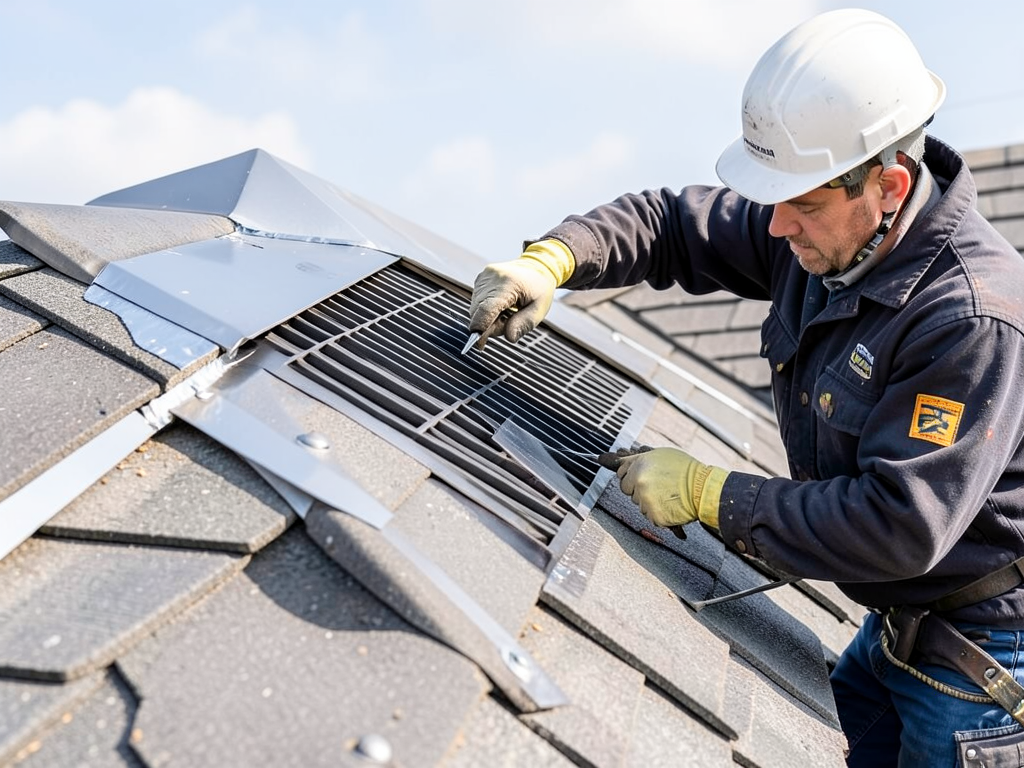
DIAGNOSTIC NOTE: A properly vented attic should feel close to outdoor temperature on a summer day. If your attic is 30+ degrees hotter than outside, you have a ventilation problem. Use a thermometer at the peak and eaves to check for temperature stratification.
Power Attic Fans: Active Ventilation Pros and Cons
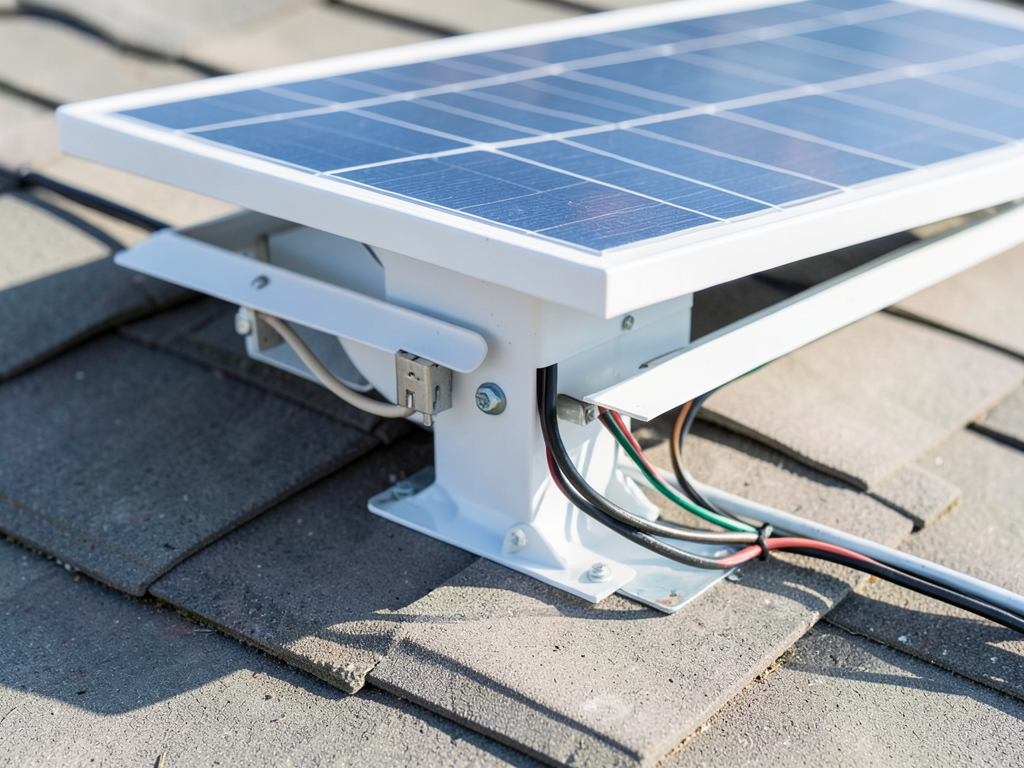
Power attic fans mount on the roof or gable wall and use electric motors to exhaust hot air. Solar models eliminate operating costs but move less air than hardwired units. A typical 1,500 square foot attic needs a 1,000-1,500 CFM fan to achieve 6-8 air changes per hour.
Benefits of power fans include immediate temperature reduction and the ability to overcome poor intake ventilation. They work well on complex roof designs where natural convection is limited. Many models include thermostats that activate only when attic temperatures exceed 95 degrees.
However, power fans have significant drawbacks. They draw 200-400 watts when running and can add $15-25 monthly to your electric bill. Most critically, they can create negative pressure that pulls conditioned air from your living space through ceiling penetrations. This makes your AC work harder and increases humidity levels.
Philadelphia’s humid summers create another problem. Power fans can pull moist outdoor air into the attic through any available opening. This moisture condenses on cool surfaces creating perfect conditions for mold growth. The EPA warns against using powered ventilation in humid climates without proper vapor barriers. EPA mold and moisture control guidelines.
Ridge Vents: The Passive Alternative
Ridge vents install along the peak of your roof creating a continuous exhaust path. They work with soffit vents to create natural convection. Hot air rises and exits through the ridge while cooler air enters through the soffits. No electricity required.
Modern ridge vents use baffled designs that prevent wind-driven rain from entering while maximizing airflow. The net free area typically provides 12-18 square inches per linear foot. For a 30-foot ridge, that equals 360-540 square inches of exhaust capacity.
The key advantage of ridge vents is their reliability. No moving parts means no maintenance and no operating costs. They work 24/7 without thermostats or sensors. When properly installed with adequate soffit ventilation, they maintain attic temperatures within 10-15 degrees of outdoor ambient.
Installation requires cutting a slot along the entire ridge which may not be possible on some roof designs. They also depend on proper intake ventilation. If your soffits are blocked by insulation or lack vents, ridge vents cannot function effectively.
Philadelphia Rowhome Ventilation Challenges
Somerton’s mix of detached homes and rowhomes present different ventilation challenges. Traditional rowhomes with flat or low-slope roofs cannot use ridge vents. These buildings need alternative strategies like powered roof vents or mechanical ventilation systems.
Flat roofs in Philadelphia often use tapered insulation to create drainage slopes. This limits ventilation options since there is no peak for ridge vents. Power fans become the primary option but require careful sealing to prevent moisture intrusion.
Many Somerton homes built in the 1950s-1970s have minimal attic space due to shallow roof pitches. These tight cavities trap heat and moisture. Power ventilation often provides the only practical solution for these configurations.. Read more about A Practical Guide to Installing Solar Tubes in Dark Cedar Park Rowhomes.
Philadelphia’s Historic Commission guidelines may restrict modifications to older homes. Some districts prohibit cutting ridge slots or installing visible roof hardware. Always check local requirements before making ventilation changes. The Best Local Roofing Companies for Luxury Homes on the Main Line.
Calculating Your Ventilation Needs
Start by measuring your attic floor area. Multiply length times width to get square footage. For a 30×40 foot attic, that equals 1,200 square feet.
Apply the 1/150 rule: 1,200 divided by 150 equals 8 square feet of total ventilation needed. Half comes from intake (soffits) and half from exhaust (ridge or fans).
For soffit ventilation, most vinyl vents provide 9-11 square inches of net free area per linear foot. A 30-foot soffit run yields 270-330 square inches or about 2 square feet of intake capacity.
Ridge vents typically provide 12-18 square inches per linear foot. A 30-foot ridge yields 360-540 square inches or about 2.5-3.75 square feet of exhaust capacity.
This example meets the minimum requirement. However, Philadelphia’s humid climate benefits from 50-100% more ventilation than code minimums. Consider upgrading to 1/300 ratio for better performance.
Cost Comparison: Power Fans vs. Ridge Vents
Power attic fans range from $200-400 for basic models to $600-1,200 for high-efficiency units with humidistats. Installation adds $300-600 for roof mounting or $200-400 for gable mounting. Solar fans cost $300-800 but eliminate operating costs.
Ridge vent materials cost $2-4 per linear foot. For a 30-foot ridge, materials run $60-120. Installation labor adds $300-500. Total cost typically ranges $360-620.
Operating costs differ dramatically. Power fans use 200-400 watts and run 500-1,500 hours annually in Philadelphia. At $0.15 per kWh, annual electricity costs range $15-90. Solar fans have zero operating costs but may not move enough air on cloudy days.
Ridge vents have no operating costs and minimal maintenance. The only expense is occasional cleaning of debris from vent slots. Over 10 years, ridge vents save $150-900 in electricity versus powered fans.
Energy Efficiency and ROI Analysis
Proper attic ventilation reduces cooling loads by 10-15% according to the Department of Energy. For a home using 1,500 kWh monthly for cooling, that equals 150-225 kWh in savings. At $0.15 per kWh, annual savings reach $22-34. Department of Energy ventilation guidelines.
Power fans cost $15-90 annually to operate. Net savings range from $0-19 per year. Payback periods extend to 10-20 years when including fan replacement costs every 8-12 years. How Much Does a Full Roof Replacement Actually Cost in Philadelphia Right Now.
Ridge vents provide similar cooling savings without operating costs. Annual net savings of $22-34 yield payback periods of 10-15 years. However, ridge vents also extend roof life by preventing moisture damage and ice dams.
Shingle manufacturers like GAF and CertainTeed void warranties for inadequate ventilation. Proper ventilation can extend shingle life from 15-20 years to 25-30 years. This represents $5,000-10,000 in avoided replacement costs over 20 years.
Installation Considerations for Philadelphia Homes
Philadelphia’s winter weather requires specific installation details. Ridge vents must include snow baffles in areas with heavy snowfall. These prevent wind-driven snow from entering the attic through ridge openings.
Power fans need proper flashing to prevent roof leaks. The mounting brackets must attach to rafters not just sheathing. Poor installation creates leak points that damage ceilings and walls.
Both systems require proper intake ventilation. Blocked soffit vents are the most common ventilation failure. Insulation often falls into soffit cavities during installation. Use proper baffles to maintain clear airflow paths from eaves to ridge.
Philadelphia’s high humidity demands vapor barrier integrity. Any gaps in ceiling drywall allow moist air to enter the attic. This moisture condenses on cool surfaces creating mold growth and wood rot.
Always check for proper attic access. Power fans require 120V electrical connections. Ridge vents need clear paths for cutting without damaging rafters or trusses.
Making the Right Choice for Your Somerton Home
Choose power attic fans if you have complex roof designs, minimal intake ventilation, or need immediate temperature reduction. They work well for homes with cathedral ceilings or limited attic space. Solar models provide ventilation without electrical costs.
Select ridge vents for simple gable roofs with adequate soffit ventilation. They offer the best long-term value with no operating costs and minimal maintenance. Ridge vents also preserve architectural aesthetics since they sit flush with the roofline.
Consider hybrid approaches for challenging situations. Install ridge vents as primary exhaust with supplemental power fans for extreme heat. This provides passive ventilation for most conditions with active boost during heat waves.
Philadelphia’s climate favors passive systems when properly designed. The combination of high humidity and cold winters makes powered ventilation risky without perfect sealing and vapor barriers.
Professional assessment helps determine the best solution. Factors like roof pitch, attic volume, existing ventilation, and energy costs all influence the optimal choice.
Professional Installation and Maintenance
DIY ventilation projects often fail due to inadequate sealing or improper sizing. Professional installers understand local building codes and manufacturer requirements. They also carry insurance to protect against installation damage.
Power fans need annual maintenance including motor bearing checks and thermostat calibration. Solar panels require cleaning to maintain efficiency. Wiring connections should be inspected for corrosion.
Ridge vents need minimal maintenance but should be checked annually for debris buildup. Soffit vents require occasional cleaning to remove insect nests or insulation debris.
Philadelphia’s severe weather demands quality installation. Wind uplift ratings, ice dam protection, and proper flashing all protect your investment. Cheap ventilation often fails during the first major storm.
Call (267) 344-1222 for Your Free Ventilation Assessment
Don’t let your attic turn into an oven this summer. Our Philadelphia ventilation experts will assess your current system and recommend the best solution for your specific home. We understand Somerton’s unique housing stock and Philadelphia’s challenging climate.
Call (267) 344-1222 today to schedule your free attic ventilation assessment. We’ll show you exactly how much you can save on cooling costs and extend your roof life. Our installations come with a 10-year workmanship warranty and meet all Philadelphia building codes.
Pick up the phone and call (267) 344-1222 before the next heat wave hits. Your AC will thank you and your roof will last years longer with proper ventilation.
Frequently Asked Questions
How much does attic ventilation cost in Philadelphia?
Basic ridge vent installation costs $360-620 while power attic fans range $500-1,000 installed. Premium systems with professional assessment run $1,000-2,500 depending on roof complexity and existing conditions.
Can I install attic ventilation myself?
DIY installation is possible but risky. Poor sealing creates moisture problems and inadequate sizing reduces effectiveness. Professional installation ensures code compliance and includes warranties against leaks or performance issues.
How long do attic ventilation systems last?
Ridge vents last 20-30 years with minimal maintenance. Power fans typically need replacement every 8-12 years due to motor wear. Solar fans may last 15-20 years but with decreasing efficiency over time.
Will attic ventilation reduce my energy bills?
Proper ventilation reduces cooling costs by 10-15% annually. In Philadelphia’s climate, that equals $75-150 per year for most homes. The savings increase for homes with poor existing ventilation or heavy AC use.
{
“@context”: “https://schema.org”,
“@type”: “BlogPosting”,
“headline”: “Should You Choose a Power Attic Fan or Ridge Vents in Somerton?”,
“description”: “Find out which attic ventilation system works best for Philadelphia homes in Somerton. Compare power attic fans and ridge vents for energy savings and roof longevity.”,
“wordCount”: 1927,
“datePublished”: “2026-04-30T07:58:00.000Z”,
“dateModified”: “2026-04-30T07:58:00.000Z”,
“inLanguage”: “en-US”,
“mainEntityOfPage”: {
“@type”: “WebPage”,
“@id”: “https://atlasroofingphiladelphia.com”
},
“publisher”: {
“@type”: “LocalBusiness”,
“name”: “Atlas Roofing Philadelphia”,
“url”: “https://atlasroofingphiladelphia.com”
},
“author”: {
“@type”: “Organization”,
“name”: “Atlas Roofing Philadelphia”,
“url”: “https://atlasroofingphiladelphia.com”
},
“image”: {
“@type”: “ImageObject”,
“url”: “https://atlasroofingphiladelphia.com/wp-content/uploads/2026/03/should-you-choose-a-power-attic-fan-or-ridge-vents-1.png”
}
}
{
“@context”: “https://schema.org”,
“@type”: “RoofingContractor”,
“name”: “Atlas Roofing Philadelphia”,
“url”: “https://atlasroofingphiladelphia.com”,
“address”: {
“@type”: “PostalAddress”,
“addressLocality”: “Philadelphia”
},
“areaServed”: {
“@type”: “City”,
“name”: “Philadelphia”
}
}
{
“@context”: “https://schema.org”,
“@type”: “FAQPage”,
“mainEntity”: [
{
“@type”: “Question”,
“name”: “How much does attic ventilation cost in Philadelphia?”,
“acceptedAnswer”: {
“@type”: “Answer”,
“text”: “Basic ridge vent installation costs $360-620 while power attic fans range $500-1,000 installed. Premium systems with professional assessment run $1,000-2,500 depending on roof complexity and existing conditions.”
}
},
{
“@type”: “Question”,
“name”: “Can I install attic ventilation myself?”,
“acceptedAnswer”: {
“@type”: “Answer”,
“text”: “DIY installation is possible but risky. Poor sealing creates moisture problems and inadequate sizing reduces effectiveness. Professional installation ensures code compliance and includes warranties against leaks or performance issues.”
}
},
{
“@type”: “Question”,
“name”: “How long do attic ventilation systems last?”,
“acceptedAnswer”: {
“@type”: “Answer”,
“text”: “Ridge vents last 20-30 years with minimal maintenance. Power fans typically need replacement every 8-12 years due to motor wear. Solar fans may last 15-20 years but with decreasing efficiency over time.”
}
},
{
“@type”: “Question”,
“name”: “Will attic ventilation reduce my energy bills?”,
“acceptedAnswer”: {
“@type”: “Answer”,
“text”: “Proper ventilation reduces cooling costs by 10-15% annually. In Philadelphia’s climate, that equals $75-150 per year for most homes. The savings increase for homes with poor existing ventilation or heavy AC use.”
}
}
]
}
{
“@context”: “https://schema.org”,
“@type”: “BreadcrumbList”,
“itemListElement”: [
{
“@type”: “ListItem”,
“position”: 1,
“name”: “Home”,
“item”: “https://atlasroofingphiladelphia.com”
},
{
“@type”: “ListItem”,
“position”: 2,
“name”: “Blog”,
“item”: “https://atlasroofingphiladelphia.com/blog”
},
{
“@type”: “ListItem”,
“position”: 3,
“name”: “Should You Choose a Power Attic Fan or Ridge Vents in Somerton?”
}
]
}
{
“@context”: “https://schema.org”,
“@type”: “Service”,
“serviceType”: “Roofing”,
“provider”: {
“@type”: “LocalBusiness”,
“name”: “Atlas Roofing Philadelphia”,
“url”: “https://atlasroofingphiladelphia.com”
},
“areaServed”: {
“@type”: “City”,
“name”: “Philadelphia”
},
“description”: “Find out which attic ventilation system works best for Philadelphia homes in Somerton. Compare power attic fans and ridge vents for energy savings and roof longevity.”
}