
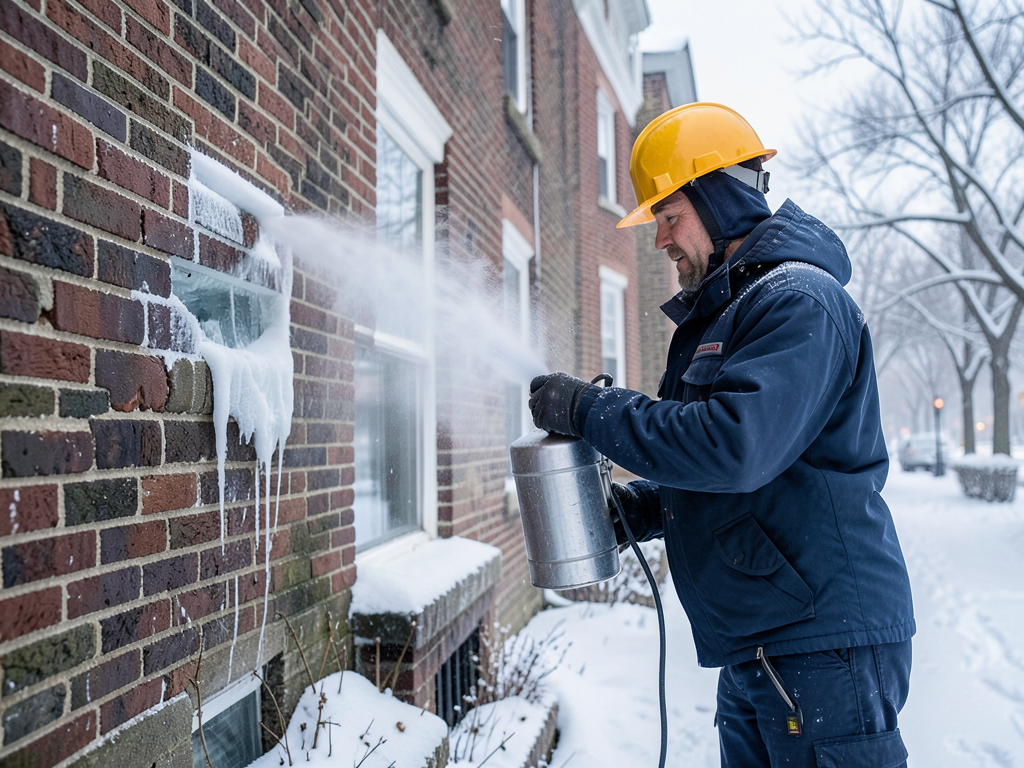
Ice dams form when melting snow refreezes at your roof’s edge, creating a wall of ice that traps water. In Philadelphia’s freeze-thaw cycles, this water backs up under shingles, causing leaks, ceiling stains, and structural damage. The weight alone can stress your roof deck and gutters.
Philadelphia’s climate creates perfect conditions for ice dams. When daytime temperatures hover just above freezing while nighttime drops below, snow melts and refreezes repeatedly. This cycle builds ice dams faster than in more consistently cold climates. Homes in Center City, Manayunk, and Chestnut Hill are especially vulnerable due to older construction and varying roof pitches. Why More Homeowners in Manayunk Are Switching to Metal Roofing.
Steam-based removal is the only safe method for ice dam elimination. Unlike mechanical removal that can crack shingles or pressure washing that forces water into your attic, low-pressure steam melts ice without damaging roofing materials. The process typically takes 2-4 hours for an average Philadelphia rowhome, depending on ice thickness and roof accessibility. The Best Local Roofing Companies for Luxury Homes on the Main Line.
Emergency ice dam removal requires 24/7 availability. Water damage spreads quickly once ice dams form, and waiting until morning can mean thousands in additional repairs. Professional teams arrive with industrial steamers, thermal imaging cameras to locate hidden ice, and moisture meters to assess water penetration depth. EPA ventilation guidelines.
Prevention starts with proper attic insulation. Philadelphia homes need R-49 to R-60 insulation in attics to prevent heat loss that melts snow unevenly. Many older homes in Society Hill and Old City have less than half the required insulation, creating hot spots that accelerate ice dam formation. Upgrading insulation often pays for itself within two winters through reduced heating costs.
Gutter guards prevent debris buildup that contributes to ice dam formation. When leaves and twigs accumulate in gutters, they trap moisture and create uneven freezing patterns. Professional-grade guards allow water flow while keeping out debris that would otherwise freeze into ice dams.
Heat cables offer targeted protection for problem areas. Installed along roof edges and in valleys, these cables maintain temperatures above freezing in critical zones. Modern self-regulating cables use 40% less energy than older models and automatically adjust output based on ambient temperature.
Philadelphia building code requires ice and water shield installation in roof valleys and along eaves. This rubberized asphalt membrane prevents water infiltration even when ice dams form. Many homes built before 2000 lack this protection, making them more susceptible to ice dam damage.
Insurance coverage for ice dam damage varies by policy. Most standard homeowners policies cover sudden, accidental damage but exclude damage from lack of maintenance. Documenting ice dam formation and taking immediate action often satisfies insurance requirements for coverage approval.
Professional inspection identifies hidden damage. After ice dam removal, technicians use moisture meters to detect water in roof decking, insulation, and wall cavities. Thermal imaging reveals temperature variations that indicate moisture presence, even in areas not visible from the attic.
Calcium chloride ice melt is safer than rock salt for roof use. While rock salt can corrode metal flashing and damage plants, calcium chloride works at lower temperatures and is less corrosive. However, neither should be used as a primary removal method, as they can create concentrated brine that damages roofing materials. Roofing Pittsburgh.
Philadelphia’s urban heat island effect influences ice dam formation. Rowhomes in Center City often experience different freezing patterns than detached homes in the suburbs due to heat retention from surrounding buildings. This creates localized microclimates where ice dams form unpredictably.
Attic ventilation plays a crucial role in ice dam prevention. Proper airflow keeps roof temperatures uniform, preventing the freeze-thaw cycles that create ice dams. Philadelphia homes need 1 square foot of ventilation for every 150 square feet of attic space, with vents placed at both eaves and ridge.
Roof pitch affects ice dam vulnerability. Steeper pitches shed snow more effectively, while low-slope or flat roofs trap snow and ice. Philadelphia’s mix of architectural styles means some neighborhoods face higher risks than others. Victorian homes in Germantown often have complex rooflines that create ice dam hot spots.
Emergency response time matters when ice dams form. Water damage can spread through ceilings, walls, and floors within hours. Professional teams equipped with steamers, pumps, and drying equipment can prevent secondary damage like mold growth, which begins within 24-48 hours of water exposure.
Long-term solutions include roof replacement with ice dam-resistant materials. Modern synthetic underlayment provides better protection than traditional felt paper, and architectural shingles with reinforced adhesive strips resist ice dam penetration more effectively than standard three-tab shingles. How Much Does a Full Roof Replacement Actually Cost in Philadelphia Right Now.
Philadelphia’s winter weather patterns have become more extreme in recent years. Heavier snowfalls and more frequent freeze-thaw cycles increase ice dam risks. Homes that experienced minimal ice dam issues five years ago may now face significant problems due to changing climate patterns.
Professional ice dam removal costs vary based on severity and accessibility. Factors include roof height, ice thickness, and whether emergency response is required. While DIY methods seem cheaper, they often cause more damage than the ice dams themselves, leading to higher repair costs.
Prevention through proper maintenance costs less than emergency removal. Annual gutter cleaning, attic insulation inspection, and roof condition assessment identify potential problems before winter arrives. Many Philadelphia homeowners schedule these services in early fall to prepare for winter weather.
Ice dam formation creates distinctive patterns. Water stains on ceilings often appear directly below ice dam locations, even when the actual ice is 10-15 feet away on the roof. Understanding these patterns helps technicians locate and address the source rather than just treating symptoms.
Philadelphia’s building stock presents unique challenges. Many homes have undergone multiple renovations, creating complex roof structures with varying insulation levels and ventilation patterns. These inconsistencies often create the hot and cold spots that lead to ice dam formation.
Professional assessment includes evaluating your home’s specific risk factors. Factors like tree coverage, roof orientation, and neighboring building heights all influence ice dam formation. Homes on north-facing slopes or those shaded by large trees may experience more severe ice dam problems.
Emergency ice dam removal requires proper equipment. Industrial steamers operating at 300°F melt ice without damaging roofing materials. Pressure washers, while tempting, force water into your home and can damage shingles. The right equipment makes the difference between effective removal and costly damage. Roofing Allentown.
Philadelphia’s freeze-thaw cycles are particularly damaging to older roofing materials. Asphalt shingles become brittle in extreme cold, making them more susceptible to damage during ice removal. Professional technicians understand these material limitations and adjust their techniques accordingly.
Insurance claims for ice dam damage require documentation. Photos of ice dam formation, water damage progression, and professional assessment reports support claims approval. Many homeowners discover too late that they lack proper documentation for their insurance claims.
Preventive measures include installing snow guards in strategic locations. These devices prevent large snow slides that can damage gutters and create dangerous conditions below. While primarily used in mountain regions, they’re increasingly relevant for Philadelphia homes facing heavier winter precipitation.
Professional ice dam removal includes complete cleanup. Steam removal creates minimal debris compared to mechanical methods, but proper disposal of ice and water prevents refreezing in problematic areas. Many technicians also apply calcium chloride to prevent immediate refreezing after removal.
Philadelphia’s historic districts have additional considerations. Homes in areas like Society Hill must comply with Historical Commission guidelines, which may limit certain prevention methods. Professional contractors familiar with these regulations can recommend compliant solutions that preserve architectural integrity.
Modern technology improves ice dam detection and removal. Thermal imaging cameras identify hidden ice and moisture, while moisture meters quantify water penetration depth. These diagnostic tools help technicians develop targeted removal strategies rather than treating entire roof areas uniformly.
Emergency response includes temporary protection measures. When immediate removal isn’t possible due to weather or equipment availability, professionals can install temporary barriers or apply ice melt compounds to minimize damage until full removal can be completed.
Philadelphia’s winter weather creates unique timing challenges. Ice dam formation often occurs during nighttime hours when temperatures drop, making emergency response more complex. Professional services with 24/7 availability can address problems before they escalate into major damage.
Professional ice dam removal includes damage assessment and repair planning. Technicians evaluate whether ice dam formation has caused structural damage, compromised roofing materials, or created conditions conducive to future problems. This comprehensive approach prevents recurring issues.
Philadelphia’s mix of architectural styles requires varied approaches. A solution effective for a Center City rowhome may not work for a detached colonial in Chestnut Hill. Professional contractors assess each home’s specific characteristics to develop appropriate prevention and removal strategies.
Emergency ice dam removal success depends on timing. The longer ice dams remain, the more water penetrates roofing materials and the greater the risk of structural damage. Professional services prioritize emergency calls based on damage severity and weather conditions.
Professional ice dam removal protects your home’s value. Water damage from ice dams can reduce property values and complicate future sales. Addressing ice dam problems promptly maintains your home’s structural integrity and market appeal.
Philadelphia’s winter weather patterns continue to evolve. Heavier snowfalls and more frequent freeze-thaw cycles increase ice dam risks for all homes, regardless of age or construction quality. Staying ahead of these trends through prevention and prompt removal protects your investment.
Frequently Asked Questions
How much does professional ice dam removal cost in Philadelphia?
Professional ice dam removal in Philadelphia typically costs between $300-$600 for an average rowhome, depending on ice thickness, roof accessibility, and whether emergency service is required. Emergency calls during nighttime hours or weekends may cost 25-50% more.
Can I remove ice dams myself without damaging my roof?
DIY ice dam removal often causes more damage than the ice dams themselves. Using hammers, chisels, or pressure washers can crack shingles, damage flashing, and force water into your attic. Professional steam removal is the only method that safely eliminates ice without harming roofing materials.
How long does ice dam removal take?
Professional ice dam removal typically takes 2-4 hours for an average Philadelphia home. Emergency situations with severe ice buildup may require 6-8 hours. The process includes assessment, steam removal, moisture detection, and cleanup. Weather conditions and roof accessibility can affect completion time.
Will my insurance cover ice dam damage?
Most standard homeowners insurance policies cover sudden, accidental damage from ice dams but exclude damage from lack of maintenance. Document ice dam formation with photos, take immediate action to prevent further damage, and keep receipts for all removal and repair work to support your insurance claim.
What’s the best way to prevent ice dams from forming?
Preventing ice dams requires proper attic insulation (R-49 to R-60), adequate ventilation, clean gutters, and heat cables in problem areas. Annual maintenance including gutter cleaning and roof inspection identifies potential issues before winter. Homes built before 2000 often need insulation upgrades to meet current standards.
How do I know if I have ice dam damage?
Signs of ice dam damage include water stains on ceilings or walls, peeling paint, sagging drywall, and ice buildup along roof edges. Interior doors may stick due to moisture swelling. Professional moisture detection can identify hidden damage in insulation, wall cavities, and roof decking before visible signs appear. For more information, visit FEMA winter weather protection.
{
“@context”: “https://schema.org”,
“@type”: “BlogPosting”,
“headline”: “Fixing Ice Dam Damage on Your Roof Before the Next Philly Freeze”,
“description”: “Don’t let ice dams destroy your Philadelphia home. Get expert ice dam removal and prevention before the next freeze damages your roof.”,
“wordCount”: 1893,
“datePublished”: “2026-03-04T14:48:00.000Z”,
“dateModified”: “2026-03-04T14:48:00.000Z”,
“inLanguage”: “en-US”,
“mainEntityOfPage”: {
“@type”: “WebPage”,
“@id”: “https://atlasroofingphiladelphia.com”
},
“publisher”: {
“@type”: “LocalBusiness”,
“name”: “Atlas Roofing Philadelphia”,
“url”: “https://atlasroofingphiladelphia.com”
},
“author”: {
“@type”: “Organization”,
“name”: “Atlas Roofing Philadelphia”,
“url”: “https://atlasroofingphiladelphia.com”
},
“image”: {
“@type”: “ImageObject”,
“url”: “https://atlasroofingphiladelphia.com/wp-content/uploads/2026/03/fixing-ice-dam-damage-on-your-roof-before-the-next-1.png”
}
}
{
“@context”: “https://schema.org”,
“@type”: “RoofingContractor”,
“name”: “Atlas Roofing Philadelphia”,
“url”: “https://atlasroofingphiladelphia.com”,
“address”: {
“@type”: “PostalAddress”,
“addressLocality”: “Philadelphia”
},
“areaServed”: {
“@type”: “City”,
“name”: “Philadelphia”
}
}
{
“@context”: “https://schema.org”,
“@type”: “FAQPage”,
“mainEntity”: [
{
“@type”: “Question”,
“name”: “How much does professional ice dam removal cost in Philadelphia?”,
“acceptedAnswer”: {
“@type”: “Answer”,
“text”: “Professional ice dam removal in Philadelphia typically costs between $300-$600 for an average rowhome, depending on ice thickness, roof accessibility, and whether emergency service is required. Emergency calls during nighttime hours or weekends may cost 25-50% more.”
}
},
{
“@type”: “Question”,
“name”: “Can I remove ice dams myself without damaging my roof?”,
“acceptedAnswer”: {
“@type”: “Answer”,
“text”: “DIY ice dam removal often causes more damage than the ice dams themselves. Using hammers, chisels, or pressure washers can crack shingles, damage flashing, and force water into your attic. Professional steam removal is the only method that safely eliminates ice without harming roofing materials.”
}
},
{
“@type”: “Question”,
“name”: “How long does ice dam removal take?”,
“acceptedAnswer”: {
“@type”: “Answer”,
“text”: “Professional ice dam removal typically takes 2-4 hours for an average Philadelphia home. Emergency situations with severe ice buildup may require 6-8 hours. The process includes assessment, steam removal, moisture detection, and cleanup. Weather conditions and roof accessibility can affect completion time.”
}
},
{
“@type”: “Question”,
“name”: “Will my insurance cover ice dam damage?”,
“acceptedAnswer”: {
“@type”: “Answer”,
“text”: “Most standard homeowners insurance policies cover sudden, accidental damage from ice dams but exclude damage from lack of maintenance. Document ice dam formation with photos, take immediate action to prevent further damage, and keep receipts for all removal and repair work to support your insurance claim.”
}
},
{
“@type”: “Question”,
“name”: “What’s the best way to prevent ice dams from forming?”,
“acceptedAnswer”: {
“@type”: “Answer”,
“text”: “Preventing ice dams requires proper attic insulation (R-49 to R-60), adequate ventilation, clean gutters, and heat cables in problem areas. Annual maintenance including gutter cleaning and roof inspection identifies potential issues before winter. Homes built before 2000 often need insulation upgrades to meet current standards.”
}
},
{
“@type”: “Question”,
“name”: “How do I know if I have ice dam damage?”,
“acceptedAnswer”: {
“@type”: “Answer”,
“text”: “Signs of ice dam damage include water stains on ceilings or walls, peeling paint, sagging drywall, and ice buildup along roof edges. Interior doors may stick due to moisture swelling. Professional moisture detection can identify hidden damage in insulation, wall cavities, and roof decking before visible signs appear. For more information, visit FEMA winter weather protection.”
}
}
]
}
{
“@context”: “https://schema.org”,
“@type”: “BreadcrumbList”,
“itemListElement”: [
{
“@type”: “ListItem”,
“position”: 1,
“name”: “Home”,
“item”: “https://atlasroofingphiladelphia.com”
},
{
“@type”: “ListItem”,
“position”: 2,
“name”: “Blog”,
“item”: “https://atlasroofingphiladelphia.com/blog”
},
{
“@type”: “ListItem”,
“position”: 3,
“name”: “Fixing Ice Dam Damage on Your Roof Before the Next Philly Freeze”
}
]
}
{
“@context”: “https://schema.org”,
“@type”: “Service”,
“serviceType”: “Roofing”,
“provider”: {
“@type”: “LocalBusiness”,
“name”: “Atlas Roofing Philadelphia”,
“url”: “https://atlasroofingphiladelphia.com”
},
“areaServed”: {
“@type”: “City”,
“name”: “Philadelphia”
},
“description”: “Don’t let ice dams destroy your Philadelphia home. Get expert ice dam removal and prevention before the next freeze damages your roof.”
}