
Choosing a Commercial Roofing Partner for Your Business in Center City
Philadelphia’s Center City district presents unique challenges for commercial property owners. Narrow streets, limited crane access, and strict Philadelphia Department of Licenses and Inspections (L&I) requirements demand a roofing partner with specific urban expertise. Your building’s flat roof system faces constant stress from freeze-thaw cycles, high humidity, and the urban heat island effect. Finding a contractor who understands these local conditions and can navigate the complex permitting process is critical for protecting your investment. Philadelphia Department of Licenses and Inspections.
Urban Roofing Logistics in Philadelphia’s Downtown Core
Commercial roofing in Center City requires specialized logistics coordination. Street closures for crane operations need approval through the Philadelphia Streets Department, often taking 2-3 weeks to process. Parking restrictions affect material delivery schedules, and many buildings have limited roof access points that require custom equipment configurations. Your roofing partner must have established relationships with city agencies and experience managing these constraints. EPA Heat Island Effect Information.
Most Center City buildings feature flat roof systems with parapets ranging from 18 to 36 inches high. These parapet walls create additional challenges for tear-off operations and material staging. The weight restrictions on older buildings mean some cannot support the load of traditional built-up roofing systems, requiring lighter alternatives like TPO or PVC membranes.
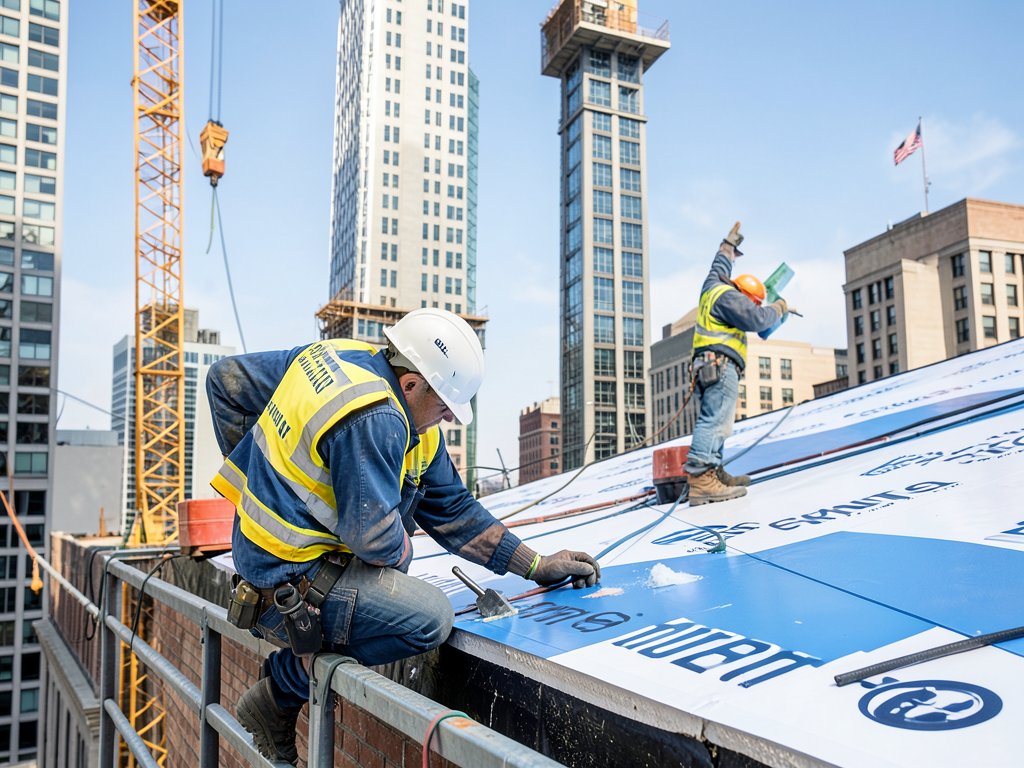
Commercial Roofing Systems for Philadelphia’s Climate
Philadelphia’s climate demands specific roofing materials. The city experiences 22 inches of snow annually, with temperatures dropping below freezing 15-20 nights per year. This creates ice damming risks on poorly insulated roofs. High humidity levels (average 70% in summer) promote algae growth on certain membrane surfaces, while summer thunderstorms with 60+ mph winds test roof fastening systems.
TPO (Thermoplastic Polyolefin) roofing dominates Center City installations due to its energy efficiency and heat-welded seams. A typical 20,000-square-foot TPO installation in Philadelphia costs between $4.50 and $6.50 per square foot installed, depending on insulation requirements and building access complexity. EPDM (ethylene propylene diene monomer) remains popular for its durability and lower initial cost, typically $3.80 to $5.20 per square foot.
PVC roofing offers superior chemical resistance for restaurants and industrial facilities, with heat-welded seams that prevent water infiltration. Modified bitumen provides a cost-effective solution for smaller buildings with simple roof layouts. Each system requires specific installation techniques and flashing details that experienced Philadelphia contractors understand.
Philadelphia L&I Compliance and Permitting
Philadelphia’s L&I department enforces strict commercial roofing standards. All commercial roof replacements require a building permit, with fees based on project value. The city mandates specific R-value insulation requirements for flat roof replacements: R-20 for most commercial buildings, with higher values required for buildings seeking LEED certification.
Commercial roofing contractors must maintain Pennsylvania contractor registration and carry specific insurance coverage: $500,000 general liability and $100,000 workers’ compensation. The city requires permits for roof-mounted equipment installations, including HVAC units, solar panels, and communication equipment. These permits add 2-3 weeks to project timelines.
Philadelphia’s stormwater management regulations affect roofing decisions. Buildings over 15,000 square feet must incorporate detention systems or green roof components to manage runoff. The Philadelphia Water Department offers fee reductions for buildings that reduce impervious surface area or implement rainwater harvesting systems.
Emergency Leak Detection and Rapid Response
Commercial roof leaks in Center City require immediate attention. Water traveling through ceiling systems can damage expensive equipment, inventory, and tenant spaces within hours. A small leak can spread across 500+ square feet before becoming visible in occupied spaces.
Professional leak detection uses multiple diagnostic methods. Electronic leak detection (ELD) systems create electrical fields to locate breaches in membrane roofing. Infrared thermography identifies wet insulation areas that appear cooler than dry areas. Core sampling reveals the extent of water infiltration in built-up systems.
Emergency response teams should arrive within 2-4 hours for active leaks. Temporary repairs using EPDM patches or TPO heat-welded patches prevent further damage while permanent repairs are scheduled. Center City buildings often require after-hours work to minimize tenant disruption, with premium rates for night and weekend emergency calls.
Preventative Maintenance Programs for Property Managers
Commercial roofing maintenance prevents 80% of premature roof failures. Philadelphia’s freeze-thaw cycles cause expansion and contraction that stress membrane seams and flashing details. Regular inspections identify problems before they cause interior damage.
A comprehensive maintenance program includes quarterly inspections, with additional checks after severe weather events. Inspectors examine membrane integrity, flashing conditions, drainage systems, and rooftop equipment mounting. They document findings with photographs and moisture readings, creating a condition history that helps predict future maintenance needs.
Maintenance contracts typically cost 1-2% of the roof replacement value annually. This investment extends roof life by 5-7 years and prevents costly emergency repairs. Many Philadelphia property managers schedule maintenance during off-peak seasons when contractor availability is highest and rates are lower.
Historic Building Roofing Considerations
Center City contains numerous historic buildings with specific roofing requirements. The Philadelphia Historical Commission reviews all exterior modifications to buildings in historic districts. Replacement materials must match original profiles and colors, and modern roofing systems must integrate with historic architectural details.
Historic buildings often feature multiple roof levels, decorative cornices, and ornate metal work that require specialized restoration skills. Lead-coated copper, terne-coated stainless steel, and traditional slate installations demand craftsmen familiar with historic preservation techniques. These materials cost 2-3 times more than standard commercial roofing but maintain architectural integrity.
Energy efficiency upgrades in historic buildings require careful planning. Spray foam insulation cannot be used in buildings with original wood decking due to moisture trapping concerns. Alternative insulation methods, such as rigid board insulation with vapor barriers, preserve the building envelope while meeting modern energy codes.
Roof Drainage and Philadelphia’s Stormwater Management
Philadelphia receives 47 inches of rainfall annually, with intense storms producing 2+ inches in 24 hours. Center City buildings must manage this water volume through properly designed drainage systems. Internal drains, scuppers, and gutters require regular cleaning to prevent ponding that accelerates membrane deterioration.
The city’s combined sewer system means roof runoff enters the same pipes as sanitary sewage. During heavy storms, this system can overflow, causing environmental damage. Philadelphia’s Green City, Clean Waters initiative encourages commercial properties to implement green roof systems, blue roofs, or rainwater harvesting to reduce stormwater volume.
Green roof systems provide multiple benefits: they reduce heat island effects, manage stormwater, and extend membrane life by protecting it from UV radiation and temperature extremes. A typical extensive green roof system costs $15-25 per square foot installed but can reduce cooling costs by 15-25% and qualify for stormwater fee reductions.
Project Management for High-Rise and Limited Access Sites
Center City’s high-rise buildings require specialized project management. Material hoisting often involves cranes or material lifts, with setup times of 4-6 hours. Traffic control plans must be submitted to the Streets Department, and neighboring property owners must be notified of potential disruptions.
Roofing projects on occupied buildings require careful scheduling to minimize tenant impact. Phased approaches allow sections of the roof to remain watertight during replacement. Noise restrictions in residential areas may limit work hours, extending project duration by 25-50%.
Safety considerations increase with building height. OSHA requires fall protection systems for work above 6 feet. Center City buildings often require perimeter warning lines, safety monitors, and personal fall arrest systems. These safety measures add 10-15% to project costs but are mandatory for compliance.
Energy Efficiency and Philadelphia’s Building Energy Code
Philadelphia’s Energy Code requires commercial buildings to meet specific energy performance standards. Cool roof technologies using highly reflective materials can reduce cooling costs by 10-30% in Philadelphia’s climate. The city offers expedited permitting for projects meeting Energy Star or LEED certification requirements.
Roof coatings provide an economical way to improve energy efficiency on existing buildings. Silicone coatings reflect up to 85% of solar radiation and can extend roof life by 5-10 years. Application costs range from $1.50 to $2.50 per square foot, making them attractive for budget-conscious property owners.
Solar integration is increasingly common on Center City commercial roofs. The city streamlined permitting for solar installations, with typical approval times of 2-3 weeks. Solar-ready roofing designs incorporate additional structural support and conduit pathways, adding $1-2 per square foot to initial installation costs but enabling future solar additions.
Selecting the Right Commercial Roofing Partner
Choosing a commercial roofing partner requires evaluating specific qualifications. Look for contractors with Pennsylvania contractor registration, proper insurance coverage, and manufacturer certifications for your chosen roofing system. Request references from similar Center City projects and verify their experience with Philadelphia’s permitting processes.
Quality contractors provide detailed proposals with material specifications, project timelines, and payment schedules. They conduct thorough building assessments before quoting, identifying potential challenges like structural limitations or access restrictions. Professional proposals include warranty information, specifying both manufacturer material warranties and contractor workmanship coverage.
Communication throughout the project prevents misunderstandings. Your contractor should provide weekly progress reports, coordinate with building management for access, and maintain a clean worksite. Post-installation support, including warranty registration and maintenance scheduling, demonstrates commitment to long-term customer satisfaction.
Cost Factors and ROI Considerations
Commercial roofing costs in Center City vary based on multiple factors. Building height affects labor costs due to increased safety requirements and equipment needs. Roof complexity, including multiple levels, penetrations, and drainage details, increases installation time and material waste.
Material selection significantly impacts lifecycle costs. While premium materials like PVC cost more initially, their durability and energy efficiency often provide better long-term value. A 20-year PVC roof might cost 30% more than TPO initially but could save $50,000 in energy costs and last 5-7 years longer.
ROI calculations should include energy savings, maintenance costs, and potential tax incentives. Philadelphia offers several programs for energy-efficient building improvements, including the EnergyWorks program for commercial properties. These incentives can reduce project costs by 10-20% while improving building performance.
Frequently Asked Questions
How long does a commercial roof replacement take in Center City?
Most commercial roof replacements in Center City take 2-4 weeks, depending on building size, weather conditions, and permitting requirements. Complex high-rise projects may require 6-8 weeks due to logistics and safety requirements.
What permits are required for commercial roofing in Philadelphia?
Philadelphia requires building permits for all commercial roof replacements, plus separate permits for roof-mounted equipment. The process typically takes 2-3 weeks, with fees based on project value and specific requirements for stormwater management compliance.
How can I tell if my commercial roof needs replacement?
Signs include recurring leaks, visible membrane damage, standing water after rain, and interior ceiling stains. Professional inspections using infrared thermography and moisture meters can identify problems before they cause major damage.
What warranties are available for commercial roofing systems?
Warranties include manufacturer material warranties (typically 15-30 years) and contractor workmanship warranties (usually 2-10 years). Extended warranties covering both material and labor are available for an additional cost.
How often should commercial roofs be inspected?
Quarterly inspections are recommended, with additional checks after severe weather events. Annual professional inspections identify developing problems and help maintain warranty compliance.
Call for Your Commercial Roofing Assessment
Center City commercial properties need specialized roofing expertise. Don’t wait for leaks to disrupt your business operations. Call (267) 344-1222 today to schedule a comprehensive roof assessment. Our team understands Philadelphia’s unique building codes, weather challenges, and logistical requirements. We’ll provide a detailed evaluation and recommend the best roofing solution for your specific building needs.
Pick up the phone and call (267) 344-1222 before the next storm hits. Our emergency response team is ready to protect your investment with rapid leak detection and repair services. We serve all Center City Philadelphia zip codes including 19102, 19103, 19106, and 19107 with fast, professional service you can trust.
{
“@context”: “https://schema.org”,
“@type”: “BlogPosting”,
“headline”: “Choosing a Commercial Roofing Partner for Your Business in Center City”,
“description”: “Find expert commercial roofing services in Center City Philadelphia. Learn about TPO/EPDM systems, L&I compliance, and emergency repairs for high-density buildings.”,
“wordCount”: 1918,
“datePublished”: “2026-02-21T07:16:00.000Z”,
“dateModified”: “2026-02-21T07:16:00.000Z”,
“inLanguage”: “en-US”,
“mainEntityOfPage”: {
“@type”: “WebPage”,
“@id”: “https://atlasroofingphiladelphia.com”
},
“publisher”: {
“@type”: “LocalBusiness”,
“name”: “Atlas Roofing Philadelphia”,
“url”: “https://atlasroofingphiladelphia.com”
},
“author”: {
“@type”: “Organization”,
“name”: “Atlas Roofing Philadelphia”,
“url”: “https://atlasroofingphiladelphia.com”
},
“image”: {
“@type”: “ImageObject”,
“url”: “https://atlasroofingphiladelphia.com/wp-content/uploads/2026/03/choosing-a-commercial-roofing-partner-for-your-bus-1.png”
}
}
{
“@context”: “https://schema.org”,
“@type”: “RoofingContractor”,
“name”: “Atlas Roofing Philadelphia”,
“url”: “https://atlasroofingphiladelphia.com”,
“address”: {
“@type”: “PostalAddress”,
“addressLocality”: “Philadelphia”
},
“areaServed”: {
“@type”: “City”,
“name”: “Philadelphia”
}
}
{
“@context”: “https://schema.org”,
“@type”: “FAQPage”,
“mainEntity”: [
{
“@type”: “Question”,
“name”: “How long does a commercial roof replacement take in Center City?”,
“acceptedAnswer”: {
“@type”: “Answer”,
“text”: “Most commercial roof replacements in Center City take 2-4 weeks, depending on building size, weather conditions, and permitting requirements. Complex high-rise projects may require 6-8 weeks due to logistics and safety requirements.”
}
},
{
“@type”: “Question”,
“name”: “What permits are required for commercial roofing in Philadelphia?”,
“acceptedAnswer”: {
“@type”: “Answer”,
“text”: “Philadelphia requires building permits for all commercial roof replacements, plus separate permits for roof-mounted equipment. The process typically takes 2-3 weeks, with fees based on project value and specific requirements for stormwater management compliance.”
}
},
{
“@type”: “Question”,
“name”: “How can I tell if my commercial roof needs replacement?”,
“acceptedAnswer”: {
“@type”: “Answer”,
“text”: “Signs include recurring leaks, visible membrane damage, standing water after rain, and interior ceiling stains. Professional inspections using infrared thermography and moisture meters can identify problems before they cause major damage.”
}
},
{
“@type”: “Question”,
“name”: “What warranties are available for commercial roofing systems?”,
“acceptedAnswer”: {
“@type”: “Answer”,
“text”: “Warranties include manufacturer material warranties (typically 15-30 years) and contractor workmanship warranties (usually 2-10 years). Extended warranties covering both material and labor are available for an additional cost.”
}
},
{
“@type”: “Question”,
“name”: “How often should commercial roofs be inspected?”,
“acceptedAnswer”: {
“@type”: “Answer”,
“text”: “Quarterly inspections are recommended, with additional checks after severe weather events. Annual professional inspections identify developing problems and help maintain warranty compliance.”
}
}
]
}
{
“@context”: “https://schema.org”,
“@type”: “BreadcrumbList”,
“itemListElement”: [
{
“@type”: “ListItem”,
“position”: 1,
“name”: “Home”,
“item”: “https://atlasroofingphiladelphia.com”
},
{
“@type”: “ListItem”,
“position”: 2,
“name”: “Blog”,
“item”: “https://atlasroofingphiladelphia.com/blog”
},
{
“@type”: “ListItem”,
“position”: 3,
“name”: “Choosing a Commercial Roofing Partner for Your Business in Center City”
}
]
}
{
“@context”: “https://schema.org”,
“@type”: “Service”,
“serviceType”: “Roofing”,
“provider”: {
“@type”: “LocalBusiness”,
“name”: “Atlas Roofing Philadelphia”,
“url”: “https://atlasroofingphiladelphia.com”
},
“areaServed”: {
“@type”: “City”,
“name”: “Philadelphia”
},
“description”: “Find expert commercial roofing services in Center City Philadelphia. Learn about TPO/EPDM systems, L&I compliance, and emergency repairs for high-density buildings.”
}